Navigating the $50 Billion Rural Health Transformation Program: Structure, State Allocations, and the Shadow of Medicaid Reductions

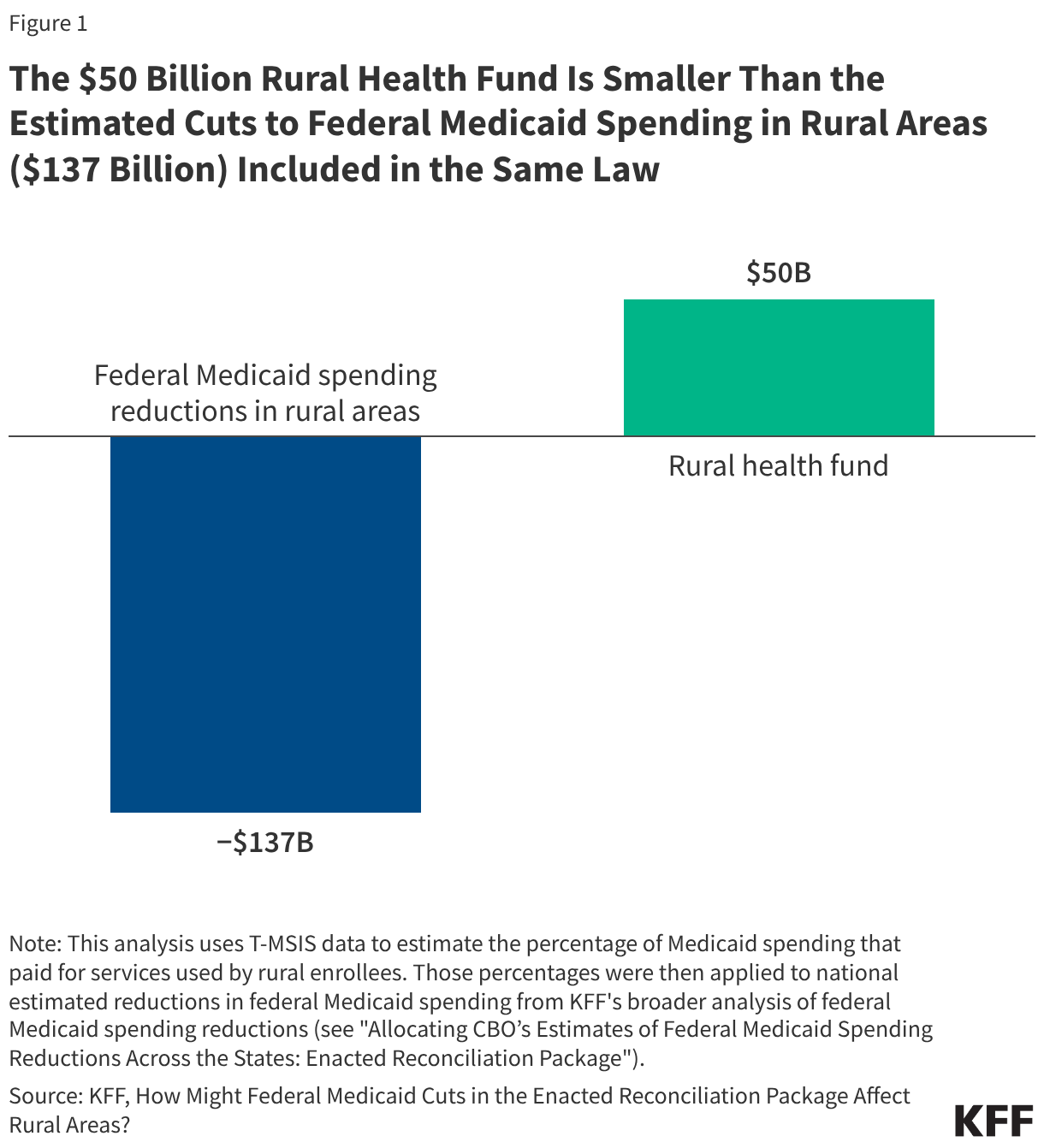
The landscape of American health care underwent a profound structural shift following the enactment of a sweeping budget reconciliation package signed into law by President Trump. Initially dubbed "One Big Beautiful Bill," the legislation instituted historic reductions in federal health care spending alongside significant tax reforms. Independent policy analyses, notably from KFF, projected that the law would decrease federal Medicaid spending by $911 billion over a decade. Of that total, rural communities are expected to absorb approximately $137 billion in cuts. In an effort to cushion the blow to America’s countryside—where medical infrastructure is often fragile—the legislative package established the Rural Health Transformation Program. Commonly referred to as the rural health fund, this initiative injects $50 billion in federal grants into state treasuries spanning from fiscal years 2026 through 2030. Administered by the Centers for Medicare & Medicaid Services (CMS) through its newly minted Office of Rural Health Transformation, the program is designed to modernize rural care delivery, bolster workforce recruitment, and foster technological innovation. However, as states scramble to obligate these funds and operationalize long-term plans, healthcare experts, hospital administrators, and lawmakers continue to debate whether the temporary influx of capital will be sufficient to offset deep, enduring cuts to the federal safety net.
Legislative Chronology and Program Timeline
The inception and rollout of the rural health fund followed an exceptionally fast-paced, high-stakes timeline. The mechanism itself materialized during late-stage Senate negotiations in June 2025 as a political compromise to quell mounting anxiety among rural lawmakers regarding the adverse effects of impending federal spending reductions. Following the bill’s formal enactment on July 4, 2025, federal agencies moved quickly to build an administrative framework. By September 2025, CMS issued the official Notice of Funding Opportunity, granting states a compressed window of less than two months to prepare comprehensive applications. These initial filings locked in the overarching scope of activities states intended to pursue and established their baseline eligibility for the duration of the program.
By December 2025, CMS announced the first-year awards, kicking off a frantic period for state procurement officers. States were given less than a year to finalize cooperative agreements, establish local grant application portals for internal stakeholders, process awards, and prepare mandatory first annual progress reports. According to program guidelines, all first-year funding must be legally obligated by October 30, 2026, with initial quarterly tracking reports due by late November 2026. The broader program is structured to distribute $10 billion annually through fiscal year 2030, with a final wind-down period requiring all distributed funds to be fully expended by the conclusion of fiscal year 2032. Because the funding relies on a cooperative agreement framework, CMS maintains active, ongoing project involvement, giving federal regulators substantial oversight capacity well beyond the initial grant-making phase.
Financial Architecture and Distribution Methodology
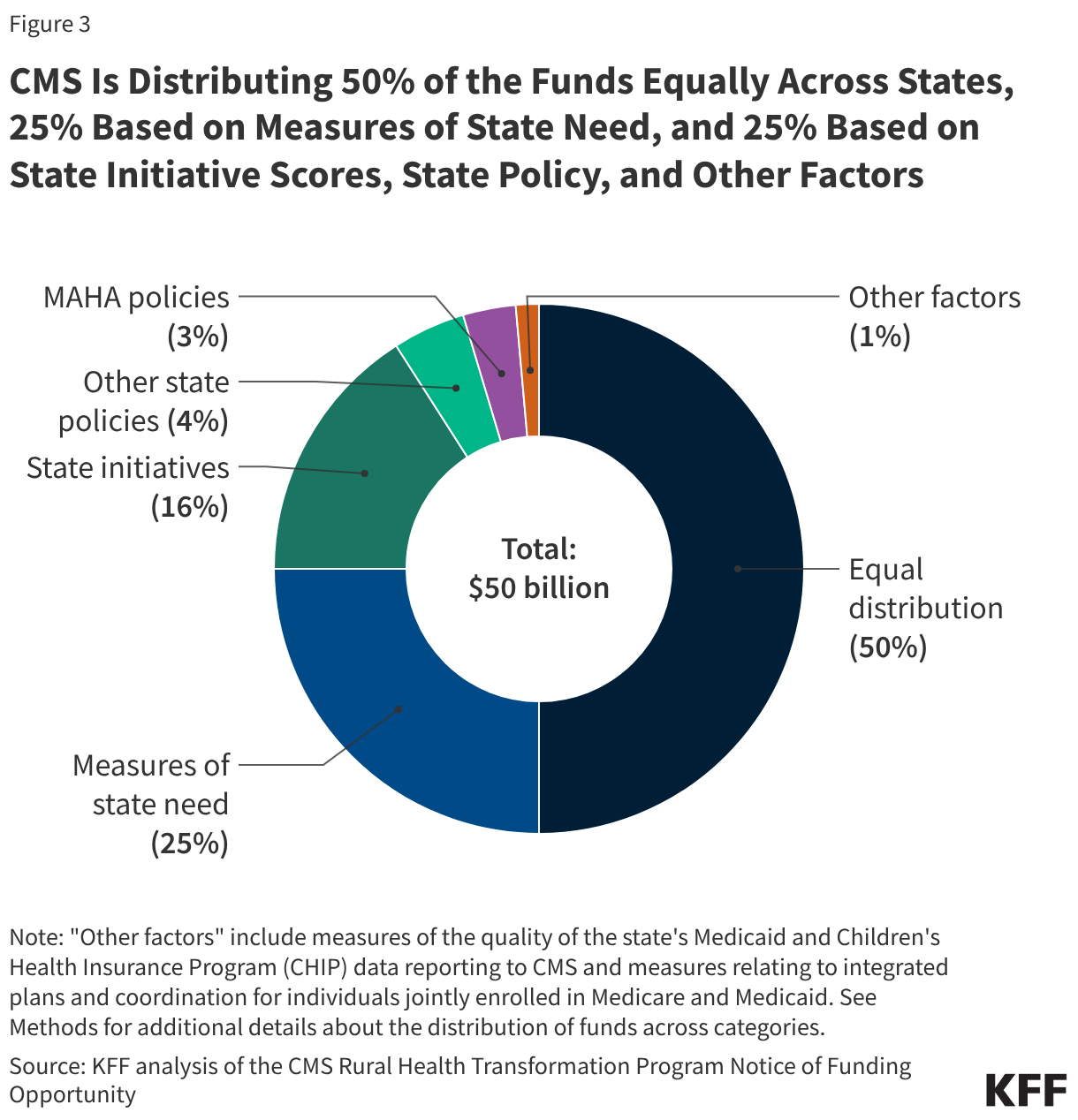
The financial distribution of the $50 billion fund is split cleanly down the middle, though the mechanics behind the allocation have sparked considerable debate among health policy analysts. Half of the total program—$25 billion, or $5 billion annually—is designated as "baseline funding." Under this provision, all fifty states were approved for participation after submitting their initial applications, ensuring that every state receives an equal share regardless of geographic size or rural population density. In the first operational year, this translates to a guaranteed $100 million baseline allocation for every state.
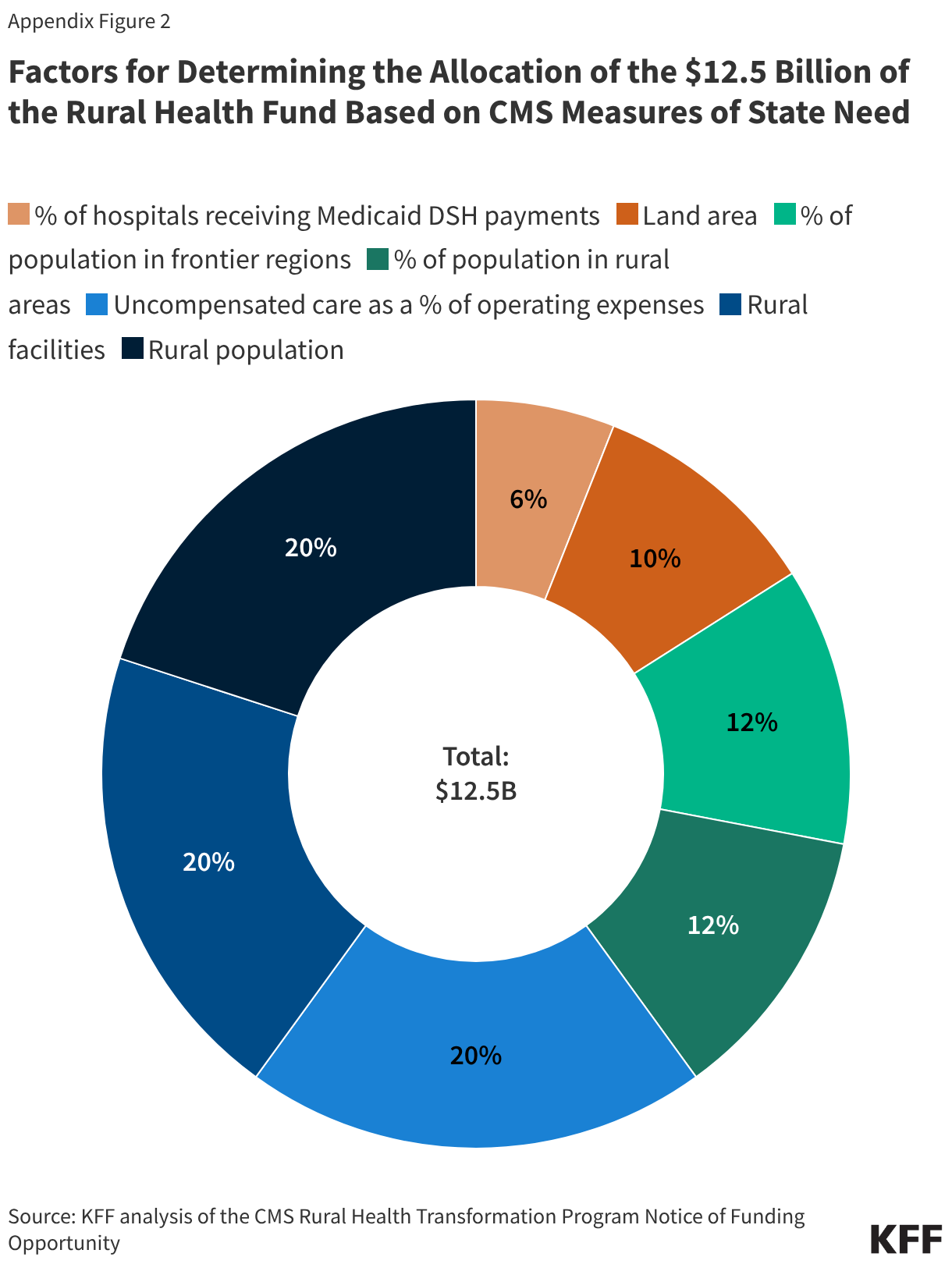
The remaining half of the fund, referred to as "workload funding," is distributed using a complex matrix of 23 weighted factors overseen by CMS. This pool is divided into distinct categories: 25% of the total program funds are tied directly to objective measures of state need, such as the volume of rural health facilities, local demographic vulnerabilities, and the prevalence of chronic health conditions. The final 25% of the program’s capital is allocated based on state initiative scores, specific policy adoptions, and geographic considerations, such as a special carve-out designed to benefit the five states with the largest total land areas (Texas, California, New Mexico, Montana, and Alaska).
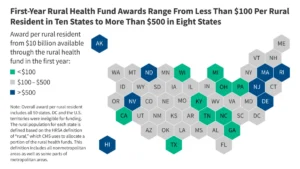
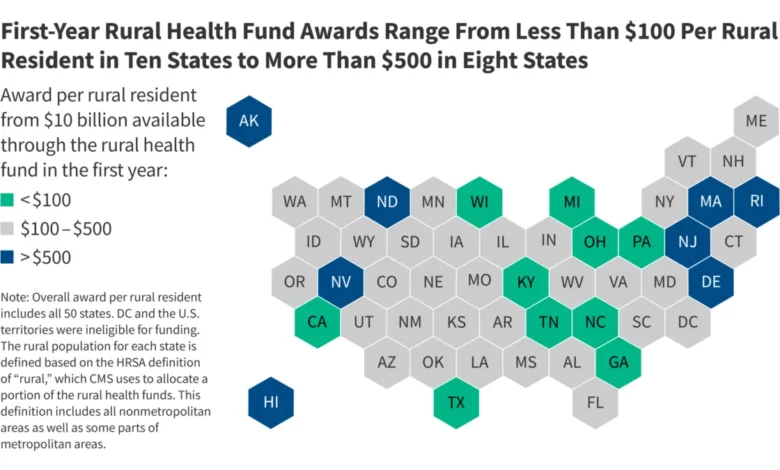
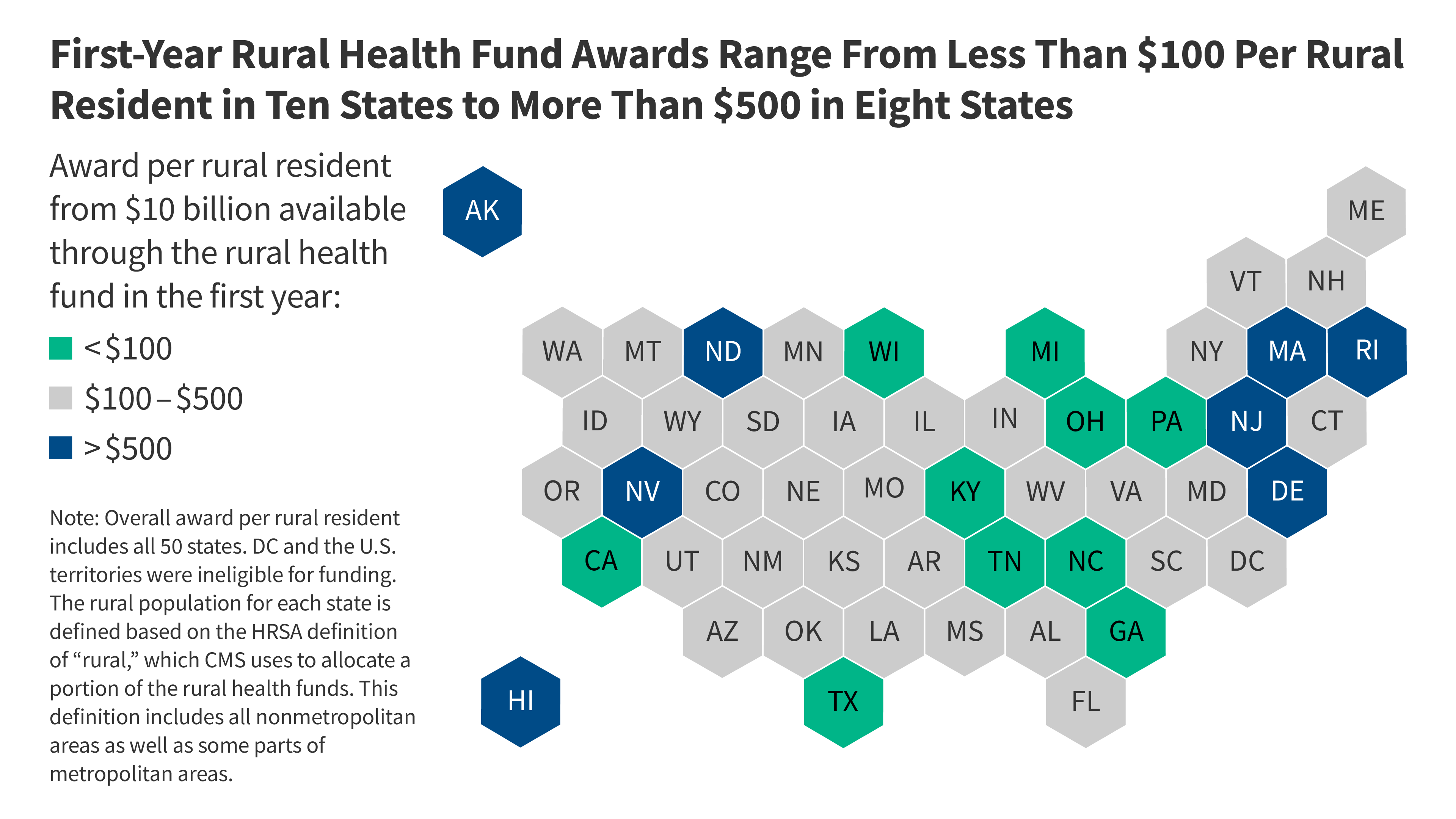
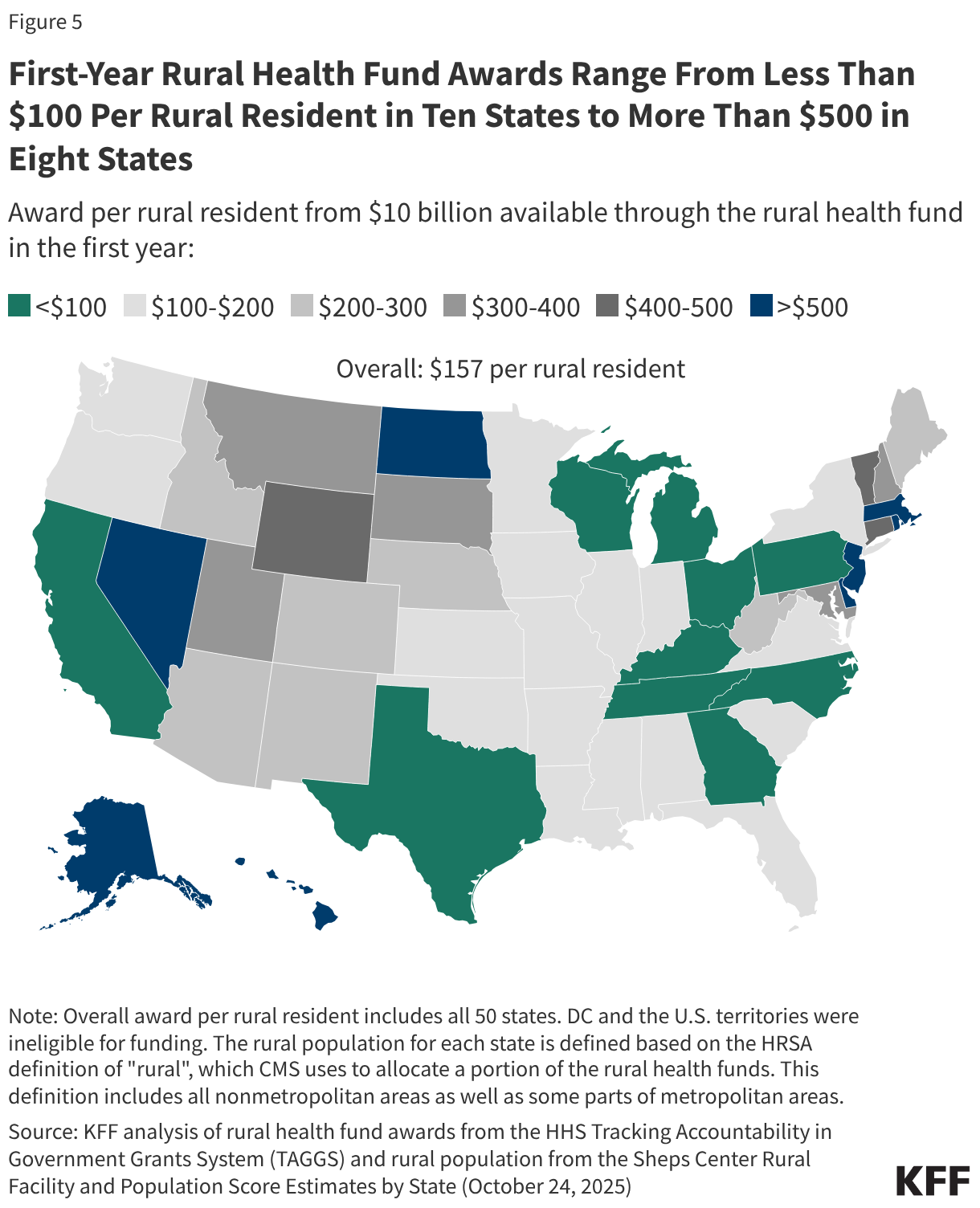
Despite these workload metrics, the equal distribution of baseline funding has generated stark disparities when viewed on a per-capita basis. First-year awards averaged $200 million nationwide, ranging from a low of $147 million in New Jersey to a high of $281 million in Texas. However, when calculated per rural resident, the variation becomes extreme. Ten states received less than $100 per rural resident, while eight states received more than $500. Texas, which boasts the largest rural population in the United States at approximately 4.3 million residents, received the smallest award per rural resident at just $66. Conversely, small-population states like Rhode Island, New Jersey, and Alaska saw significantly higher per-capita returns, with Rhode Island emerging as an extreme outlier at over $6,300 per rural resident due to the weight of the flat baseline allocation.
Strategic Uses and Permitted Activities
The statutory language of the rural health fund mandates that states direct resources toward transforming care delivery rather than merely propping up perpetual operating expenses. CMS has established five overarching strategic goals for the program: restoring the health of rural populations, ensuring sustainable health care access, driving workforce development, pioneering innovative care delivery models, and expanding technological infrastructure.
To meet these benchmarks, states must select at least three permitted uses authorized under the statute and federal guidance. Approved activities encompass a wide range of interventions, including the promotion of chronic disease prevention, the facilitation of administrative and clinical collaborations between isolated rural facilities and larger regional health systems, and aggressive recruitment campaigns to attract physicians and nurses to underserved areas. Furthermore, funds are being heavily funneled into technological upgrades, such as expanding telehealth networks and integrating artificial intelligence diagnostic tools into rural clinics. States are also permitted to invest limited capital into existing hospital physical infrastructure, help financially distressed facilities evaluate which service lines to maintain or divest, and transition local providers toward value-based care frameworks and alternative payment models. Administrative costs are strictly capped at 10% of each state’s total budget period award.
The Hospital Industry Response and Stakeholder Perspectives
While the rural health fund was born out of legislative concern for vulnerable rural hospitals, the hospital industry and various advocacy groups have expressed apprehension regarding how effectively the money will reach facilities in acute financial distress. Because states retain broad discretion over downstream fund distribution, capital can be routed not only to hospitals but also to academic institutions, regional health systems based in urban centers, technical assistance vendors, and health IT developers. Furthermore, CMS guidelines explicitly permit funds to flow to non-rural entities, provided the expenditures directly benefit rural residents.
Major industry groups, including the American Hospital Association (AHA) and the Federation of American Hospitals (FAH), have formally petitioned CMS to implement stricter reporting standards and to prioritize direct financial relief for hospitals. In public comments, industry representatives argued that statutory restrictions on provider payments and capital investments hinder the fund’s ability to keep cash-strapped facilities afloat. Concurrently, a bipartisan coalition of senators led by congressional leaders pressed CMS to grant greater operational flexibility while voicing concern that smaller, independent rural providers would struggle to compete against large, well-resourced health systems for state-administered grants.
Broader Implications and the Reality of Medicaid Reductions
A critical analysis of the Rural Health Transformation Program reveals a stark mathematical imbalance when weighed against the broader budget reconciliation law. The $50 billion allocated over five years represents roughly 37% of the estimated $137 billion in federal Medicaid spending cuts projected to hit rural areas over a ten-year horizon, and only 5% of the $911 billion in total federal Medicaid reductions.
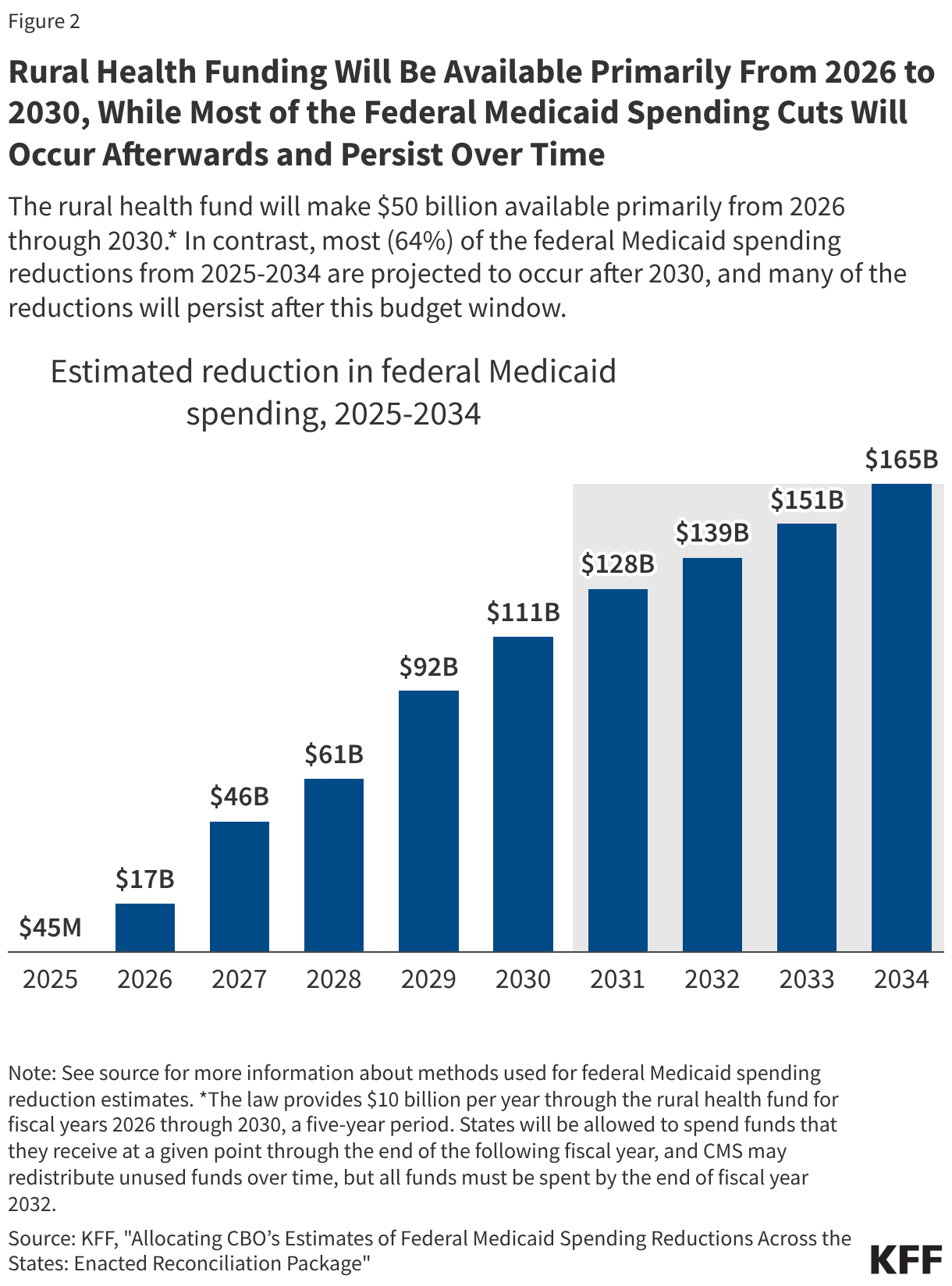
Moreover, a pronounced temporal mismatch complicates the fiscal outlook. The rural health fund is heavily front-loaded, pouring $10 billion annually into state economies between 2026 and 2030, with all expenditures concluding by 2032. In contrast, the majority of the federal health care spending cuts are backloaded; nearly two-thirds of the ten-year Medicaid reductions will materialize after fiscal year 2030 and persist indefinitely. This dynamic is further exacerbated by the expiration of enhanced Affordable Care Act marketplace premium tax credits and stricter insurance enrollment integrity rules, which are projected to drive up uninsured rates in rural regions. As uncompensated care burdens climb alongside reduced Medicaid reimbursement rates for hospital services, the long-term sustainability of rural health infrastructure remains an open question. Unless future legislative action provides permanent funding after the rural health fund expires, communities across rural America may face a severe fiscal cliff once the five-year federal grant cycle concludes.
Related posts: