IAPC releases new infographic on palliative care at home as part of ongoing care continuum series

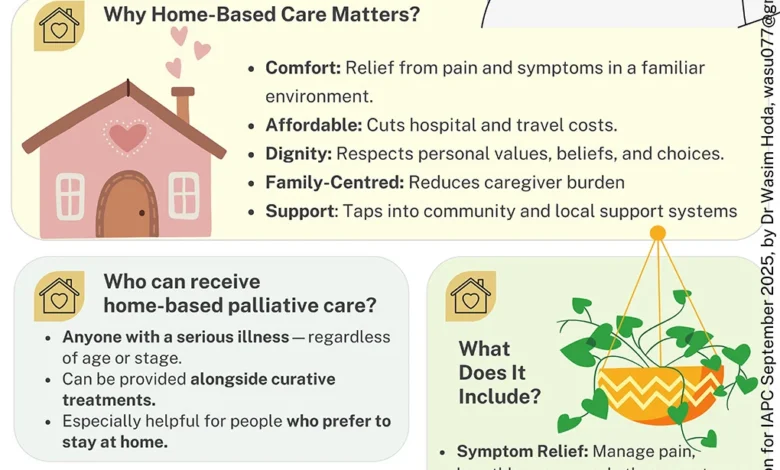
The Indian Association of Palliative Care (IAPC) has officially released the third installment of its comprehensive infographic series, focusing specifically on the critical domain of Palliative Care at Home. This latest educational resource, launched in September 2025, serves as a vital component of the organization’s broader “Care Continuum” initiative, which began in June 2025. By distilling complex medical and logistical frameworks into accessible visual formats, the IAPC aims to bridge the information gap for patients, families, and healthcare providers regarding the delivery of end-of-life and chronic symptom management within domestic settings.
The Evolution of the Care Continuum Series
The IAPC’s current initiative is rooted in the strategic necessity to standardize palliative care knowledge across India’s diverse healthcare landscape. The "Care Continuum" series was conceived to map the various stages of palliative intervention, ensuring that patients transition smoothly from hospital-based care to community or home-based support.
The first installment of this series established the foundational philosophy of integrated care, while the second focused on institutional requirements. This third release, Palliative Care at Home, addresses the growing global and national trend of "aging in place," which emphasizes the importance of providing high-quality medical, psychological, and social support in the comfort of a patient’s own residence. The development of this specific infographic was supported by Dr. Wasimul Hoda, a Fellow in Pain Medicine at the Department of Anaesthesia, Critical Care, and Pain Medicine at AIIMS, New Delhi, whose clinical expertise helped frame the essential pillars of home-based care.
The Significance of Home-Based Palliative Care
Palliative care is specialized medical care for people living with a serious illness. It focuses on providing relief from the symptoms and stress of the illness, with the goal of improving the quality of life for both the patient and their family. While palliative care is often associated with hospital settings, the shift toward home-based delivery is supported by significant clinical evidence.
Studies indicate that patients receiving palliative care at home often report higher levels of satisfaction, improved pain management, and a reduction in unnecessary hospital readmissions. For many, the home environment serves as a therapeutic space that reduces the trauma associated with clinical environments. However, the efficacy of home-based care depends heavily on the education of family caregivers—an area the IAPC seeks to address through this infographic. The document outlines the essential elements required to establish a functional home-care environment, including medication management, symptom monitoring, and the coordination of multidisciplinary support teams.
Chronology of the IAPC Educational Outreach
The IAPC’s commitment to education has been a multi-year effort, but 2025 has marked a distinct acceleration in their digital advocacy.
- January – May 2025: The IAPC conducted a series of regional workshops and webinars aimed at identifying the primary barriers to home-based palliative care, such as lack of skilled nursing availability and limited family knowledge.
- June 2025: Official launch of the "Care Continuum" infographic series. The inaugural piece established the roadmap for patient flow from tertiary centers to home environments.
- July 2025: The second infographic was released, detailing the role of specialized pain clinics and hospital-based palliative support teams.
- September 2025: The release of the third infographic, "Palliative Care at Home," specifically designed to empower families and provide a checklist for home-care safety and efficacy.
This timeline highlights a systematic approach to addressing the palliative care deficit in India, moving from the conceptual (the continuum) to the practical (home-based application).
Supporting Data and the Burden of Chronic Disease
The necessity for such educational initiatives is underscored by the rising burden of non-communicable diseases (NCDs) in India. According to data from the World Health Organization (WHO) and regional health assessments, the incidence of cancer, cardiovascular diseases, and chronic respiratory conditions is projected to increase significantly over the next two decades.

In India, a vast majority of patients with advanced illnesses prefer to spend their final days at home. However, the lack of standardized protocols often leads to "caregiver burnout" and suboptimal pain management. Data suggests that in regions where palliative care education is disseminated effectively, the reliance on emergency department visits for symptom management—such as breakthrough pain or breathlessness—drops by nearly 30%. By providing a visual guide that is easily shareable via social media and digital platforms, the IAPC is directly influencing the standard of care in the domestic sphere.
Expert Perspectives on the Initiative
The involvement of medical professionals from institutions like AIIMS, New Delhi, underscores the clinical rigor behind the IAPC’s visual materials. Experts argue that the "infographic model" is particularly effective in India, where healthcare literacy varies significantly.
"The transition from hospital to home is often the most vulnerable phase for a patient," notes a representative associated with palliative care advocacy. "Without clear, actionable information, families are left to navigate complex medication schedules and symptom monitoring alone. By synthesizing this into a clear, one-page document, the IAPC provides a ‘bedside manual’ that is invaluable during high-stress situations."
The initiative is not merely a document release but a call to action for the healthcare community to integrate these resources into their discharge planning. When a patient is discharged, healthcare providers are encouraged to share these IAPC infographics, ensuring that the continuum of care remains unbroken as the patient enters the home environment.
Broader Implications and Future Outlook
The IAPC’s initiative carries broader implications for India’s public health policy. As the government continues to discuss the integration of palliative care into the primary healthcare system, the role of non-governmental organizations (NGOs) and professional bodies like the IAPC becomes central.
- Standardization: These infographics serve as a de facto standard, providing consistent information that avoids the misinformation often found on unverified online forums.
- Resource Accessibility: By hosting these materials on their website, the IAPC ensures that high-quality, expert-vetted information is available free of charge to any family or caregiver with internet access.
- Community Engagement: The emphasis on sharing these materials through social media networks facilitates a grassroots movement where families can learn from one another, effectively crowdsourcing support while adhering to clinical best practices.
Looking ahead, the IAPC is expected to continue this series, likely addressing other facets of the care continuum, such as pediatric palliative care, psychological support for caregivers, and legal/ethical considerations in end-of-life care.
Conclusion: Accessing the Resources
The IAPC has made these resources publicly available via their official website at www.palliativecare.in. The organization encourages healthcare professionals, medical students, and the general public to utilize these assets. As the healthcare sector faces the twin challenges of an aging population and an increase in chronic disease, the shift toward empowering the home environment as a site of care is both logical and necessary.
Through the persistent efforts of organizations like the IAPC and the expertise of practitioners like Dr. Wasimul Hoda, the paradigm of palliative care is gradually shifting from an institutional focus to a community-centric model. This evolution ensures that patients not only receive the best possible medical treatment but also the dignity and comfort that can only be found in the familiar surroundings of their own homes. The "Palliative Care at Home" infographic is a vital tool in this ongoing transformation of the Indian healthcare landscape.