Grief, Heat, and Access by Design in Nora Kaye and Daisy Rosato’s “Sinner Supper Club”

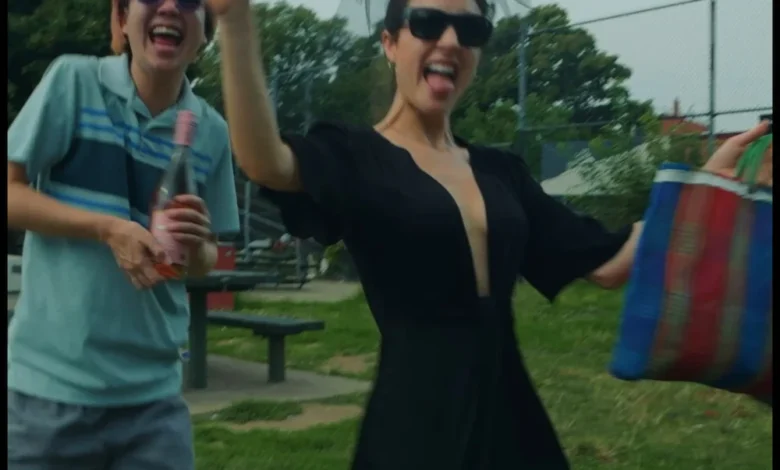
The narrative centers on Genevieve, known to her friends as “G,” who is preparing to leave New York City after being priced out of the housing market. To mark her departure, she organizes an “eviction funeral” for the Sinner Supper Club—a group of friends formerly centered around a shared passion for food. This gathering serves as the first time the group has reunited following the death of their friend Sophie, played by Disability Belongs® Entertainment Lab alum Sophie Sagan-Gutherz. As a record-breaking heat wave traps the friends in a cramped, half-packed apartment, the tension between them—exacerbated by a melting ice cream cake and a forgotten stove—shifts from interpersonal friction to something far more haunting.
A Chronology of Creative Development
The production of Sinner Supper Club was defined by a commitment to accessibility that prioritized the well-being of the cast and crew. Rather than adhering to the grueling, high-pressure standard of a 20-day feature shoot, the production was completed in just six days, divided into two blocks with a critical two-day rest period in between. This scheduling choice was not merely a logistical necessity but a deliberate creative strategy. By allowing for recovery time, the leadership ensured that the performances remained grounded in authenticity rather than fatigue.
The film was shot entirely on an iPhone, a choice that mirrors the intimacy of the narrative. The script was built through a process of improvisation, allowing the actors to bring their own experiences with neurodivergence and disability to the dialogue. This approach enabled the characters to navigate their environments with a naturalistic, non-performative version of disability. When a character mentions needing to avoid specific sensory inputs or requires an adjustment for a game, these moments are not framed as plot-driven "accommodations" but as organic expressions of care between friends.
Data-Driven Insights on Representation
The industry context for Sinner Supper Club is significant. According to recent research from the Geena Davis Institute, the landscape of disability representation in American television remains stark; between 2016 and 2023, only 21% of disabled characters in scripted series were portrayed by actors with the same or similar disabilities. This deficit highlights a systemic failure to integrate authentic lived experience into the storytelling process.
Furthermore, the myth that accessibility is prohibitively expensive continues to hinder production budgets. However, a study conducted by the Inevitable Foundation suggests that reasonable accommodations for disabled cast and crew members typically account for less than 3% of a project’s total budget. Sinner Supper Club provides a tangible case study that challenges the industry’s risk-aversion, demonstrating that inclusive practices—such as mindful scheduling and transparent communication regarding sensory needs—actually enhance the depth and emotional resonance of the final product.
Character Dynamics and Narrative Themes
The brilliance of the film’s approach lies in its refusal to utilize "diagnosis as spectacle." No character explicitly lists a medical history. Instead, their neurodivergence and disabilities manifest as texture. G’s anxiety is depicted through her rigid need for control in a chaotic kitchen environment. Jayae’s preference for open-air, group-centric spaces is treated as a baseline requirement for their comfort, which the group accepts without skepticism or pushback.
These characters are not "fixed," nor are they reduced to tropes of inspiration or tragedy. They are messy, often irritable, and deeply human. The horror element, which arrives in the final act, feels earned precisely because the audience has spent the preceding hour invested in the mundane reality of these individuals. When the film’s sound design dissolves into underwater audio to represent the weight of grief, it underscores the idea that trauma does not always yield a neat resolution or a didactic lesson.

The Impact of Disability-Led Leadership
Sophie Sagan-Gutherz, who served as a producer on the project, has emphasized that the authenticity of the film is a direct result of who held power behind the camera. "When you put filmmakers with disabilities in crew positions, especially leadership positions, the way the day is run, what is communicated in call sheets, and what is put on the crafty table is done with accessibility in mind," Sagan-Gutherz stated.
This shift in leadership impacts every layer of the film. The inclusion of open captions—which utilize tone tags like "(resigned)" or "[awkward silence]"—transforms accessibility features into a deliberate aesthetic choice. By integrating these elements, the directors have ensured that the viewing experience is unified, offering the same level of narrative context to all audience members while simultaneously providing a template for how modern films can be inclusive by design.
Broader Industry Implications
The success of Sinner Supper Club suggests that the future of independent film lies in decentralized, inclusive creative models. By prioritizing the health of the crew and the authenticity of the performance over the rigid demands of traditional production schedules, the team behind Sinner Supper Club has achieved a level of emotional depth that is rarely seen in mainstream horror or comedy.
The film is not simply a piece of content; it is a proof-of-concept. It demonstrates that the "cost" of inclusivity is, in reality, an investment in quality. As the industry continues to grapple with calls for more diverse representation, this film offers a blueprint for how to move beyond tokenism. It suggests that if creators want to capture the nuances of the human experience—particularly for queer, trans, and neurodivergent communities—they must change the conditions under which those stories are told.
Distribution and Reception
Following its successful festival run, including a screening at NewFest in New York, the film has secured a distribution deal with Factory 25. The company plans to initiate a theatrical rollout in the spring of 2027, with subsequent plans for digital and physical media releases. The anticipation surrounding the film’s wider release speaks to a growing appetite for stories that treat disability as a natural component of life rather than a plot device.
For audiences who have navigated the disintegration of a friend group, or for those who find the traditional tropes of horror stale, Sinner Supper Club offers a necessary evolution. It is a film that acknowledges the difficulty of holding onto the past while providing a clear-eyed look at the value of what remains. By centering the needs of its creators and the reality of its characters, the production team has succeeded in creating a work that is as intellectually challenging as it is emotionally accessible.
In summary, Sinner Supper Club is a testament to the fact that accessible filmmaking is not a compromise of artistic vision. Through its deliberate pacing, focus on interpersonal care, and commitment to authentic representation, the film has set a high bar for independent cinema. As it prepares for its theatrical release, the project stands as a reminder that the most profound stories are often found in the quietest, most honest corners of our lives, and that those stories are best told when everyone involved is given the space to thrive.