Five-Year-Old Michigan Resident Dahlia Swanson Makes History as the Inaugural Little Miss Wheelchair America

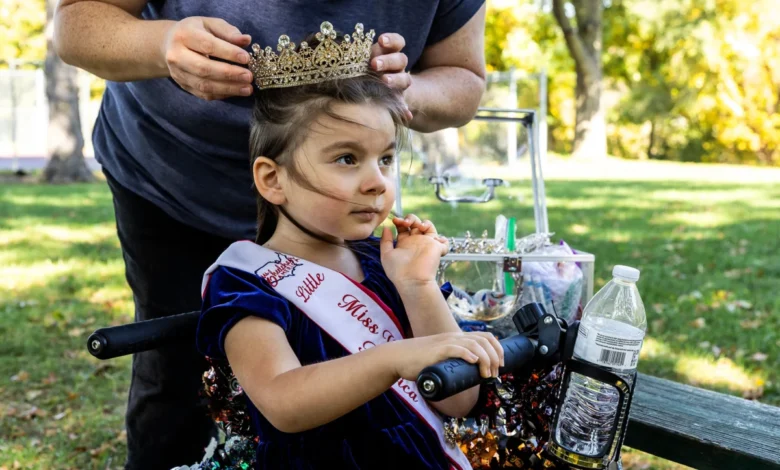
KENT COUNTY, Mich. — In an era where advocacy often begins in adulthood, five-year-old Dahlia Swanson of Alto, Michigan, is reshaping perceptions of disability representation at an unprecedented age. Diagnosed with cerebral palsy at two years old, Swanson has spent a significant portion of her young life navigating complex medical interventions, intensive physical rehabilitation, and public advocacy. Her journey culminated in late 2025 when she was selected as the inaugural Little Miss Wheelchair America for the 2026–27 term, establishing her as the first child to hold the national title.
Swanson’s public platform, themed "Play! Learn! Grow!", centers on promoting accessibility, adaptive sports, and inclusive fashion. Despite her tender age, her resume already includes major milestones: undergoing complex spinal neurosurgery, walking out of a children’s hospital against initial medical projections, traveling across the United States to meet civic leaders, and walking the runway at New York Fashion Week. Her story highlights a broader cultural shift toward early inclusivity, providing a case study in how adaptive infrastructure, pediatric rehabilitation, and youth-focused advocacy intersect in modern American society.
Medical Background and Early Resilience
Dahlia Swanson’s path to national advocacy is rooted in profound physical challenges. Diagnosed at age two with cerebral palsy—a neurological disorder caused by abnormal brain development or damage to the developing brain that affects muscle control and movement—Swanson experienced significant mobility restrictions affecting the lower half of her body and her left arm.
The trajectory of her mobility shifted dramatically just before her fourth birthday. In a high-risk procedure performed at Helen DeVos Children’s Hospital in Grand Rapids, Michigan, pediatric neurosurgeons executed a selective dorsal rhizotomy (SDR). This specialized neurosurgical procedure involves identifying and severing specific sensory nerve fibers in the lower spinal cord that send abnormal signals to the muscles, thereby permanently reducing severe muscle spasticity in the lower extremities.
While SDR is an established intervention for managing spastic diplegia in children with cerebral palsy, it demands rigorous postoperative rehabilitation. Following the surgery, Swanson endured a grueling six-week inpatient rehabilitation program at the Mary Free Bed Rehabilitation Hospital. Her parents, Brandon Swanson, 32, and Chelsey Lovett, 34, noted that their daughter essentially had to restart her physical development from square one, relearning fundamental motor patterns such as rolling, crawling, and weight-bearing.
Medical teams initially advised the family to anticipate a prolonged period during which Swanson would rely exclusively on a wheelchair while rebuilding her strength. However, the young patient maintained a different perspective. According to her mother, Swanson insisted she would walk out of the medical facility upon discharge. While medical staff cautioned the family against setting unrealistic expectations that could lead to psychological disappointment, Swanson defied the projections. She walked out of the hospital under her own volition, supported by walking aids.
Presently, Swanson utilizes a pediatric walker for ambulation and has begun taking unassisted steps. Her physical recovery is complemented by continuous participation in adaptive athletics, including adaptive skateboarding, martial arts, and sled hockey with the Grand Rapids Sled Wings, a regional nonprofit organization providing ice hockey opportunities for individuals with physical impairments.
Historical Appointment: The Launch of Little Miss Wheelchair America
The establishment of the Little Miss Wheelchair America program represents a significant expansion of the legacy Ms. Wheelchair America organization, which has long provided a platform for adult women with disabilities to advocate for legislative and social accessibility.
Mary Zendejas, president of Ms. Wheelchair America, instituted the youth division to foster self-advocacy and leadership skills among young girls with physical disabilities. Zendejas encountered Swanson during the national selection process and noted that the then-four-year-old’s demeanor, charisma, and resilience made her an exceptional candidate for the inaugural crown.
"She was a ray of sunshine who brought joy to everyone at our national competition," Zendejas stated, reflecting on Swanson’s active participation throughout the event. "She was the first to arrive at activities and the last to leave, eager to participate in everything. Everyone wanted to spend time with her. Her energy was undeniable, and her ability to bring a room together was remarkable."
Officially crowned Little Miss Wheelchair Michigan in May 2025 before securing the national title later that year, Swanson assumed a demanding public relations and advocacy schedule. Her official duties have required travel to major metropolitan areas, including New York City, Chicago, Los Angeles, and various municipalities across New Jersey, Pennsylvania, and her home state of Michigan. In these forums, she interacts with local officials, disability rights advocates, and community leaders to discuss the practical realities of architectural and social accessibility.
Expanding the Runway: Inclusion in the Fashion Industry
Among her most notable public appearances occurred in September 2025, when Swanson participated as a runway model during New York Fashion Week. Described by her family as being the only individual with a visible disability in her specific showcase, Swanson utilized the platform to draw attention to the lack of commercially available adaptive clothing—apparel designed with specialized fasteners, closures, and cuts to accommodate medical devices, braces, and varying body positions.
The fashion industry has historically struggled with comprehensive representation for individuals with physical disabilities, though recent years have seen incremental shifts toward adaptive lines by major retailers. Swanson’s presence on a high-profile runway underscores the commercial and cultural demand for broader inclusivity in mainstream design.
"It means so much, because you can do things with a disability, even like fashion, anything, if you put your heart and hard work into it," Swanson remarked regarding her experience in the fashion capital.
Broader Implications: Pediatric Advocacy and Family Support
Sociological and public health experts note that early-childhood disability advocacy plays a dual role: it empowers the affected child while simultaneously educating the public and connecting isolated families with vital support systems.
For Swanson’s parents, the primary objective of her national platform is demystifying disability for the general public and demonstrating that children with mobility impairments can lead active, fulfilling childhoods. Brandon Swanson emphasized that public exposure to adaptive sports and specialized programming helps bridge informational gaps for families who may be unaware of local resources.
"They still can be a kid," Brandon Swanson said. "They still can go out and experience all that they want to. It may not be the same as some of their friends or some of their family, but if they want to, they still can have that childhood."
Public health policy analysts observe that initiatives highlighting adaptive sports and inclusive education contribute to long-term improvements in community infrastructure. When children with disabilities are visible in public spaces, schools, and cultural events, municipal planners and commercial enterprises face increased pressure to comply with or exceed the baseline accessibility standards mandated by legislation such as the Americans with Disabilities Act (ADA).
As Dahlia Swanson continues her reign as Little Miss Wheelchair America through 2027, her schedule remains filled with public speaking engagements, athletic training, and community outreach. By combining personal resilience with national visibility, the young advocate continues to challenge institutional and societal boundaries, proving that leadership and representation transcend chronological age.