Federal Judge Intervenes as Millions in U.S. Education Research and Special Education Funds Face Imminent Expiration Deadline

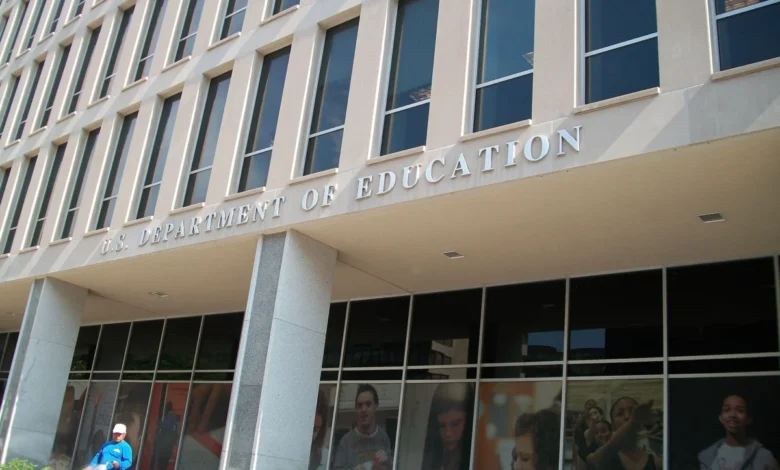
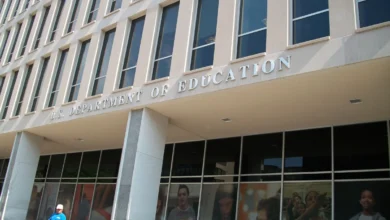
Federal judicial oversight has officially entered the ongoing battle over federal education funding, as a U.S. District Court judge steps in to monitor millions of dollars in research and evaluation money managed by the U.S. Department of Education. With the looming expiration of vital fiscal resources at the end of September, advocates, educators, and legal experts are closely watching whether crucial grants will be distributed or allowed to lapse permanently.
U.S. District Judge Allison D. Burroughs has formally ordered the Department of Education to submit a status update regarding government education research funds. The judicial intervention comes in response to mounting concerns from advocacy groups and educational associations that massive sums designated for statistical analysis, program evaluation, and specialized student research remain unallocated as the fiscal clock winds down.
The Scope of the Funding Crisis and the Judicial Response
At the heart of the legal dispute is the Institute of Education Sciences (IES), the independent statistics, research, and evaluation arm of the U.S. Department of Education. According to judicial assessments, approximately $180 million in unallocated IES funding remained on the table as of mid-September, with the entire sum scheduled to expire permanently at the end of the federal fiscal year on September 30. While the exact portion of this total explicitly designated for special education research has been a point of contention and opacity, the broader uncertainty has triggered alarm bells across the educational landscape.
Judge Burroughs opted for a measured approach initially, citing formal assurances provided by the Department of Education. Representatives for the agency maintained that they fully intend to obligate the disputed funds prior to the statutory deadline. However, the court has made it clear that oversight will remain rigorous. Judge Burroughs explicitly noted that if the unfolding timeline suggests the agency misled the court or if funds remain unallocated as September 30 approaches, the judiciary stands ready to reconsider the situation and potentially issue binding injunctive relief to halt the expiration.
Despite the department’s assurances in a courtroom setting, the practical reality on the ground remains deeply murky for researchers, institutions, and families who rely on these federal allocations. Stakeholders argue that official reassurances have not translated into transparent, verifiable distributions.
Chronology and Escalation of the Legal Conflict
The trajectory toward federal court intervention began months earlier, marked by alarming discoveries regarding the pace of federal spending.
- Spring: Investigative reports revealed a profound lag in federal spending, showing that out of a $77 million government budget earmarked specifically for special education research and evaluation programs, only $11 million had been formally committed or spoken for.
- Late Spring: Alarmed by the sluggish pace of awards and the looming threat of returned funds, a coalition comprising the National Center for Learning Disabilities (NCLD), the Massachusetts Teachers Association, and other key education stakeholders filed a federal lawsuit against the Department of Education to prevent the funds from lapsing.
- Summer: Legal arguments and court filings intensified. Plaintiffs pointed to a distinct lack of transparency from federal agencies, while education experts noted an alarming slowdown in grant processing times.
- September: With the fiscal year deadline rapidly approaching, Judge Burroughs ordered the Department of Education to provide a comprehensive status report by Monday, ramping up pressure on federal officials to justify their timeline for dispersing the remaining capital.
Academic and Advocacy Perspectives on the Ground
The impact of the funding bottleneck is already being felt within academic and institutional settings. Meghan Burke, a professor of special education at Vanderbilt University, highlighted a noticeable deceleration in grant awards distributed through the National Center for Special Education Research (NCSER), which operates as the specialized funding wing of the IES.
According to Professor Burke, academic observers have tracked only a handful of new awards originating from NCSER this year, with all of them commencing in September. This volume, she emphasizes, falls significantly below the standard benchmarks of a typical fiscal year, leaving numerous research pipelines starved of predictable resources.
Jacqueline Rodriguez, Chief Executive Officer of the National Center for Learning Disabilities and a central figure in the ongoing litigation, voiced cautious optimism mixed with persistent frustration regarding the lack of public data. While Rodriguez acknowledges that the government has issued formal assurances and that some requests for proposals have belatedly been sent out—actions she attributes directly to the pressure exerted by the lawsuit—she stresses that accountability remains compromised by a lack of transparent accounting.
"We don’t have a current number for exactly how much special education research funding remains unspent because the government has not publicly updated those figures," Rodriguez stated.
The Broader Impact and Implications for Students with Disabilities
The implications of lapsing federal research dollars extend far beyond bureaucratic accounting, touching the daily lives of millions of students, educators, and families navigating the educational system.
Special education research acts as the empirical backbone for policy decisions, classroom methodologies, and resource allocation. Without sustained financial backing for rigorous scientific inquiry, schools risk losing visibility into the specific challenges confronting students with disabilities.
"This funding supports research that gives us a much clearer picture of what students with disabilities are experiencing in schools and where they are not getting the support they need," Rodriguez explained. "It also supports work that benefits students in general education, as well as technical assistance that helps families understand and participate in the special education process."
Without this foundational data, educational leaders risk making policy and instructional decisions in the dark, unable to measure whether institutions are adequately serving vulnerable student populations or closing persistent achievement gaps.
Official Responses and the Department of Education’s Stance
When pressed for specific details regarding the exact volume of unallocated special education research funds remaining in its coffers, the U.S. Department of Education declined to provide specific numerical breakdowns. However, agency representatives defended their operational strategy moving forward.
Through an official statement, an agency spokesperson asserted, "IES intends to use its remaining FY25 funds to fully fund existing research grants, as well as to support other high-quality statistical and evaluation activities in service of its statutory obligations."
Despite this official stance, critics and legal teams remain skeptical, noting that statements of intent do not replace the concrete accountability demanded by federal courts and institutional stakeholders.
A Wider Pattern of Judicial Scrutiny on Educational Funding
The current dispute over IES research dollars does not occur in a vacuum. It forms part of a broader, increasingly contentious pattern of legal battles between federal authorities, state coalitions, and education advocates regarding the administration and disbursement of federal educational mandates.
In a separate legal proceeding, a different federal judge issued a ruling against the Department of Education in a lawsuit brought by a coalition of states. That case centered on what the court determined were improper cancellations of hundreds of millions of dollars in federal grants designated for educator training programs—including targeted funding aimed at preparing specialized teachers to work with students with disabilities.
Stephanie Smith Lee, co-director of policy and advocacy at the National Down Syndrome Congress and a former director of the Department of Education’s Office of Special Education Programs during the George W. Bush administration, praised that judicial outcome.
"The ruling is a victory for students, teachers and schools and common sense as our nation’s schools struggle with teacher training, hiring and retention," Smith Lee remarked.
However, legal battles over specialized educator funding remain far from resolved. Another active lawsuit brought by state coalitions concerning Individuals with Disabilities Education Act (IDEA) grants—specifically focusing on funding for special education teacher training—remains undecided in the federal court system, leaving educational institutions to navigate a volatile and uncertain financial climate.
As Judge Burroughs’ Monday deadline approaches, all eyes remain fixed on the Department of Education’s forthcoming disclosures. Whether the agency can successfully disburse the remaining millions before the September 30 expiration date will determine the immediate future of specialized educational research in the United States, setting a critical precedent for federal accountability and the protection of vulnerable student populations.
Related posts: