Accessible Outdoor Adventure: A Nationwide Guide to Free All-Terrain Track Chair Programs

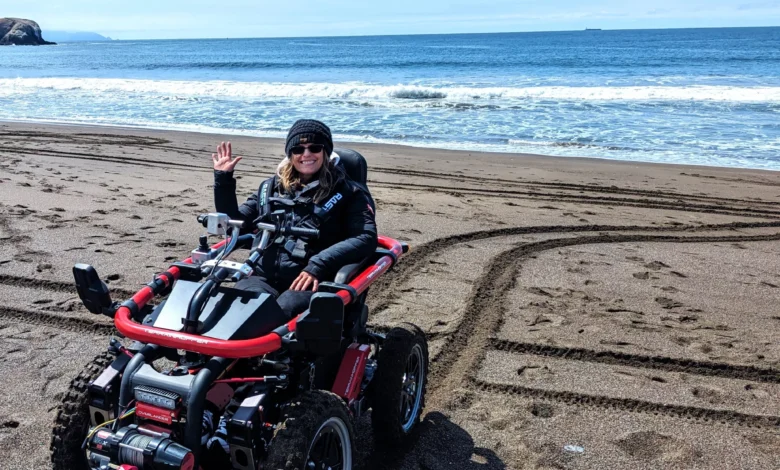
The landscape of outdoor recreation in the United States is undergoing a significant transformation, shifting from a model of exclusive accessibility to one of inclusive participation for individuals with limited mobility. For decades, the rugged terrain of state and national parks served as a barrier for wheelchair users, effectively limiting access to paved paths and boardwalks. However, a burgeoning movement of conservation agencies and nonprofit organizations is now providing all-terrain track chairs—specialized, battery-powered vehicles capable of navigating sand, snow, mud, and uneven forest trails—at no cost to the public. This initiative is fundamentally changing how millions of Americans experience the wilderness, turning what was once a spectator activity into a participatory one.
The Evolution of Adaptive Outdoor Access
The integration of all-terrain wheelchairs into public lands began as a localized effort, gaining momentum in 2016 when Colorado’s Staunton State Park launched its pioneering track chair program. This initiative served as a proof-of-concept, demonstrating that rugged trails could be made accessible without compromising the environmental integrity of the parks. Over the last decade, the program has scaled from a solitary experimental site into a nationwide network of hundreds of access points.
The expansion of these programs has been driven by a combination of technological advancements in mobility equipment and a cultural shift within the National Park Service (NPS) and state-level departments of natural resources. By 2026, the movement has matured into a sophisticated logistics operation, with states like Indiana and Minnesota committing to large-scale deployments that ensure nearly every regional park system offers some form of adaptive equipment.
Regional Breakdown and Program Logistics
While the goal of universal access remains the primary objective, the logistical execution varies by jurisdiction. Understanding these nuances is critical for planning, as the availability of equipment is often subject to strict reservation protocols and specific physical requirements.
In the Midwest, Minnesota leads the charge with an extensive program across 13 state parks. The Minnesota Department of Natural Resources (DNR) has streamlined the process, requiring only a signed waiver upon arrival to access chairs that feature a four-to-six-hour battery range. This efficiency stands in contrast to the more rigorous requirements in Georgia. Under the "All-Terrain Georgia" initiative—a partnership between the state and the Aimee Copeland Foundation—users must undergo a seven-day approval process and participate in a virtual training session. Furthermore, the Georgia program mandates that a companion, or "buddy," over the age of 18 accompany the user, highlighting the safety-first approach taken by organizations that emphasize guided rather than solitary wilderness exploration.
In the Northeast, Connecticut’s state parks have implemented a time-restricted model, allowing three-hour blocks of use to maximize equipment turnover. Their fleet includes both tracked vehicles for rough terrain and wheel-based chairs for flatter, more stable surfaces. Meanwhile, in the Western states, programs like those in Montana and Kansas prioritize regional deployment. Kansas, through the Adaptive Sportsmen of Kansas, operates on a first-come, first-served basis, requiring users to possess the upper-body dexterity to operate a side-mounted joystick.
Economic and Environmental Implications
The economic impact of these programs is twofold: they remove the financial barrier to entry, as high-end track chairs can cost upwards of $15,000, and they stimulate local tourism. By making parks accessible, agencies are opening their gates to a demographic that was previously unable to contribute to the local tourism economy.
Environmental agencies have also conducted internal reviews to ensure that the deployment of these heavy chairs does not accelerate trail erosion. Data from the Colorado Parks and Wildlife department suggests that when used on designated paths, the impact of a track chair is comparable to that of standard mountain bike traffic. Consequently, most programs limit the use of these chairs to established trail networks to balance accessibility with conservation mandates.
National Park Service (NPS) Policy and Local Autonomy
Unlike state-managed programs, the National Park Service does not currently operate a centralized, nationwide track chair mandate. Instead, accessibility is managed at the unit level. Iconic locations, including Rocky Mountain National Park and the Redwoods, have independently secured funding to acquire track chairs. The decentralized nature of this system means that visitors cannot rely on a universal policy when traveling across state lines. Instead, the burden falls on the visitor to consult the NPS accessibility portal for each specific unit, where amenities—ranging from track chairs to specialized beach-access equipment—are listed on a park-by-park basis.
The Road Ahead: Infrastructure and Technology
The trajectory of this movement is pointing toward increased automation and widespread availability. The 2026 deployment in Indiana, funded by a significant grant from the Lilly Endowment, serves as a model for future infrastructure projects. By integrating 45 new electric track chairs into their state park system, Indiana is effectively removing the "lottery" element of accessibility, ensuring that equipment is geographically dispersed rather than concentrated in a few flagship locations.
However, challenges remain. Battery life, weight limits, and transfer logistics continue to be the primary constraints for users. Most programs explicitly state that staff are not permitted to assist with physical transfers, meaning that users must either be independent or travel with a companion who is capable of assisting with the transition from a personal wheelchair to the track chair. For many, this necessitates a degree of planning that able-bodied hikers often overlook, including the assessment of transfer heights and the availability of specialized equipment like slide boards or slings.
Strategic Planning for Prospective Users
For individuals seeking to utilize these programs, experts recommend a three-step approach:
- Verification of Equipment Type: Not all "all-terrain" chairs are equal. Users should clarify whether the site offers a tracked vehicle—best for sand, mud, and deep snow—or an all-terrain manual chair, which requires significantly more physical effort.
- Advanced Reservation Lead Times: While some sites offer spontaneous access, the majority of high-demand locations require booking several weeks in advance, especially during peak spring and autumn seasons.
- Site-Specific Waivers: Many programs require liability waivers that must be signed in the presence of park staff. Failing to review these documents prior to arrival can lead to unnecessary delays or, in worst-case scenarios, the inability to check out the equipment.
Summary of Impact
The integration of all-terrain chairs into the public domain represents a significant victory for disability rights and inclusive recreation. By formalizing these programs, states are acknowledging that the right to experience the natural world is not contingent upon physical ability. As these programs continue to mature, the focus is shifting from simply providing the chairs to creating comprehensive "accessibility ecosystems"—networks of trails, parking, and equipment that allow for a seamless, dignified outdoor experience.
The data confirms that demand is high. With waitlists forming for weekend slots in parks from Pennsylvania to California, it is evident that the public has been waiting for these barriers to be removed. As funding models evolve and technology continues to lower the cost of entry, the vision of a truly accessible national outdoor network is closer to reality than ever before. For the millions of Americans with mobility needs, the wilderness is no longer a restricted zone, but a frontier waiting to be explored.