The Psychology of the Fan: Why We Claim Victory and Distance Ourselves from Defeat

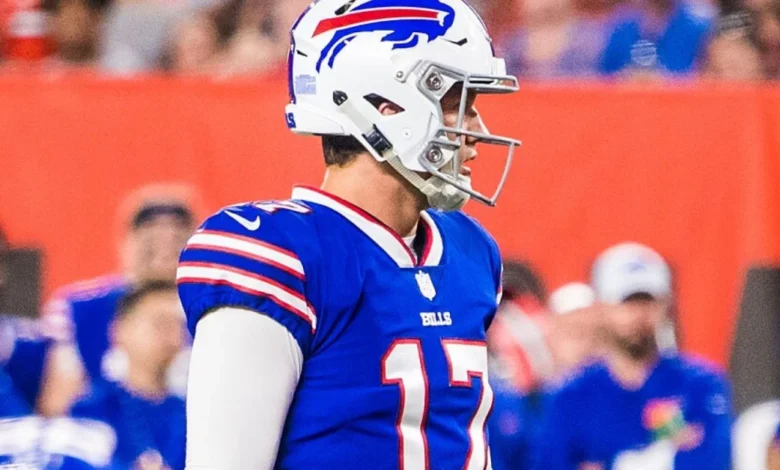
In the modern landscape of professional sports, the phenomenon of fan identity has transcended mere spectatorship, evolving into a sophisticated psychological construct that dictates how individuals perceive their own successes and failures. Whether it is a Buffalo Bills fan donning a Josh Allen jersey at a supermarket or a casual observer cheering from a local sports bar, the emotional investment in a team’s performance is profound. This deep-seated connection, characterized by the frequent use of the pronoun "we" during winning streaks and "they" during periods of decline, serves as a window into the complex interplay between individual self-esteem and group affiliation.
The Phenomenon of BIRGing
In 1976, social psychologist Robert B. Cialdini and his colleagues conducted a seminal study that defined a psychological behavior now known as Basking in Reflected Glory, or BIRGing. The study observed how university students were more likely to wear school-branded apparel following a victory by the university’s football team. Cialdini’s research suggested that by aligning themselves with a successful entity, individuals are able to bolster their own public image and self-worth.
The mechanism is largely subconscious. While the fan has no direct physical input into the game—they do not throw the touchdown passes, execute the defensive blitzes, or endure the physical toll of the "tush-push"—the psychological benefit of identifying with a winner is measurable. When a team succeeds, the fan experiences a surge of collective pride. This is often reinforced by the physiological response known as mirror neurons, where the spectator’s brain simulates the intensity and emotion of the players on the field, creating a shared experience that feels visceral and personal.
Chronology of Fandom and Emotional Investment
The evolution of fan loyalty can be traced through the history of professional leagues like the NFL. The Buffalo Bills provide a quintessential case study in this longitudinal engagement. Between 1990 and 1993, the Bills reached four consecutive Super Bowls, losing each one. Despite these devastating losses, the fanbase remained remarkably loyal, cementing a regional identity defined by resilience.
Contrast this with the "17-year drought" that followed for the franchise, during which the team failed to reach the playoffs. While many fanbases in cities like Los Angeles or Phoenix might see attendance and merchandise sales plummet during such a period, the Bills’ community maintained a high level of engagement. Sociologists note that this type of long-term commitment creates a form of communitas—a term coined by anthropologist Victor Turner and expanded upon by play theorist Thomas Henricks. Communitas refers to an intense community spirit, a feeling of social equality, and a sense of belonging that transcends the outcome of any single game.
Data-Driven Perspectives on Fan Behavior
Market research into sports consumption corroborates the psychological findings of Cialdini. Data from licensed sports merchandise providers frequently show a "victory spike" in sales. For instance, following a championship win or a standout regular-season performance by a star quarterback, sales of jerseys and team-themed paraphernalia can increase by as much as 30% to 50% within the local demographic.
Furthermore, attendance metrics often reflect the inverse of BIRGing: CORFing, or Cutting Off Reflected Failure. When a team consistently performs below a .500 winning percentage, attendance figures in "fair-weather" markets typically drop by an average of 15% to 25% over a three-season span. In contrast, markets with high historical loyalty, such as Green Bay or Pittsburgh, show a statistical resilience where attendance remains near capacity regardless of the team’s immediate success. This indicates that for some, the fan identity is "event-driven," while for others, it is "institution-driven."
The Implications of Identity Projection
The act of personalizing a team’s success has broader societal implications. During the post-game analysis on Monday mornings, the shift in language—moving from "they played well" to "we looked good on offense"—is more than a linguistic habit; it is a psychological reclamation of victory. Psychologists argue that this serves as a buffer against personal insecurity. If an individual feels that their life or professional circumstances are currently stagnant, the success of a local sports team acts as a surrogate for personal achievement.
However, the flip side of this projection is the intense shame or frustration felt during a loss. When fans switch to "they," it is a defense mechanism designed to distance the individual from the negative association of failure. By externalizing the defeat, the fan protects their own self-esteem from the perceived stigma of being associated with a "loser."
Community and Non-Partisan Spirit
Despite the potential for negative emotional volatility, the existence of sports fanbases provides significant social utility. In an era often characterized by political polarization and social isolation, sports serve as a "non-partisan circle of spirit." The shared devotion to a team allows individuals from diverse socioeconomic backgrounds to convene under a single banner.
This is particularly evident in family dynamics. The modern digital age allows for "far-flung" families to maintain ties through the shared experience of a game. Whether it is FaceTime commentary at halftime or a group chat active during a critical third-down play, the game provides a structured context for social bonding that might otherwise be difficult to maintain in a mobile, globalized society.
Resilience and the Lessons of Competition
Sports psychologists often point to the "object lessons" provided by high-stakes competition. For the fan, the experience of watching a team navigate the volatility of a season—the injuries, the penalties, the miraculous comebacks—mirrors the challenges of daily life. The ability to "hang in there," as expressed by the "Go Bills" mantra during difficult seasons, represents a form of psychological resilience.
When a team loses, the fan learns to process disappointment within a safe, controlled environment. When a team wins, they learn the value of perseverance. This emotional training, while not as rigorous as that of the athletes on the field, contributes to the emotional health of the community.
Future Outlook for Sports Fandom
As professional sports continue to integrate technology—such as real-time betting, augmented reality experiences in stadiums, and global streaming access—the distance between the fan and the athlete will continue to blur. The psychological mechanisms of BIRGing and CORFing are likely to become even more pronounced. With social media providing an immediate, global stage for "publishing" one’s pride or disappointment, the stakes for self-identification have never been higher.
Experts suggest that while the intensity of these feelings is unlikely to wane, the sustainability of a community depends on the balance between event-driven excitement and long-term institutional loyalty. As the sports industry evolves, the challenge for organizations will be to cultivate that sense of communitas that survives both the championship parades and the long, winless winters. Ultimately, the jersey on the back is more than just fabric; it is a declaration of where an individual finds their place in a world that is often fragmented, offering a temporary, yet powerful, sense of home.
Related posts: