Bridging the Gap Between Autonomy and Assistance: Insights from the Independent Living Institute Seminar on Supported Decision-Making

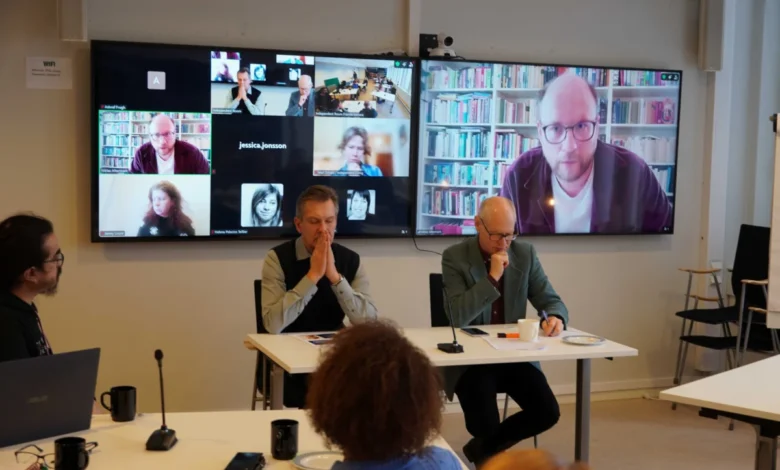
The Independent Living Institute (ILI) recently hosted a landmark educational seminar on January 13, 2026, centering on the fundamental human right to self-determination and the practical implementation of supported decision-making. Organized under the umbrella of ILI’s ongoing project, "Mitt liv mitt val" (My Life, My Choice), the event brought together leading academics, legal experts, and disability rights advocates to dissect how Sweden can transition from substitute decision-making models—such as legal guardianship—toward empowering frameworks that respect the autonomy of individuals with intellectual and cognitive disabilities.
As international human rights standards increasingly demand an end to paternalistic practices, this seminar served as both a critical forum for sharing current research and a strategic workshop for adapting international models of support to fit the Swedish welfare landscape.
Background and Context: Moving Beyond Substitute Decision-Making
For decades, individuals with significant cognitive, intellectual, or psychosocial disabilities have frequently faced systemic barriers in exercising their legal capacity. Traditional models of welfare and legal intervention have heavily relied on substitute decision-making, where guardians or administrative authorities make choices on behalf of an individual. However, this approach directly conflicts with Article 12 of the United Nations Convention on the Rights of Persons with Disabilities (CRPD), which asserts that persons with disabilities enjoy legal capacity on an equal basis with others in all aspects of life.
The "Mitt liv mitt val" project was established to address this exact paradigm shift. By drawing inspiration from international pioneers in supported decision-making—specifically models developed in Australia, Canada, and Norway—the project aims to design, test, and evaluate practical structures that enable individuals to make their own choices. Central to this initiative is the concept of a "decision-making support group," a methodology where a network of approximately five trusted individuals, including personal assistants, family members, and friends, gathers around a person to help them navigate complex choices, weigh alternatives, and articulate their true preferences.
International Frameworks and Legal Definitions
Mari Siilsalu, a project jurist for "Mitt liv mitt val," opened the academic discourse by drawing a crucial legal distinction between "support for decision-making" and genuine "supported decision-making" as outlined in the CRPD’s General Comment No. 1.
Siilsalu emphasized that true supported decision-making must center on the will and preferences of the individual rather than their perceived "best interests," a subjective standard often used by paternalistic actors to override personal autonomy. Sweden’s legal and social systems, she argued, must actively dismantle reliance on institutional guardianship and replace it with formal, rights-based decision-making tools. These tools must guarantee equal access to decision-making processes without artificially raising the standard of competence demanded of disabled individuals.
To achieve this, the project stresses that access to understandable information, time for deliberation, and tailored analytical assistance are prerequisites for ensuring that every person can make informed choices regarding their housing, healthcare, finances, and personal lives.
Academic Insights: Parenting with Cognitive Disabilities
The seminar featured prominent presentations from Swedish academic researchers who highlighted the real-world friction between theoretical autonomy and practical execution.
Thomas Strandberg, professor of social work at Örebro University, presented findings from his extensive research career, focusing in particular on the PYC (Parenting Young Children) project. This research initiative investigates the efficacy of supported decision-making for parents with intellectual disabilities or cognitive difficulties—a demographic that has historically faced disproportionate scrutiny from child welfare authorities and a lack of tailored support.
Strandberg noted that parents with cognitive impairments are frequently deemed incompetent based on standardized parenting metrics that fail to account for their actual capabilities when proper accommodations are provided. Through the PYC project, researchers have evaluated parental capacity and child well-being using structured questionnaires, qualitative interviews with children, and visual support tools such as daily activity circles.
Preliminary results from the project indicate positive behavioral changes and a measurable increase in parental competence when appropriate, non-judgmental assistance is made available under the Swedish Social Services Act (SoL). However, Strandberg’s presentation also sparked rigorous debate concerning the delicate balance between safeguarding child welfare and respecting parental autonomy. Questions were raised regarding how social workers formulate intervention goals, the inherent power imbalance of the child protection system, and the difficult threshold at which state intervention—such as the apprehension of a child—becomes legally and ethically necessary.
The Reality of Group Homes and Institutional Power Dynamics
Shifting the lens from parental rights to residential care, Niklas Altermark, associate professor of political science at Lund University, delivered a piercing critique of power dynamics within Swedish group homes (gruppbostäder) and institutional settings.
Altermark’s research explores how power is systematically exercised over individuals with non-normative functional abilities and chronic illness. He underscored a persistent and troubling gap between the progressive values enshrined in Swedish disability legislation and the lived reality inside residential facilities. In many cases, frontline care staff unconsciously view residents through a lens of presumed incapacity, routinely stripping them of everyday choices under the guise of safety, efficiency, or institutional routine.
Furthermore, Altermark connected these daily micro-level deprivations of autonomy to macro-level economic trends, discussing how ongoing austerity measures within the Swedish welfare state erode the quality of life and self-image of marginalized groups. The subsequent discussion panel interrogated the fine line between necessary physical assistance and overreaching paternalism. Participants emphasized that because decisions are inherently social acts influenced by surrounding power structures, creating genuine autonomy requires transforming the organizational culture of care providers to actively foster participation rather than compliance.
Moderated Dialogue and the Path Forward
Emil Erdtman, managing director of the Independent Living Institute and moderator of the seminar, synthesized the day’s extensive discussions by reiterating the profound complexity involved in operationalizing supported decision-making for individuals with significant intellectual disabilities.
Erdtman noted that while international models from nations like Australia offer valuable blueprints, they cannot be copy-pasted directly into the Swedish context. Instead, they must be rigorously adapted to mesh with Sweden’s specific municipal welfare structures, legal traditions, and labor market regulations.
As the "Mitt liv mitt val" project moves forward through 2026, the insights generated from this educational seminar will directly inform the ongoing pilot studies and study circles. By bridging the divide between academic research, legal theory, and grassroots activism, the Independent Living Institute continues to spearhead the structural evolution necessary to transform the abstract right of self-determination into an enforceable, everyday reality for people with disabilities across Sweden.