Breaking Barriers in the Heartland: Former Paralympian Josh Turek Wins Historic U.S. Senate Election in Iowa

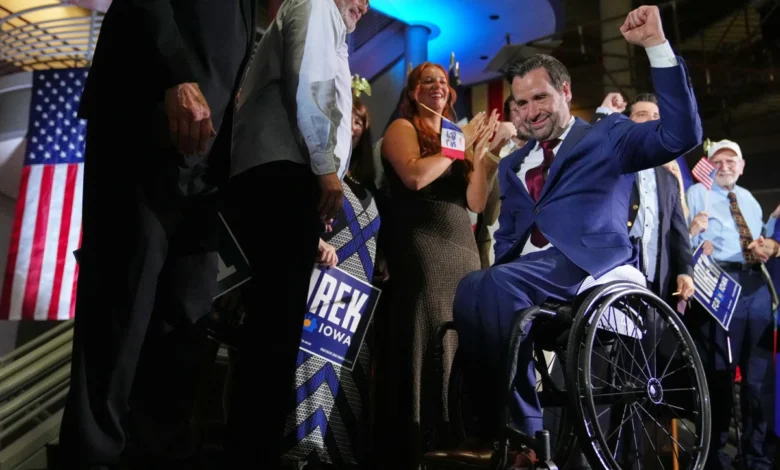
The political landscape of the American Midwest underwent a significant realignment following the conclusion of a fiercely contested United States Senate race in Iowa. Josh Turek, a Democratic state representative, former Paralympic athlete, and advocate for disability rights, secured a historic victory by defeating Republican Representative Ashley Hinson. Turek’s triumph not only flips a crucial Senate seat but also marks a milestone in American political representation, as he becomes one of the few individuals with a visible physical disability to serve in the upper chamber of the United States Congress.
Turek’s victory carries deep historical and personal resonance for the state of Iowa and the broader national disability community. He is set to assume the seat previously held by retiring Republican Senator Joni Ernst, stepping into a legislative chamber once occupied by Democratic icon Tom Harkin. Harkin served in the Senate for three decades and was the primary author and chief sponsor of the landmark Americans with Disabilities Act (ADA) of 1990, legislation that fundamentally transformed accessibility, civil rights, and public infrastructure for millions of Americans.
The Path to Victory and Campaign Dynamics
The race between Turek and Hinson was closely monitored by national political strategists, drawing millions of dollars in outside spending and intense media scrutiny. Iowa, once a reliable swing state that had trended increasingly conservative in recent election cycles, proved to be a battleground where retail politics and personal background played decisive roles.
Turek ran a campaign centered on economic populism, healthcare access, and infrastructure development, while frequently leveraging his personal journey to connect with voters. Known for campaigning vigorously across all 99 counties of Iowa—often literalizing his commitment to accessibility by physically navigating inaccessible campaign stops, including dragging his wheelchair up flights of stairs to reach constituents—Turek positioned himself as a pragmatic moderate focused on working-class concerns.
His Republican opponent, Ashley Hinson, a sitting member of the U.S. House of Representatives, ran a campaign focused on traditional conservative principles, highlighting economic inflation, border security, and national defense. However, Turek’s message of resilience and his direct engagement with voters on pocketbook issues proved potent in a cycle where healthcare costs and community investment resonated deeply with the electorate.
Overcoming the Odds: A Life Defined by Resilience
Born with spina bifida—a neural tube defect that affects the spinal column—Turek’s life has been defined by overcoming institutional and physical barriers. Medical professionals initially offered a grim prognosis to his parents, suggesting that a fulfilling life would be out of reach. Turek defied these early expectations, channeling his competitive drive into athletics.
He went on to become a titan in wheelchair basketball, representing the United States on the global stage. Turek competed in four Paralympic Games, capturing two gold medals and cementing his status as one of the sport’s elite competitors. His athletic career, however, was not without setbacks. He faced repeated rejections, being cut from the U.S. national team six consecutive times before finally breaking through to international glory. Turek has often drawn a direct parallel between his athletic resilience and his political ambitions, noting that rejection and skepticism have fueled his determination throughout his life.
Furthermore, Turek has publicly shared that his spina bifida is a direct result of his father’s exposure to Agent Orange during his military service in the Vietnam War, connecting his personal medical history to a broader legacy of veterans’ health issues and federal accountability.
The Tom Harkin Legacy and Historical Continuity
The geographical and ideological lineage of the Senate seat Turek is inheriting adds a profound layer of poetic justice to his electoral victory. Tom Harkin’s legislative legacy is inextricably linked to the empowerment of disabled Americans. The passage of the Americans with Disabilities Act thirty-four years ago dismantled systemic barriers to employment, transportation, and public accommodations.
Speaking to supporters after his victory was confirmed, Turek reflected on the profound impact of Harkin’s legislative work on his own life. Without the structural protections and societal integration fostered by the ADA, Turek noted, his trajectory—from a child with a severe spinal condition to an elite athlete, state legislator, and now U.S. Senator—would have been virtually impossible.
Political analysts have pointed out that Turek’s presence in the Senate provides a powerful living testament to the efficacy of civil rights legislation. While lawmakers routinely draft laws regulating public life, few enter the chamber with their daily existence so directly enabled by the specific legislative output of their predecessors.
Broader Implications for American Politics and Disability Representation
Turek’s election arrives at a critical juncture for the U.S. Senate. As institutional norms shift and the demographic makeup of Congress slowly diversifies, the inclusion of a legislator with a significant physical disability introduces vital lived experience to policy debates surrounding healthcare, social security, public transit, and architectural accessibility.
During his campaign, Turek outlined a comprehensive policy platform focused on expanding affordable housing initiatives, protecting and strengthening healthcare access, and investing in rural infrastructure. His legislative priorities as a state representative in the Iowa General Assembly largely mirrored these themes, where he earned a reputation for working across the aisle on targeted community development projects while steadfastly advocating for social safety nets.
As Turek prepares to be sworn in on January 3, political observers will be watching closely to see how the freshman senator navigates the hyper-partisan environment of Washington, D.C. While the political polarization of the modern Senate often stifles bipartisan cooperation, Turek’s background as a consensus-building athlete and retail politician in a mixed-partisan state may offer a distinct strategic advantage.
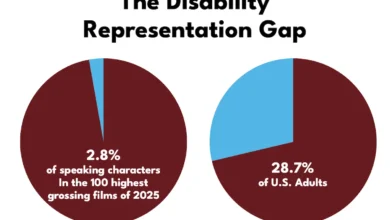
Moreover, his victory serves as a watershed moment for disability representation in American governance. Historically, individuals with disabilities have been severely underrepresented in elected office, often facing architectural, financial, and attitudinal barriers that discourage participation. By ascending to the nation’s highest legislative body, Turek shatters a persistent glass ceiling, offering a new template for political leadership and reinforcing the principle that governance should reflect the diverse populations it serves.
Conclusion
The transition from the Iowa Statehouse to the corridors of the United States Capitol represents the culmination of a lifelong journey of perseverance for Josh Turek. By flipping a high-stakes Senate seat, he has not only reshaped the political calculus of the Midwest but also secured a prominent platform to advocate for the systemic changes he has championed throughout his life. As he prepares to take the oath of office, Turek carries forward the legislative torch of Tom Harkin, bridging the historical past of disability advocacy with the modern challenges of American public policy.