Navigating Modern Dietary Guidelines and Nutritional Science in the Era of Information Overload

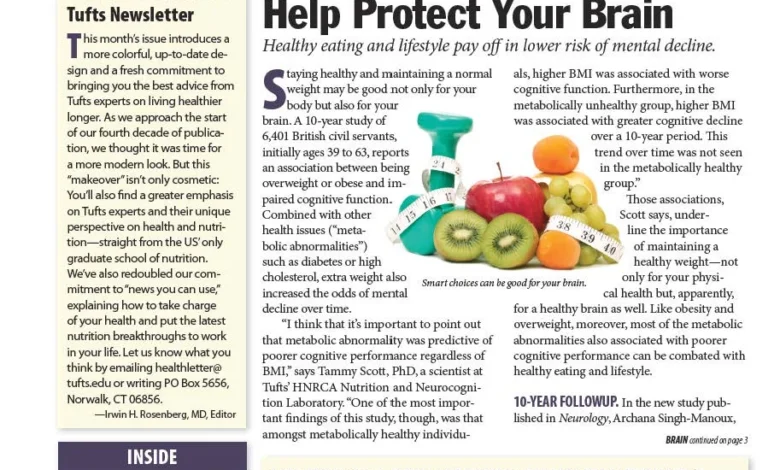
The landscape of nutritional science has undergone a profound transformation over the past several decades, shifting from a rudimentary understanding of basic macronutrients to a highly sophisticated, molecular-level appreciation of how diet influences human health. Today, consumers are bombarded with a ceaseless stream of dietary advice, ranging from peer-reviewed clinical trials to viral social media trends, creating an environment of profound confusion. In this era of information overload, authoritative institutions play a critical role in distilling complex scientific data into actionable, evidence-based guidance. Among these trusted voices, academic publications such as the Tufts Health & Nutrition Letter have long served as beacons of objective analysis, translating rigorous scientific research into practical advice for the general public. However, as the digital age reshapes how content is consumed, funded, and accessed, the mechanisms by which nutritional guidance is delivered are also evolving, raising important questions about public access to health education, the economics of scientific publishing, and the persistent challenge of combating nutritional misinformation in modern society.
The Evolution of Nutritional Science Communication
To understand the current state of nutritional guidance, one must examine the historical trajectory of how dietary advice has been communicated to the public. For much of the 20th century, nutritional science was dominated by the reductionist view of nutrients—focusing primarily on preventing overt deficiencies such as scurvy, rickets, and beriberi through the establishment of Recommended Dietary Allowances (RDAs). During this period, information dissemination was largely top-down, flowing from government agencies like the United States Department of Agriculture (USDA) and academic medical centers through print newspapers, television broadcasts, and pamphlets.
By the late 20th and early 25th centuries, the public health paradigm shifted dramatically. The primary health crisis transitioned from nutrient deficiencies to chronic, diet-related diseases such as obesity, type 2 diabetes, cardiovascular disease, and certain forms of cancer. Consequently, nutritional science had to adapt, moving beyond simple vitamin counts to investigate complex dietary patterns, such as the Mediterranean diet, the impact of ultra-processed foods, the role of the gut microbiome, and the intricate biochemical pathways of inflammation and metabolism.
This scientific maturation coincided with the digital revolution. While the internet democratized access to health information, it also removed traditional editorial gatekeepers. Suddenly, anecdotal wellness blogs, commercially motivated supplement manufacturers, and unverified influencers held the same perceived authority as registered dietitians, epidemiologists, and academic researchers. In this saturated information marketplace, consumers face unprecedented challenges in discerning robust science from fleeting commercial fads. Academic publications and specialized health letters emerged as vital counterweights to this noise, offering rigorous, peer-reviewed curation of current literature. Yet, these institutions face their own economic pressures in the digital age, balancing the high cost of rigorous journalistic and scientific synthesis with the public demand for free, instantaneous information.
The Economic Realities of Specialized Health Journalism
The financial architecture of scientific and health journalism has experienced severe disruptions over the past twenty years. Historically, specialized publications relied heavily on paid subscriptions—delivered via physical print mail—to fund their operations, pay expert researchers and science writers, and maintain editorial independence from commercial biases, such as food industry funding.
As digital media consumption skyrocketed, consumer expectations shifted toward zero-cost content supported primarily by digital advertising. However, in the realm of health and nutrition, relying solely on advertising revenue introduces perilous conflicts of interest. Publications dependent on banner ads from food manufacturers, pharmaceutical companies, or alternative wellness brands risk compromising their editorial objectivity. To preserve their integrity, many reputable health publications have maintained or transitioned toward subscription-based digital models, often referred to as paywalls.
This economic model, while essential for sustaining high-quality, independent journalism, creates a complex tension in public health advocacy. On one hand, charging for subscriptions ensures that the publication remains insulated from commercial pressures, allowing writers and editors to critically evaluate flawed studies, expose misleading marketing claims by food corporations, and provide unbiased guidance. On the other hand, it erects financial barriers that can limit access to vital health information for lower-income populations—demographics that are frequently disproportionately affected by diet-related chronic diseases.
Addressing this paradox requires a nuanced examination of how health literacy is funded and distributed in modern society. Academic institutions and university-affiliated newsletters often navigate this landscape by offering tiered pricing structures, institutional access for libraries and universities, and discounted introductory rates to maximize their reach while safeguarding their operational viability.
A Chronology of Dietary Guidance and Public Access
The intersection of dietary science, public policy, and media communication has evolved through several distinct phases over the past fifty years:
The 1970s to 1980s: The Foundation of Dietary Guidelines
During this era, the first comprehensive federal dietary recommendations were established. The publication of the 1980 Dietary Guidelines for Americans marked a turning point, emphasizing a reduction in saturated fat, cholesterol, and sodium. Print newsletters and academic health letters gained prominence during this decade as trusted intermediaries that helped consumers interpret these broad federal recommendations into everyday grocery shopping and meal preparation habits.
The 1990s: The Rise of Specialized Health Publications
With the introduction of the World Wide Web in the mid-1990s, health information began its migration from exclusively print formats to early digital bulletin boards and websites. University-based health letters formalized their digital presence, expanding their subscriber bases globally while maintaining rigorous peer-review and fact-checking standards that distinguished them from mainstream lifestyle magazines.
The 2000s to 2010s: The Social Media Disruption
The proliferation of Web 2.0, blogging platforms, and social media networks fundamentally altered the information ecosystem. Algorithms prioritizing engagement over accuracy led to the rapid spread of sensationalized nutritional claims, such as extreme low-carbohydrate diets, juice cleanses, and unfounded detox protocols. In response, evidence-based publications doubled down on debunking pseudoscience, emphasizing long-term dietary patterns rather than short-term fixes.
The 2020s and Beyond: The Subscription and Paywall Era
Facing declining print revenues and the saturation of unverified digital content, specialized health publications widely adopted digital subscription models. This period also saw an increased focus on digital account activation, mobile-optimized reading experiences, and integrated subscriber benefits, such as access to expansive digital archives spanning decades of nutritional research.
The Critical Importance of Evidence-Based Curation
In an environment where a single viral video can convince millions of people to eliminate entire food groups or purchase expensive, unregulated supplements, the role of evidence-based curation cannot be overstated. Nutritional science is notoriously difficult to study rigorously. Randomized controlled trials (RCTs)—the gold standard of medical research—are exceptionally challenging to conduct over long periods when applied to human diets, as participants struggle to adhere to strict dietary protocols for years, and self-reported food diaries are notoriously inaccurate. Consequently, much of nutritional epidemiology relies on observational studies, which can establish correlations but rarely prove direct causation.
Navigating these methodological complexities requires specialized expertise. Journalists and editors working for academic health publications possess the scientific literacy necessary to interrogate a study’s methodology, sample size, funding sources, and statistical limitations. For example, a well-trained science writer can differentiate between a relative risk increase reported in a sensationalized press release and the much smaller absolute risk change that actually matters to an individual’s health.
By distilling these nuances into accessible language, trusted publications empower consumers to make informed choices without falling prey to nutritional nihilism—the demoralizing belief that "everything causes cancer" or that "scientists keep changing their minds." Instead, effective health communication demonstrates how scientific consensus evolves incrementally as new data emerge, reinforcing foundational principles such as the importance of whole grains, lean proteins, healthy fats, and abundant plant-based foods.
Institutional Responses and Access Strategies
Recognizing the tension between financial sustainability and public health education, leading academic health publications have developed multifaceted access strategies. Rather than relying on rigid, impenetrable paywalls, many organizations provide a balance of free public content—such as foundational articles, basic recipes, and breaking news summaries—alongside deeply analytical investigative reports, comprehensive archives, and personalized expert Q&As reserved for paid subscribers.
Furthermore, educational institutions frequently partner with public libraries, corporate wellness programs, and healthcare providers to sponsor subscriptions, thereby bridging the access gap for underserved communities. These initiatives reflect a growing recognition that nutritional literacy is a fundamental social determinant of health. When individuals have reliable access to accurate dietary guidance, community-wide rates of obesity, cardiovascular disease, and metabolic disorders decline, alleviating the immense financial burden these chronic conditions place on healthcare systems.
Broader Implications for Public Health and Digital Media
The ongoing evolution of how nutritional science is communicated carries profound implications for the future of public health. As artificial intelligence and algorithmic content generators assume a larger role in producing online health content, the risk of misinformation scaling exponentially is a very real threat. Automated content farms can quickly generate thousands of articles promoting pseudoscientific diets without human oversight, fact-checking, or ethical accountability.
In this high-stakes digital arena, the value of human-edited, academically grounded publications becomes even more pronounced. The financial models that support these publications—whether through modest annual subscription fees, institutional grants, or philanthropic support—are essential investments in society’s collective critical thinking and physical well-being.
Ultimately, navigating the modern nutritional landscape requires a collaborative effort among researchers, science journalists, policymakers, and consumers. By supporting rigorous, independent journalism and valuing evidence-based education over sensationalized quick fixes, society can foster a healthier relationship with food—one rooted in sound science, critical inquiry, and equitable access to life-changing knowledge.