
Colleges Urgently Need to Address a Surge in Undisclosed Autism Among Students

New estimates reveal a dramatic underestimation of the number of college students on the autism spectrum, highlighting a critical need for improved identification and support systems on campuses nationwide. Research published in the journal Autism in Adulthood suggests that between 135,400 and 286,254 students with autism are currently enrolled in U.S. colleges and universities. This figure significantly surpasses previous estimations, which placed the number as low as 60,000, indicating that a substantial and growing population of autistic individuals is navigating higher education, often without explicit recognition or tailored support.
The findings, spearheaded by Brad Cox, an associate professor at Michigan State University, underscore a fundamental shift in the landscape of higher education. For years, educators and disability advocates have observed a trend of increasing college enrollment among autistic individuals, but the precise scale of this demographic has remained elusive. "For years, we’ve known more autistic students were going to college – we just didn’t know how many," Cox stated. "What this shows is that this is not a small or niche population. These students are already part of our campuses."
This revelation stems from a comprehensive analysis of existing research, surveys administered to college students, and the examination of federal datasets. The methodology aimed to provide a more current and accurate picture than prior estimates, which were often based on data that was over two decades old. The disparity between older and newer figures suggests a significant increase in both the number of autistic individuals pursuing higher education and the capacity of institutions to track this demographic.
Despite the substantial new figures, researchers caution that the true number of autistic college students may still be higher. The study indicates that approximately 43% to 47% of high school students with autism transition to college. However, a significant portion of these students may choose not to disclose their diagnosis or formally request accommodations, either due to personal preference, a lack of awareness about available resources, or concerns about stigma. This often results in students navigating the complexities of college life without the specialized support that could significantly enhance their academic success and overall well-being.
The implications of these findings are far-reaching, prompting a call to action for higher education institutions, policymakers, and disability support services. The sheer volume of autistic students on campuses necessitates a re-evaluation of current identification protocols and support frameworks.
The Evolving Landscape of Autism in Higher Education
The increasing presence of autistic students in higher education is not a sudden phenomenon but rather a culmination of several evolving factors. Over the past two decades, there has been a significant increase in autism diagnoses, particularly in younger generations. This demographic is now reaching college age, bringing with them a desire for post-secondary education and the skills development it offers. Simultaneously, increased awareness and advocacy surrounding autism have led to greater expectations for inclusion and accessibility in all facets of life, including education.
Historically, higher education institutions were not explicitly designed to accommodate the diverse neurocognitive profiles of students. Support services, when available, were often reactive and geared towards addressing specific diagnosed disabilities. The new estimates suggest that the reactive approach is no longer sufficient. Colleges and universities are now populated by a substantial number of autistic individuals who may require proactive and nuanced support that addresses their unique strengths and challenges.
The research highlights that many autistic students excel in academic environments, particularly in areas that align with their interests and strengths. However, they may encounter difficulties in areas such as social interaction, sensory processing, executive functioning (e.g., organization, time management, task initiation), and navigating the unstructured social environment of college life. Without appropriate accommodations and understanding, these challenges can impede academic progress and lead to feelings of isolation and burnout.
The Critical Role of Support Programs: A Case Study
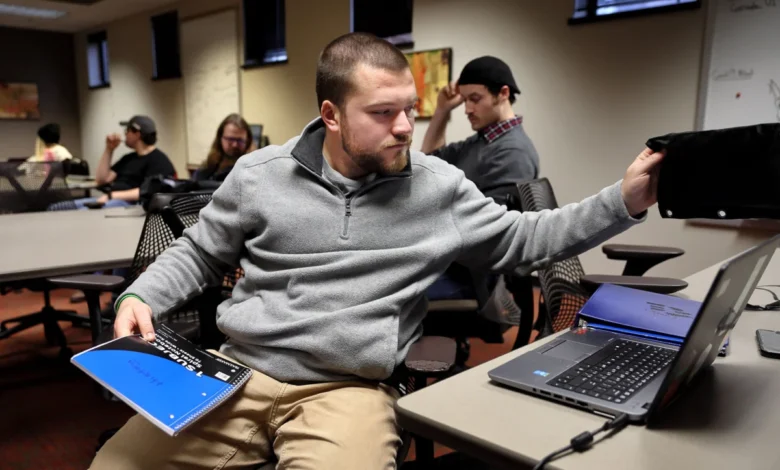
Programs like Link at the University of Missouri-St. Louis (UMSL) exemplify the type of specialized support that can make a profound difference for autistic students. Conner Stewart, a student at UMSL, is shown preparing for his history class, a scene made possible, in part, by the resources provided through the Link program. This initiative is designed to equip students on the autism spectrum with essential educational, life, and career preparation skills, fostering their independence and success.
Such programs often provide a range of services, including:
- Academic Support: Assistance with study skills, time management, note-taking strategies, and understanding academic expectations.
- Social Skills Training: Guidance on navigating social interactions, building relationships, and participating in campus activities.
- Life Skills Development: Support with independent living skills, such as budgeting, meal preparation, and personal organization.
- Career Counseling: Assistance with identifying career interests, developing resumes, practicing interview skills, and exploring internship opportunities.
- Advocacy and Navigation: Helping students understand their rights, access accommodations, and communicate their needs effectively to faculty and staff.
- Peer Support: Facilitating connections with other students, both autistic and neurotypical, to build a supportive community.
The success of programs like Link underscores the principle that tailored support can unlock the potential of autistic students, enabling them to thrive academically and personally. The existence of such programs, however, also points to a broader institutional responsibility to integrate these principles across campus.
Data Limitations and the Path Forward
The study’s authors emphasize that improved data collection is crucial for effective policy and practice. Current methods of identifying students with disabilities often rely on self-disclosure or referral through disability services offices. This reliance can lead to undercounting, as many students may not identify with the label of "disability" or may fear negative repercussions from disclosing.
"Our numbers clearly show this is a large and growing group that deserves more attention – from families, educators, policymakers and researchers alike," Cox urged. "The next step is turning that awareness into action so autistic individuals have the support they need to thrive in school, work and life."
This call to action suggests a multi-pronged approach:
- Institutional Audits: Colleges should conduct internal reviews of their current support structures and identify gaps in services for autistic students. This might involve surveying current students, faculty, and staff to understand perceived needs and barriers.
- Proactive Outreach: Instead of waiting for students to self-identify, institutions could develop proactive outreach strategies to inform students about available resources and the benefits of disclosure and accommodation. This could involve information sessions, targeted communications, and dedicated onboarding processes.
- Faculty and Staff Training: Comprehensive training for faculty and staff on neurodiversity, autism spectrum disorder, and effective communication and teaching strategies is essential. This can help create a more inclusive and understanding campus environment.
- Universal Design for Learning (UDL): Implementing UDL principles in curriculum design and delivery can benefit all students, including those on the autism spectrum, by offering multiple means of engagement, representation, and expression.
- Data Modernization: Encouraging institutions to adopt more robust and nuanced methods for tracking student demographics and support needs, while prioritizing student privacy and autonomy. This could involve exploring more inclusive definitions of disability and support requirements.
- Policy Advocacy: Advocating for federal and state policies that support inclusive higher education practices and provide funding for specialized support services.
Broader Societal Implications
The growing number of autistic individuals pursuing higher education has significant implications beyond the campus walls. It signals a broader societal shift towards greater inclusion and a recognition of the valuable contributions that autistic individuals can make to the workforce and society. As more autistic students graduate from college, they will enter various professions, bringing unique perspectives, problem-solving skills, and talents.
However, for this potential to be fully realized, the transition from higher education to employment must also be supported. This requires employers to be educated about neurodiversity and to create inclusive work environments. Colleges and universities play a vital role in preparing students for this transition, not only through academic and career preparation but also by fostering the social and emotional skills that are crucial for workplace success.
The research also highlights the importance of early intervention and support throughout an individual’s life journey. The positive trajectory of autistic individuals entering higher education suggests that earlier, more effective support during K-12 education can significantly improve college readiness and overall life outcomes.
In conclusion, the recent estimates concerning the number of autistic students in higher education serve as a critical wake-up call. Colleges and universities must move beyond outdated assumptions and actively embrace the need for comprehensive, nuanced, and proactive support systems. By fostering inclusive environments and providing tailored resources, institutions can empower a growing demographic of autistic students to achieve their full academic and personal potential, ultimately enriching the fabric of higher education and contributing to a more diverse and capable society. The journey from awareness to effective action is imperative, ensuring that all students, regardless of neurotype, have the opportunity to thrive.
Related posts: