



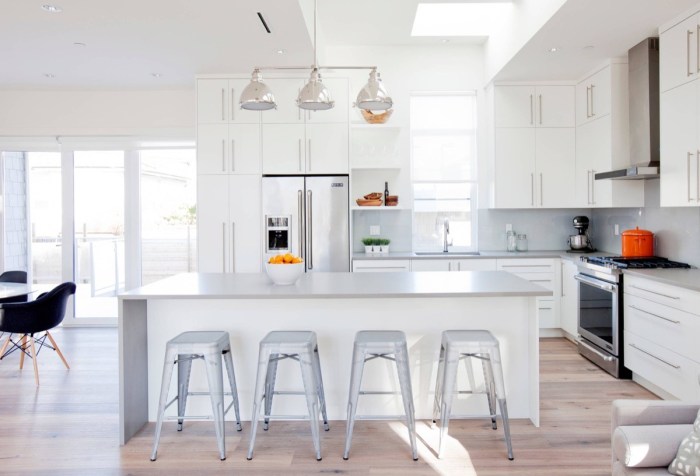
Gray and white kitchen ideas offer a timeless and elegant aesthetic, perfect for creating a sophisticated and inviting space. This exploration dives deep into the nuances of these two neutrals, from choosing the right color palettes to selecting the perfect materials, cabinetry, and lighting. We’ll discover how to craft a kitchen that’s both visually stunning and practically functional.
From exploring various shades of gray and white to considering different material combinations like quartz, marble, and stainless steel, we’ll cover everything you need to know to transform your kitchen into a beautiful and practical space. We’ll also delve into cabinetry styles, countertop options, and lighting ideas, along with thoughtful floor and backsplash choices to achieve the ideal design.
Color Palette Exploration

Gray and white kitchens are incredibly popular for their versatility and ability to create a wide range of moods. From sleek and modern to cozy and inviting, the key to achieving the desired aesthetic lies in carefully selecting the shades and tones of gray and the way they interact with the white. This exploration dives into the nuances of gray and white palettes, offering various combinations and comparisons to other neutral color schemes.Exploring different gray and white palettes is crucial for designing a kitchen that reflects personal style and desired ambiance.
The subtle variations in gray tones can significantly impact the overall atmosphere, making the space feel warm, cool, sophisticated, or even playful. By understanding these nuances, we can create a kitchen that is both aesthetically pleasing and functionally perfect.
Gray and White Shade Variations
Different shades of gray, from light greys resembling ash to deep charcoal, can dramatically alter the perceived mood and style of a gray and white kitchen. A lighter gray, often described as a “silver” or “dove” gray, creates a bright and airy ambiance, making the space feel more expansive. Conversely, a darker gray, such as a “charcoal” or “slate” gray, introduces a touch of drama and sophistication.
These darker shades can add depth and create a more intimate atmosphere.
- Light gray (e.g., dove gray, ash gray): These lighter shades reflect more light, creating a brighter and more spacious feel. This choice is often favored for smaller kitchens or those wanting a sense of openness.
- Medium gray (e.g., gray-blue, gray-green): These shades offer a balance between light and dark, creating a more neutral and versatile backdrop. This range can be used effectively for kitchens with natural light to enhance a calm atmosphere.
- Dark gray (e.g., charcoal gray, slate gray): These shades add a touch of sophistication and drama. They are best used strategically, perhaps for cabinetry or backsplashes, to avoid making the kitchen feel too dark, especially in spaces with limited natural light.
Gray and White Combinations
A range of gray and white combinations is possible, impacting the overall visual appeal and character of the kitchen. Variations in intensity and saturation can significantly alter the mood of the space.
- High Contrast: Using very light gray (almost white) alongside pure white creates a high-contrast, modern aesthetic. This combination is ideal for those seeking a clean, minimalist look.
- Soft Contrast: A combination of various shades of gray, from light to medium, with white provides a more subtle and welcoming atmosphere. This option is great for those who want a less stark, more calming feel.
- Muted Tones: Using soft gray tones, such as a pale gray or a gray-blue, alongside off-white can create a muted and serene ambiance. This is an excellent choice for kitchens that aim for a relaxed and cozy atmosphere.
Impact of Gray Tones on Ambiance
The chosen gray tone significantly affects the ambiance of the kitchen. Light gray promotes a sense of spaciousness and brightness, perfect for smaller kitchens. Medium gray provides a balance between light and dark, creating a versatile and sophisticated backdrop. Darker gray shades, while adding depth and drama, should be used carefully to avoid making the space feel cramped or too dark, especially in kitchens with limited natural light.
Modern Gray and White Palette
A modern gray and white kitchen palette should emphasize clean lines, smooth surfaces, and well-defined spaces. A combination of a light gray (e.g., a soft dove gray) for cabinetry and pure white for countertops and walls creates a fresh and contemporary feel. Using sleek hardware and metallic accents can further enhance the modern aesthetic.
Comparison with Other Neutral Schemes
Comparing gray and white with other neutral color schemes, like black and white or beige and white, reveals distinct characteristics.
| Color Scheme | Characteristics |
|---|---|
| Gray and White | Versatile, modern, adaptable to various styles, creates a balanced and sophisticated ambiance |
| Black and White | High contrast, bold, dramatic, often associated with sleek, minimalist design |
| Beige and White | Warm, inviting, cozy, often associated with a more traditional or relaxed style |
Material Choices
Choosing the right materials is crucial in crafting a gray and white kitchen that’s both beautiful and functional. The selection impacts the overall aesthetic, durability, and ease of maintenance. Different materials evoke distinct textures and feelings, from the sleek sophistication of quartz to the warm elegance of wood. Understanding the pros and cons of each option will guide you towards the perfect material combination for your dream kitchen.Careful consideration of material choices in a gray and white kitchen translates directly into a space that feels cohesive and stylish.
Each material contributes to the overall ambiance, whether it’s the cool, modern feel of stainless steel or the timeless warmth of wood. The combinations you select will significantly influence the space’s character.
Quartz
Quartz countertops are incredibly popular in contemporary kitchens, and for good reason. Their non-porous nature makes them exceptionally easy to clean and maintain. This resilience to stains and scratches is a significant advantage, especially in high-traffic areas. Quartz also comes in a wide array of colors and patterns, allowing for a great deal of customization to match the overall aesthetic of the gray and white palette.
Many quartz options mimic the look of natural stone like marble or granite, but without the maintenance requirements. The smooth, uniform surface of quartz contributes to a sleek, modern feel, complementing the clean lines often found in gray and white kitchens.
Marble
Marble countertops are synonymous with luxury and elegance. The natural veining and unique patterns of marble create a visually stunning and sophisticated focal point in any kitchen. The cool, smooth surface of marble is a delightful tactile experience. However, marble’s porous nature means it’s susceptible to stains and etching. Regular sealing and meticulous care are essential to preserve its beauty and longevity.
The high maintenance requirements should be carefully weighed against the aesthetic appeal. In a gray and white kitchen, marble can add a touch of timeless sophistication, particularly when paired with sleek cabinetry and stainless steel appliances. A kitchen featuring white cabinets and gray countertops, with marble backsplash, can create a striking contrast.
Stainless Steel
Stainless steel appliances are a classic choice for gray and white kitchens. The modern, sleek appearance seamlessly blends with the clean lines of the color palette. Stainless steel is known for its durability and resistance to rust and corrosion, making it a practical choice for high-use areas. The reflective surface can brighten the space and contribute to a sense of spaciousness, especially in smaller kitchens.
A gray and white kitchen with stainless steel appliances often exudes a contemporary, high-end feel.
Wood
Wood elements, like butcher block countertops or wooden accents, can add a touch of warmth and natural beauty to a gray and white kitchen. The natural variations in wood grain provide visual interest and a tactile dimension that quartz or marble cannot replicate. Wood is a durable material, but proper care and sealing are crucial to protect it from water damage and staining.
The warm tones of wood can create a cozy and inviting atmosphere, especially when used in moderation, softening the cool tones of gray and white. A kitchen with white cabinets and gray countertops featuring a wood island adds a touch of rustic charm.
Material Comparison Table
| Material | Durability | Maintenance | Visual Appeal |
|---|---|---|---|
| Quartz | High | Low | Elegant |
| Marble | High | Medium | Luxurious |
| Stainless Steel | High | Low | Modern |
| Wood | Medium | Medium | Natural |
Cabinetry and Countertops
Gray and white kitchens offer a versatile canvas for design, and the choice of cabinetry and countertops plays a crucial role in achieving the desired aesthetic and functionality. Careful consideration of these elements can transform a simple kitchen into a stylish and practical space. The interplay of different materials and finishes creates a unique visual experience, reflecting light and shadow in distinct ways.The selection of cabinetry and countertops is not just about aesthetics; it’s also about practicality.
Gray and white kitchens are so trendy right now, aren’t they? The clean lines and bright contrast are just fantastic. Thinking about how to keep those plants thriving in a kitchen like that, I was wondering about using hydrogen peroxide for plants hydrogen peroxide for plants to keep them healthy and happy. It’s a great way to maintain the greenery in your space, and it definitely complements the overall aesthetic of a gray and white kitchen.
Different materials offer varying levels of durability, maintenance requirements, and cost. Understanding these factors is essential for making informed decisions that align with your lifestyle and budget. A well-designed gray and white kitchen integrates these elements seamlessly, creating a space that is both beautiful and functional.
Cabinet Styles
Cabinetry styles significantly influence the overall look of a kitchen. Various styles complement the clean lines of gray and white kitchens. Shaker style cabinets, with their simple, paneled doors, offer a timeless appeal. Flat-front cabinets create a modern and minimalist aesthetic, emphasizing clean lines. Modern styles often feature sleek, contemporary designs with integrated handles or no handles at all, maximizing the visual impact of the gray and white color palette.
Choosing a style that aligns with your personal preferences and the overall design direction of the kitchen is key.
Countertop Materials
The countertop material chosen for a gray and white kitchen should complement the cabinets while considering practicality and budget. Granite, with its varied patterns and colors, can add warmth and visual interest to the space. Quartz, known for its durability and stain resistance, is a popular choice for its ability to withstand daily wear and tear. Solid surface materials offer a seamless look and are easy to maintain.
Choosing a countertop that harmonizes with the cabinet style and complements the gray and white color scheme is crucial for a cohesive design.
Cabinet Finishes
Cabinet finishes, like matte and glossy, significantly affect the visual impact of a gray and white kitchen. Matte finishes create a softer, more subdued look, often appearing more sophisticated. Glossy finishes reflect light, adding a bright and airy feel. The choice between these two depends on the desired ambiance and the overall design goals of the space. For example, a glossy finish can be ideal for smaller kitchens to create an illusion of spaciousness, while matte finishes might be preferred for a more intimate and sophisticated feel.
Kitchen Layout
The layout of cabinets and countertops directly impacts the functionality and flow of the kitchen. A well-organized layout allows for smooth movement and efficient use of space. A kitchen island, for instance, can serve as a focal point and add extra counter space. Careful consideration of work triangles, storage solutions, and traffic patterns is vital for creating a user-friendly space.
The arrangement of cabinets and countertops should be designed to optimize workflow and maximize the use of available space.
Cabinet Materials Comparison
| Cabinet Material | Style | Maintenance | Cost |
|---|---|---|---|
| Solid wood | Traditional | Medium | High |
| Engineered wood | Modern, Transitional | Low to Medium | Medium |
| Particleboard | Contemporary, Budget-friendly | Low | Low |
| Laminate | Modern, Budget-friendly | Low | Low |
This table provides a concise comparison of common cabinet materials, highlighting their respective styles, maintenance needs, and cost considerations. Choosing the right material depends on your budget, desired aesthetic, and the level of maintenance you’re willing to undertake.
Lighting and Accessories
A gray and white kitchen, with its clean lines and bright palette, is a blank canvas for lighting and accessories to bring life and personality. The right lighting choices can dramatically alter the mood and functionality of the space, while thoughtful accessories can add warmth and character. This section delves into the crucial role of lighting and the variety of accessories that can elevate a gray and white kitchen from simple to stunning.Lighting is paramount in any kitchen, especially in a gray and white space.
It can accentuate the sleekness, highlight the elegance, and create a welcoming ambiance. Properly chosen lighting fixtures can highlight countertops, cabinetry, and the overall architectural features, enhancing the kitchen’s visual appeal and functionality. Accessories, on the other hand, inject the space with personality and warmth. Decorative items, artwork, and rugs can complement the color scheme and add a touch of individual style.
Lighting Fixtures for Gray and White Kitchens
Gray and white kitchens, with their neutral backdrop, allow for a diverse range of lighting fixtures. The choice should be guided by the kitchen’s layout, the desired mood, and the overall aesthetic. Pendant lights, recessed lighting, and under-cabinet lights offer different functionalities and styles.
Pendant lights, with their suspended design, can add a touch of elegance and drama. They can be used to illuminate a kitchen island or dining area. Recessed lighting provides ambient illumination and is often incorporated for overall kitchen brightness. Under-cabinet lights are ideal for task lighting, allowing for focused illumination of countertops and work areas.
Lighting Options and Their Benefits
Different lighting options cater to different needs and preferences. Choosing the right combination can transform the kitchen’s ambiance.
- Pendant Lights: These lights add a focal point and visually separate different zones in the kitchen. They can be incorporated over an island or a dining area, providing both task and ambient lighting. Examples include modern linear pendant lights or vintage-inspired pendant lights with intricate details. Pendant lights can be used to add a touch of visual interest and texture, creating a focal point within the space.
- Recessed Lighting: Providing ambient illumination, recessed lights are discreet and offer a seamless, clean aesthetic. They can be strategically placed to highlight specific areas, such as artwork or architectural details. Recessed lighting is often a cost-effective option for general illumination. Modern recessed lights are available in a variety of sizes and shapes.
- Under-Cabinet Lighting: Task lighting is essential for any kitchen. Under-cabinet lights offer focused illumination perfect for food preparation and meal presentation. These lights can be installed along countertops or under cabinet shelves. The warm glow of under-cabinet lights creates a warm and inviting atmosphere.
- Natural Light: Maximize natural light sources. Large windows or skylights can significantly reduce the need for artificial lighting and offer a brighter, more welcoming atmosphere. Maximize natural light sources to reduce energy consumption and enhance the kitchen’s overall appeal.
Combining Lighting Styles for a Cohesive Look
Creating a cohesive look in a gray and white kitchen involves strategically combining different lighting styles. The key is to balance ambient, task, and accent lighting.
A balanced approach combines ambient lighting from recessed lights, task lighting from under-cabinet lights, and accent lighting from pendant lights. This layered approach enhances the functionality and visual appeal of the kitchen. A subtle interplay of different light sources creates depth and visual interest, without overwhelming the space.
Accessories for a Gray and White Kitchen
Accessories are the finishing touches that personalize and complete the gray and white kitchen.
Gray and white kitchens are always a stylish choice, offering a clean and modern feel. Thinking about sprucing up your space with these classic colors? Consider using your tax refund for some home upgrades, like new countertops or appliances, based on your tax refund home upgrades based on your tax refund. The possibilities are endless when you combine a fresh color palette with some well-planned improvements.
A gray and white kitchen with updated cabinets or backsplash is a dream come true.
- Decorative Bowls: Unique bowls can be used to hold fresh produce, or as decorative accents on countertops or shelves. Choose bowls that complement the kitchen’s color scheme and style.
- Artwork: Artwork can add a touch of personality and visual interest to the space. Select artwork that complements the kitchen’s color scheme and design style.
- Rugs: A rug can define a dining area or kitchen island, adding warmth and texture to the space. Select rugs that complement the kitchen’s color scheme and design style.
Floor and Backsplash Ideas
Choosing the right flooring and backsplash is crucial for a cohesive and aesthetically pleasing gray and white kitchen. These elements significantly impact the overall ambiance and functionality of the space, influencing everything from visual appeal to ease of maintenance. Careful consideration of materials, colors, and patterns is essential for achieving the desired design and ensuring longevity.
Flooring Options
Selecting the appropriate flooring material depends on factors such as budget, desired aesthetic, and lifestyle. Durability and ease of maintenance are equally important considerations, especially in a high-traffic area like a kitchen. The following are common and suitable choices for gray and white kitchens.
- Tile: A versatile and durable choice, tile offers a wide range of styles and colors. Ceramic, porcelain, and glass tiles can complement gray and white kitchens beautifully. For example, a white subway tile backsplash with a gray grout line creates a classic and timeless look. Porcelain tile is highly resistant to water and stains, making it a practical choice for kitchens.
- Hardwood: A natural and elegant choice, hardwood flooring adds warmth and sophistication to a gray and white kitchen. Species like oak and maple offer a variety of tones that can be easily incorporated into the color scheme. However, hardwood requires more maintenance than tile or laminate, including regular sealing and refinishing.
- Laminate: A budget-friendly option, laminate flooring mimics the look of hardwood or stone at a more accessible price point. It’s relatively easy to install and maintain, and available in a wide range of colors and patterns. A downside is its durability may be less than hardwood or tile, and it might not be the ideal choice for high-moisture areas.
- Luxury Vinyl Tile (LVT): LVT offers a realistic representation of natural materials like wood or stone with improved durability compared to laminate. LVT is water-resistant, easy to clean, and comes in a variety of colors and textures, making it a great option for gray and white kitchens. It is less expensive than hardwood or natural stone but more costly than laminate.
Backsplash Materials, Gray and white kitchen ideas
The backsplash is a focal point in a kitchen, often acting as a transition between the countertop and the wall. Choosing the right backsplash material can significantly enhance the aesthetic appeal and functionality of the kitchen.
- Tile: Similar to flooring, tile offers a wide range of options for backsplashes. It is durable, easy to clean, and comes in various colors, sizes, and patterns. Matching or coordinating the tile with the flooring can create a seamless visual connection.
- Stone: Natural stone, such as marble, granite, or quartz, offers a luxurious and high-end aesthetic. These materials often add a touch of elegance to a gray and white kitchen. However, natural stone is more expensive and requires specific maintenance.
- Glass: Glass backsplashes are popular for their transparency and ability to diffuse light. Various colors and patterns can be incorporated to enhance the overall design. Glass is often chosen for its modern and stylish appeal.
Visual Effects of Combinations
The combination of flooring and backsplash materials can significantly impact the visual perception of a gray and white kitchen. Consider the following examples:
- Light-colored tile flooring with a white backsplash creates an airy and bright atmosphere, ideal for smaller kitchens. This combination emphasizes the spaciousness of the room.
- Dark-colored tile flooring with a gray backsplash provides a more dramatic and sophisticated feel, creating a visually rich contrast.
- Hardwood flooring with a white subway tile backsplash provides a warm and inviting ambiance.
Maintenance and Durability
Considering the maintenance and durability of flooring and backsplash materials is essential for long-term satisfaction. Factors such as stain resistance, water resistance, and ease of cleaning should be considered.
- Tile is generally the most durable and easiest to maintain. Regular cleaning and sealing are important to prevent stains and maintain its appearance.
- Hardwood requires more maintenance, including regular cleaning, sealing, and refinishing. This is crucial to maintain its appearance and protect it from damage.
- Laminate is relatively easy to maintain, but its durability may vary depending on the specific type and quality.
- LVT is designed for durability and water resistance, making it suitable for high-moisture areas like kitchens.
Coordinating Flooring Options
Choosing flooring that coordinates with the gray and white color palette can enhance the overall aesthetic harmony.
- Gray hardwood or laminate offers a sophisticated contrast to the gray cabinets and white walls. This choice creates a modern and stylish look.
- White tile provides a bright and clean look that complements the gray and white theme. This choice enhances the airy and spacious feel.
- Light gray or beige tile offers a neutral backdrop that can be easily combined with various backsplash materials and cabinetry.
Kitchen Layout and Functionality: Gray And White Kitchen Ideas
Gray and white kitchens, with their clean lines and versatile aesthetic, offer a fantastic canvas for a wide array of layouts. Choosing the right layout is crucial for maximizing both the visual appeal and the practical functionality of the space. A well-designed layout seamlessly integrates storage, appliance placement, and workflow, leading to a more enjoyable and efficient kitchen experience.The layout directly impacts how you interact with the space, from meal preparation to cleanup.
Careful consideration of the available space, the number of people using the kitchen, and the frequency of cooking activities are essential factors in selecting the optimal layout.
Different Kitchen Layouts
Various layouts cater to different needs and kitchen dimensions. Understanding the options available allows you to choose the one that best suits your space and lifestyle.
- Galley Kitchen: This layout, featuring two parallel countertops, is ideal for smaller spaces. Its linear arrangement often maximizes wall space and creates a focused workflow. This is particularly effective in kitchens with limited width but reasonable depth.
- L-shaped Kitchen: This layout, resembling the letter ‘L’, utilizes two adjoining walls for countertops and cabinets. It offers more workspace and storage than a galley layout, making it suitable for mid-sized kitchens. The corner space often becomes a focal point for food preparation and storage.
- U-shaped Kitchen: This layout encompasses three walls, creating a larger, more versatile work triangle. It is the most spacious option, accommodating multiple cooks or a high volume of activity, ideal for larger kitchens or homes with multiple family members who use the kitchen frequently.
Appliance Arrangement
The arrangement of appliances significantly affects the workflow within a gray and white kitchen. Strategic placement ensures efficiency and minimizes unnecessary movement.
Gray and white kitchens are super stylish, right? They’re clean, modern, and offer a fantastic backdrop for pops of color. Thinking about festive decorations, choosing the best artificial Christmas trees can really elevate the holiday spirit in a gray and white kitchen, or any space for that matter. For some amazing options, check out this guide on best artificial Christmas trees.
Ultimately, the key to a beautiful kitchen, whether it’s gray and white or otherwise, is to keep it simple and elegant.
- Refrigerator: Placing the refrigerator near the entrance or within easy reach of the sink improves workflow and access. A convenient location facilitates quick access for grabbing items during meal preparation or cleanup.
- Stove/Oven: Positioning the stove near the sink and refrigerator creates a natural work triangle. This arrangement minimizes movement during meal preparation and cleanup, streamlining the cooking process.
- Dishwasher: Placing the dishwasher near the sink and cleanup area makes it more convenient for loading and unloading dishes. This also facilitates a seamless transition from cooking to cleanup, optimizing workflow.
Maximizing Storage Space
Maximizing storage in a gray and white kitchen is essential for maintaining an organized and clutter-free space. Clever solutions ensure that everything has a designated place, making daily routines more efficient.
- Built-in Cabinets: Custom-designed built-in cabinets, tailored to the kitchen’s dimensions, maximize storage capacity, ensuring every inch of the space is utilized effectively.
- Pull-out Shelves and Drawers: Pull-out shelves and drawers provide easy access to items stored in the back of cabinets, preventing wasted space and improving the usability of the storage. This ensures that frequently used items are easily accessible.
- Overhead Cabinets: Overhead cabinets effectively utilize vertical space, maximizing storage potential without compromising the kitchen’s overall aesthetic. Clever use of lighting enhances visibility and accessibility of items stored in upper cabinets.
Smart Storage Solutions
Implementing smart storage solutions enhances both the functionality and aesthetics of a gray and white kitchen.
- Drawer Organizers: Drawer organizers create designated spaces for utensils, cutlery, and other kitchen accessories. This prevents clutter and improves access to items within the drawers.
- Spice Racks: Spice racks neatly organize spices, making them readily available for cooking. This keeps the kitchen counters free from clutter and improves the cooking experience.
- Under-Counter Bins: Under-counter bins are perfect for storing various items, from cleaning supplies to small appliances. These solutions minimize clutter and maximize storage space.
Inspirational Images

Gray and white kitchens are a timeless choice, offering a clean, sophisticated aesthetic that can be adapted to various styles and functionalities. The versatility of this palette allows for a wide range of design options, from minimalist modern to cozy farmhouse. This section explores the visual appeal of gray and white kitchens through inspirational images, showcasing different design elements and layouts.This exploration delves into kitchens that highlight the elegance and practicality of gray and white color schemes.
We will examine examples showcasing diverse cabinetry and countertop styles, lighting fixtures, and accessories, and finally, the interplay of these choices with floor and backsplash materials. We will analyze how these components contribute to a well-designed and functional kitchen space.
Kitchens Showcasing Gray and White Color Palettes
Gray and white kitchens present a blank canvas for creativity. The neutral tones allow various styles to shine. One example might feature a sleek, modern kitchen with glossy white cabinets and matte gray countertops. Another kitchen might be designed in a farmhouse style with shaker-style gray cabinets, white subway tile backsplash, and light gray hardwood floors. The versatility of the palette is showcased in these diverse interpretations.
Cabinets and Countertops in Gray and White
The choice of cabinetry and countertops is crucial in defining the overall character of a gray and white kitchen. Different styles of cabinetry, from shaker-style to more contemporary designs, can be seamlessly integrated with the neutral color palette. For example, a kitchen with white shaker cabinets paired with gray quartz countertops offers a classic and timeless appeal. Conversely, a kitchen with gray cabinets and white marble countertops evokes a sense of luxury and sophistication.
The combination of gray and white in cabinetry and countertops can be varied to create different moods. Matte or glossy finishes for cabinets and countertops can dramatically affect the overall aesthetic.
Lighting and Accessories in Gray and White Kitchens
Lighting and accessories play a significant role in adding character and personality to a gray and white kitchen. Pendant lights in various styles, from modern to vintage, can add a touch of flair. Recessed lighting, strategically placed, can illuminate the space effectively. In a kitchen with white cabinets, adding brass or nickel-toned hardware can provide a touch of contrast and warmth.
Accessories, such as decorative bowls, vases, and artwork, can be carefully selected to complement the overall design and add visual interest.
Floor and Backsplash Designs Complementing Gray and White
The floor and backsplash are essential components that complete the look of a gray and white kitchen. A kitchen featuring light gray hardwood floors, paired with a white subway tile backsplash, offers a classic and clean design. Alternatively, a kitchen with gray-toned ceramic tiles as a backsplash and white oak flooring can create a more rustic and inviting feel.
The choice of material and pattern for the floor and backsplash can dramatically affect the space’s character and ambiance.
Kitchen Layout and Functionality in Gray and White
The layout of a gray and white kitchen significantly impacts its functionality and efficiency. A kitchen with an open-plan design, featuring white cabinets and gray countertops, can maximize space and enhance the flow between the kitchen and other living areas. A galley kitchen with gray cabinets and white countertops can be designed with efficient storage solutions to optimize the space.
A kitchen island, featuring a gray countertop and white cabinets, can serve as a central hub for food preparation and gathering. The layout should be carefully considered to meet the specific needs and preferences of the homeowner.
Concluding Remarks
Ultimately, gray and white kitchens offer a blank canvas for creativity, allowing you to personalize the space with your own unique style and preferences. Whether you’re aiming for a modern, minimalist look or a touch of rustic charm, the possibilities are endless. This comprehensive guide provides the insights and inspiration you need to design a gray and white kitchen that perfectly blends beauty and functionality.