

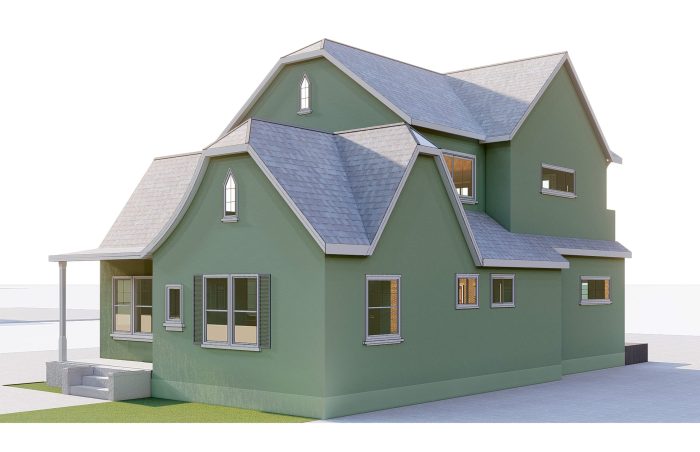



Foundation footings code basics provides a crucial understanding of the essential elements for safe and compliant structural design. This guide delves into the fundamental principles, codes, and calculations involved in designing robust foundation footings, from understanding soil bearing capacity to choosing the right footing type. We’ll explore various design considerations, including different types of footings, relevant codes and standards, and critical construction procedures.
This comprehensive overview is perfect for anyone involved in structural engineering, construction, or related fields.
This introduction will provide a concise explanation of the importance of foundation footings codes. It will explain the general principles behind foundation footing design, describing typical components and steps in the design process. A comparison table will highlight different footing types and their applications. We will also discuss the role of local building codes in influencing footing design, and the process of referencing and applying specific sections of the code.
Introduction to Foundation Footings Code Basics
Foundation footings are the critical link between a structure and the ground. Proper design and construction are paramount for the stability and longevity of any building. Foundation footing codes provide a standardized set of rules and regulations, ensuring safety, performance, and compliance with local building codes. These codes address critical aspects like material strength, soil bearing capacity, and structural loading, all vital for a structure to withstand the forces imposed on it.Foundation footing design is a complex process, but the fundamental principles are relatively straightforward.
It essentially involves calculating the loads from the structure above and ensuring that the soil beneath can safely support these loads. This involves analyzing the soil’s bearing capacity, considering the weight of the structure, and incorporating factors like the potential for settlement and seismic activity.
Importance of Foundation Footing Codes
Foundation footing codes are essential for several reasons. They safeguard public safety by ensuring that structures are built to withstand anticipated loads and prevent catastrophic failures. They also promote consistency and quality control in construction practices, leading to more reliable and durable structures. Moreover, adherence to codes ensures compliance with local regulations and standards, facilitating smooth project approvals and preventing costly rework or legal issues.
General Principles of Foundation Footing Design
The primary principle in foundation footing design is to ensure that the soil bearing pressure does not exceed the soil’s allowable bearing capacity. This is calculated based on the soil type, its characteristics, and the anticipated loading. Another key principle is to maintain adequate safety factors to account for uncertainties in the load estimations and soil properties. This safety margin is crucial for the long-term stability and performance of the foundation.
Furthermore, the design must account for the potential for settlement and differential settlement, which can cause structural damage if not properly addressed.
Typical Components of a Foundation Footing System
A typical foundation footing system comprises several key components:
- Footing Slab: This is the actual supporting surface that transmits the load from the structure to the soil. It’s typically a reinforced concrete slab, designed to spread the load over a wider area.
- Foundation Wall/Column: The portion of the structure that transfers the load to the footing. The design of these elements directly impacts the footing’s dimensions and reinforcement.
- Reinforcement Steel: Steel reinforcement is used to enhance the footing’s tensile strength and ductility, ensuring it can withstand the forces applied. The amount and placement of reinforcement are crucial for preventing cracking and ensuring the footing’s integrity.
- Soil: The soil beneath the footing plays a critical role in supporting the structure. Its bearing capacity and properties, like moisture content and compaction, are crucial design factors.
Typical Steps in Designing a Foundation Footing
The process of designing a foundation footing generally follows these steps:
- Load Analysis: Determine the total load (dead load, live load, and other imposed loads) acting on the structure and transfer it to the foundation.
- Soil Investigation: Evaluate the soil properties, including bearing capacity, settlement characteristics, and moisture content. This is done through soil testing.
- Design Calculations: Based on the load analysis and soil investigation, calculate the required footing dimensions, reinforcement, and embedment depth. This step often involves using relevant equations and design codes.
- Drawing and Detailing: Prepare detailed drawings and specifications for the construction of the footing, including reinforcement details, excavation requirements, and construction procedures.
- Construction: Ensure proper construction techniques are followed to meet the design specifications.
Comparison of Foundation Footing Types
| Footing Type | Application |
|---|---|
| Shallow Footings | Suitable for soils with high bearing capacity and relatively uniform properties. Examples include spread footings, wall footings, and combined footings. These are commonly used for residential and light commercial structures. |
| Deep Footings | Used for structures with high loads or when shallow footings are impractical due to weak soil conditions. Examples include piles and caissons. These are frequently employed in situations with poor soil conditions or high structural loads, such as skyscrapers or bridges. |
Understanding the Codes and Standards

Navigating the world of foundation footing design requires a firm grasp of the governing codes and standards. These documents provide the crucial framework for ensuring safety, structural integrity, and compliance with regulations. They dictate permissible materials, design methodologies, and required safety factors, ultimately influencing the entire construction process.Understanding these codes goes beyond simply following rules; it’s about comprehending the underlying rationale and the safety considerations embedded within them.
Local building codes, often incorporating international standards, create a tailored set of regulations for each specific region, addressing unique geological conditions and potential hazards. This ensures the design is appropriate for the specific location.
Common Building Codes and Standards
Various organizations and jurisdictions establish codes and standards for foundation footing design. These documents typically cover material specifications, design calculations, and safety factors. Familiar examples include the American Concrete Institute (ACI) standards, American Society of Civil Engineers (ASCE) standards, and International Building Codes (IBC). Each standard provides specific guidelines for the design process.
Role of Local Building Codes
Local building codes play a critical role in influencing footing design. They often incorporate or adapt international standards, tailoring them to the unique conditions of the region. Factors such as soil type, seismic activity, and local regulations influence the specific requirements for footing design. For example, areas prone to earthquakes will have stricter regulations for footing design to ensure stability during seismic events.
Comparison of International Building Codes
International building codes, such as the IBC, provide a framework for consistent design practices across various jurisdictions. Variations may exist in specific requirements related to soil conditions, seismic zones, or material specifications. For example, the IBC’s approach to designing footings in areas with high groundwater tables may differ from that of other international codes. Thorough research is necessary to understand the particular nuances of each code’s application.
Referencing and Applying Code Sections
Effective footing design relies on accurate referencing and application of specific code sections. Engineers meticulously review relevant sections to ensure compliance with the regulations. This process involves careful consideration of the applicable code provisions, including those related to material properties, allowable stresses, and safety factors. The correct interpretation and application of these provisions are essential for achieving a sound and safe design.
Required Safety Factors in Footing Designs
| Code/Standard | Safety Factor (Example) | Design Consideration |
|---|---|---|
| ACI 318 | 3.0 for concrete compressive strength | Ensures the concrete can withstand anticipated loads without failure. |
| IBC | 2.0 for soil bearing capacity | Accounts for variations in soil conditions and uncertainties in load estimations. |
| ASCE 7 | 1.5 for wind loads | Covers potential for wind forces to increase loads on the foundation. |
| Local Codes | May vary | Tailored to specific regional factors and hazards. |
The table above provides a glimpse into the required safety factors for various footing designs based on different codes. Note that these are illustrative examples; specific safety factors will vary depending on the specific design parameters and the governing code. A thorough understanding of the code sections, load estimations, and soil conditions is essential for establishing the appropriate safety factors for each design.
Soil Bearing Capacity and Site Assessment
Understanding the load-bearing capacity of the soil beneath a foundation is critical for ensuring structural stability. A foundation’s design must consider the soil’s ability to support the structure’s weight without excessive settlement or failure. This section delves into the concept of soil bearing capacity, methods for its determination, and the influence of various factors.Soil bearing capacity is the maximum pressure that a soil can withstand without experiencing unacceptable settlement or failure.
This crucial parameter directly affects the design of the foundation’s dimensions and its depth. An accurate assessment of bearing capacity is paramount for preventing structural damage and ensuring the longevity of the structure.
Defining Soil Bearing Capacity
Soil bearing capacity is a crucial parameter in foundation design. It represents the maximum pressure a soil can sustain without experiencing excessive settlement or failure. This capacity varies significantly depending on the type of soil, its moisture content, and the presence of any external factors. A proper understanding of bearing capacity allows engineers to select appropriate foundation designs and prevent structural issues.
Methods for Determining Soil Bearing Capacity
Several methods exist for determining soil bearing capacity at a specific site. One common method involves conducting laboratory tests on soil samples. These tests, such as the triaxial test, provide valuable insights into the soil’s mechanical properties. Another approach utilizes field tests, like plate load tests, which involve applying a controlled load to a plate embedded in the soil to measure the resulting settlement.
The results from these tests are then used to estimate the soil’s bearing capacity. Furthermore, correlations with readily available soil properties (e.g., shear strength, density) can be utilized for simpler estimations.
So, I’ve been diving deep into foundation footing code basics lately. It’s all about ensuring a solid structure, you know? But, something weird is happening with my pothos plant – pothos leaves turning yellow. Could it be a similar kind of “foundation” issue? Maybe not getting enough light?
Regardless, back to the footings code – it’s all about making sure the building is set up right from the ground up!
Factors Influencing Soil Bearing Capacity
Numerous factors influence the bearing capacity of soil. The type of soil significantly affects its load-bearing capabilities. Clayey soils, for instance, tend to have lower bearing capacities than sandy soils due to their inherent characteristics. Moisture content plays a crucial role; saturated soils often exhibit reduced bearing capacity compared to drier soils. The presence of water table, depth of the foundation, and the presence of any disturbances or anomalies in the soil also influence bearing capacity.
Geotechnical Investigations in Footing Design
Geotechnical investigations are essential for accurate footing design. These investigations typically involve site exploration, laboratory testing, and analysis of subsurface conditions. They aim to identify the soil profile, its properties, and potential challenges, such as variations in soil strata, the presence of bedrock, or any underground water sources. This comprehensive approach ensures that the foundation design is appropriate for the specific site conditions.
Typical Soil Bearing Capacities
| Soil Type | Typical Bearing Capacity (kPa) |
|---|---|
| Loose Sand | 50 – 100 |
| Medium Sand | 100 – 200 |
| Dense Sand | 200 – 400 |
| Clay (Soft) | 25 – 50 |
| Clay (Medium) | 50 – 100 |
| Clay (Stiff) | 100 – 200 |
Note: These values are approximate and can vary based on specific site conditions.
Design Calculations and Procedures: Foundation Footings Code Basics
Foundation footing design calculations are crucial for ensuring structural stability and preventing settlement issues. These calculations consider the load-bearing capacity of the soil, the weight of the structure, and other factors like environmental conditions. Proper design procedures prevent costly repairs and structural failures in the long run.
Typical Foundation Footing Design Calculations
Accurate calculations are fundamental to a successful footing design. These calculations must account for the anticipated loads and the soil’s characteristics. Different load types, like dead loads (weight of the structure) and live loads (occupancy weight), must be accurately determined and combined. Using established codes and standards, these factors are carefully integrated to produce the required footing dimensions.
Calculating Footing Dimensions for Different Loads
Determining the appropriate footing dimensions depends on the anticipated loads and the soil’s bearing capacity. The process typically involves several steps:
- Load Calculation: Determine the total load acting on the footing, which includes dead loads (weight of the structure), live loads (occupancy weight), and any other imposed loads (e.g., snow, wind). A critical step is the precise determination of the total load to ensure safety and prevent future structural issues.
- Soil Bearing Capacity Determination: Establish the soil’s allowable bearing capacity at the site. This value is often obtained from site investigations and geotechnical reports. Understanding the soil’s properties is vital for selecting the appropriate footing design to prevent structural issues.
- Calculating Footing Area: Divide the total load by the allowable soil bearing capacity to obtain the required footing area. This area calculation is crucial for the design to prevent issues with settlement or structural failure. A precise calculation is fundamental for a safe and stable footing design.
- Determining Footing Dimensions: Based on the required area, calculate the dimensions of the footing (length and width). This step ensures the footing’s stability and structural integrity, preventing issues like uneven settlement. For example, a square footing might be the most efficient shape, but other shapes like rectangular or trapezoidal might be better suited to the specifics of the site or the load requirements.
Methods for Calculating Settlement
Accurate settlement prediction is vital for preventing uneven settlement and potential structural damage. Different methods exist for calculating settlement, each with varying levels of complexity and accuracy.
- Elastic Settlement Calculation: This method considers the soil’s elastic properties and the stress distribution beneath the footing. This method provides an estimate of the settlement under a given load.
- Consolidation Settlement Calculation: For soil types susceptible to consolidation (like clay), this method accounts for the compression of the soil layers due to the applied load. This method is essential for soils that can change their volume under load.
- Differential Settlement Calculation: This method analyzes the difference in settlement between different parts of the footing or foundation. This is crucial in scenarios where the soil conditions vary or the loads are unevenly distributed.
Accounting for Variations in Soil Conditions and Load Factors
Foundation design must account for variations in soil conditions and load factors. For instance, if the soil is not homogeneous, different parts of the footing may have varying bearing capacities. These variations must be considered to prevent differential settlement.
| Structural Element | Dead Load (kN) | Live Load (kN) | Total Load (kN) |
|---|---|---|---|
| Residential Building (single-story) | 100 | 50 | 150 |
| Commercial Building (multi-story) | 500 | 250 | 750 |
| Industrial Building (heavy machinery) | 1000 | 500 | 1500 |
Important Note: These values are examples and may vary significantly depending on the specific design. Consult relevant codes and standards for accurate load calculations. Accurate data is essential to avoid structural issues.
Types of Foundation Footings
Foundation footings are the critical link between a structure and the ground. Choosing the right type of footing is paramount to ensuring structural stability and longevity. Proper design considers the soil conditions, load requirements, and cost-effectiveness. Understanding the various types of footings and their characteristics is essential for engineers and construction professionals.Shallow and deep foundation systems are the two broad categories of foundation types.
Shallow footings rest relatively close to the ground surface, while deep footings extend significantly below the surface to support heavier loads or unstable soil conditions. Both types are crucial for the stability of the structure above.
Shallow Foundation Footings
Shallow footings are commonly used for structures with relatively light loads and stable soil conditions. They are cost-effective and relatively easier to construct. Different types of shallow footings are designed for specific soil conditions and loads.
- Isolated Footings: These are individual footings supporting a single column or wall load. They are typically used for columns or walls with concentrated loads. The footing area is typically larger than the column or wall it supports, distributing the load over a wider area of soil to prevent excessive soil pressure. A common example is supporting a residential home’s foundation walls or columns.
- Combined Footings: These footings support two or more columns. Combined footings are used when isolated footings are impractical due to space limitations or to reduce settlement differences between columns. They are often rectangular or trapezoidal in shape and designed to distribute the load from multiple columns effectively. This type is commonly used in multi-story structures where column spacing requires a combined footing to support the load from multiple columns.
Understanding foundation footing code basics is crucial for any construction project. While it might seem unrelated, choosing different countertop materials for a kitchen island, like granite versus quartz, can also impact the overall structural design, as discussed in detail in this helpful article about can kitchen islands have a different countertop. Ultimately, a solid understanding of these codes is essential for a sound and safe building foundation.
- Strip Footings: Used to support long continuous walls, strip footings are long and narrow, extending the length of the wall. This type distributes the load from the wall over a wider area of soil, reducing soil pressure. They are cost-effective for supporting long walls and are commonly used in residential and commercial buildings.
- Mat or Raft Foundations: These are large, continuous footings that cover a significant portion of the building area. They are used for structures with very heavy loads or in areas with poor soil conditions, such as expansive soil or areas prone to settlement. A raft foundation spreads the load over a large area, minimizing differential settlement. They are also often used in areas with significant variations in soil bearing capacity.
Deep Foundation Footings
Deep foundations are used when the soil conditions at shallow depths are unsuitable to support the structure’s loads. They are deeper and more complex than shallow footings, typically involving piles, caissons, or wells.
Understanding foundation footing code basics is crucial for any construction project. It’s all about ensuring a stable and safe structure, just like getting the right foundation for a room. But while we’re on the topic of foundations, have you considered if minimalist decor is still in style? The trends seem to change as fast as the latest footing codes, as seen in this article about is minimalist decor no longer trendy.
Regardless of current design trends, solid footing code knowledge is essential for any construction project.
- Pile Foundations: These foundations use vertical, slender members called piles, driven or drilled into the ground to transfer the load to a deeper, more stable stratum. Various pile types exist, including driven piles (e.g., timber, steel, concrete) and drilled shafts (e.g., bored piles, auger cast piles). Pile foundations are ideal for supporting heavy loads or when the soil at shallow depths is weak or compressible.
- Caissons: Large, reinforced concrete or steel boxes, caissons are used for transferring heavy loads to deep, stable soil strata. They are more expensive and complex to construct than piles, but can support significantly greater loads and are useful in situations where pile foundations are not suitable.
- Well Foundations: These deep foundations involve excavating a deep pit and constructing a reinforced concrete shaft or well to transfer the load. Well foundations are often used for structures where water tables are high, or where soil conditions are extremely poor.
Isolated Footing Design
An isolated footing is designed to distribute the load from a column or wall over a wider area of soil. The design process involves calculating the required footing dimensions to ensure that the soil bearing pressure is within acceptable limits. 
Example Isolated Footing Plan View: The diagram depicts a rectangular isolated footing supporting a column. The footing dimensions are determined by the column load and the allowable soil bearing capacity. Key dimensions such as footing width (B), footing length (L), and the depth of the footing below the ground surface are calculated. The location of the column on the footing is also shown.
The footing is designed to ensure that the soil pressure under the footing is within the allowable limits for the soil type.
Conditions Dictating Footing Type
Several factors influence the selection of a particular footing type:
- Soil Conditions: The type and bearing capacity of the soil at different depths significantly affect the choice of footing type. Poor soil conditions often necessitate deep foundations.
- Structure Loads: The weight and distribution of loads on the structure determine the required bearing capacity of the footing.
- Site Conditions: Factors such as water table depth, ground water conditions, and site access influence the feasibility and cost-effectiveness of various footing types.
- Construction Costs: The cost of materials and labor associated with different footing types is a crucial consideration.
Reinforcement and Construction Considerations
Foundation footings are the critical link between a structure and the ground. Proper reinforcement and construction are paramount to ensuring the footing’s longevity and the structure’s stability. Careful attention to detail during these stages is essential to avoid costly repairs and potential structural failures in the future.Reinforcement and construction techniques directly influence the footing’s load-bearing capacity, durability, and resistance to environmental factors.
This section delves into the specifics of reinforcement requirements, concrete mix design, construction procedures, and crucial curing practices, all aimed at building robust and reliable foundations.
Reinforcement Requirements for Different Foundation Types
Proper reinforcement significantly enhances the footing’s tensile strength and its ability to resist bending moments. The amount and type of reinforcement vary depending on the footing type and the anticipated loads. For instance, a spread footing subjected to significant lateral pressure will require more reinforcement than a simple, shallow footing.
- Spread Footings: These footings typically utilize steel reinforcement bars (rebar) placed in a grid pattern, extending both horizontally and vertically. The arrangement is carefully calculated based on the footing’s dimensions, soil conditions, and anticipated loads. Reinforcement prevents cracking and ensures the footing can distribute the load effectively to the surrounding soil.
- Strip Footings: These linear footings often use continuous rebar along the footing’s length, with additional reinforcement at critical points like corners or points of high stress. The design considers the length, width, and the load distribution along the strip.
- Combined Footings: Supporting multiple columns, these footings need intricate reinforcement patterns. The reinforcement must be strategically placed to handle the complex load distribution and prevent shear failure. This necessitates careful calculations and engineering designs.
Importance of Concrete Mix Design for Footings
The concrete mix used in footings is crucial for its strength, durability, and resistance to environmental factors like moisture and freeze-thaw cycles. A poor mix can lead to cracking, settlement, and premature deterioration.
- Material Selection: Using appropriate aggregates (gravel, sand) and cement types is essential. The water-cement ratio significantly impacts the concrete’s strength. Lower ratios result in higher strength but require careful monitoring and control.
- Consistency: Achieving a balanced mix is vital for proper workability and placing of concrete. The concrete should be poured in layers to avoid segregation, ensuring uniform strength throughout the footing.
- Compaction: Proper compaction is critical for eliminating air pockets and ensuring uniform density, directly impacting the concrete’s strength and durability. This is often done with specialized vibrating tools.
Construction Procedures for Footings, Foundation footings code basics
Proper excavation, pouring, and finishing procedures are critical to the footing’s integrity. Neglecting these steps can lead to significant issues.
- Excavation: Precise excavation is critical. Excavate to the required depth, ensuring proper soil compaction around the perimeter of the footing. The excavated soil must be carefully handled to avoid contamination and ensure proper placement.
- Pouring: Pouring concrete in layers, ensuring proper compaction of each layer, is essential. This technique prevents the formation of air pockets and ensures a consistent mix. Concrete should be placed quickly to minimize setting time.
- Finishing: Proper finishing is crucial for creating a smooth, durable surface. The surface should be free of cracks or irregularities. Finishing should be done carefully to avoid disturbing the concrete’s integrity. Finishing is often done with a trowel or screed.
Importance of Proper Curing of Concrete in Footings
Curing is a crucial step that often gets overlooked but is essential for concrete to develop its full strength and durability. Insufficient curing can lead to cracking and deterioration over time.
- Moisture Retention: Maintaining moisture content in the concrete is vital for proper hydration and strength development. Methods include covering the concrete with plastic sheeting, applying curing compounds, or using wet burlap.
- Temperature Control: Temperature fluctuations during the curing period can negatively affect the concrete’s strength. Maintaining a relatively stable temperature is beneficial.
- Duration: The duration of curing depends on the concrete type and environmental conditions. Following the manufacturer’s recommendations is crucial.
Common Construction Errors to Avoid
Avoiding these common mistakes can help ensure a sound foundation.
| Error | Description | Impact |
|---|---|---|
| Insufficient Reinforcement | Not providing adequate rebar for the load | Potential for cracking, bending, or failure under stress |
| Improper Concrete Mix | Using incorrect cement-to-aggregate ratios or insufficient water | Lower concrete strength, increased susceptibility to cracking, and reduced durability |
| Poor Excavation Techniques | Inadequate compaction of soil around the footing | Potential for settlement and differential movement |
| Skipping Curing | Failure to properly cure the concrete | Reduced strength, increased susceptibility to cracking, and premature deterioration |
| Incorrect Pouring Procedures | Not pouring concrete in layers or not compacting each layer | Air pockets, non-uniform density, and reduced strength |
Common Problems and Solutions

Troubleshooting foundation footings is crucial for ensuring structural integrity and longevity. Identifying potential issues early in the design and construction phases is key to preventing costly repairs and structural failures later on. This section delves into common problems, their causes, and practical solutions to address them effectively.Understanding the interplay between soil conditions, design parameters, and construction techniques is essential for successful footing design and construction.
Addressing problems proactively can prevent costly and time-consuming issues down the line.
Potential Issues Related to Inadequate Soil Conditions
Inadequate soil conditions are a significant concern in foundation footing design. Different soil types have varying bearing capacities, and if the chosen soil type cannot support the load imposed by the structure, it can lead to significant problems. Compaction levels also play a crucial role. Loose or poorly compacted soil can lead to settlement issues.
- Differential Settlement: Different parts of the foundation settling at varying rates can cause cracks and structural distress. This is often a result of uneven soil bearing capacities or uneven loading on the footing.
- Soil Erosion: Erosion of soil around the footing can compromise the stability and bearing capacity of the foundation, leading to settlement and potentially undermining the structure.
- Expansive Soils: Expansive soils, which swell and shrink with moisture changes, can cause significant cracking and settlement problems in the foundation. This is especially relevant in regions with varying weather patterns.
Mitigation of Settlement and Cracking
Settlement and cracking are common issues in foundation footings, stemming from various factors. Understanding these issues and implementing appropriate solutions is essential for long-term structural integrity. Proper design and construction practices can minimize these problems.
- Settlement Analysis: A thorough geotechnical investigation is critical. This analysis involves determining the soil’s bearing capacity, settlement characteristics, and potential for differential settlement. This data informs the design of the footing, considering the soil’s properties and the structure’s load.
- Compaction Techniques: Proper compaction of the soil beneath the footing is essential to ensure uniform bearing capacity and minimize settlement. Methods such as vibratory compaction or controlled fill placement are used to achieve this.
- Drainage Systems: Effective drainage systems around the foundation can prevent water accumulation, reducing the risk of soil erosion and ensuring proper moisture levels for stable soil conditions. This helps prevent the soil from swelling or shrinking, mitigating settlement and cracking.
Common Footing Problems, Causes, and Solutions
This table summarizes common foundation footing problems, their potential causes, and effective solutions.
| Problem | Causes | Solutions |
|---|---|---|
| Differential Settlement | Uneven soil bearing capacity, variations in loading, and inadequate footing design | Thorough soil investigation, precise footing design with appropriate reinforcement, and consideration of variations in soil properties. |
| Cracking | Settlement, soil shrinkage, inadequate reinforcement, improper curing, or excessive loads. | Addressing the underlying causes like differential settlement, using adequate reinforcement, and proper curing techniques. Monitoring for excessive loads. |
| Uneven Loading | Inadequate load distribution or concentrated loads on a small area. | Redistributing the load using wider footings or employing appropriate load-bearing systems. |
| Poor Drainage | Water accumulation around the foundation, leading to soil erosion or moisture variations. | Implementing effective drainage systems, such as French drains or gravel layers, around the foundation. |
Practical Examples and Case Studies
Putting foundation footing design principles into practice requires understanding real-world applications and learning from both successes and failures. This section delves into detailed examples, case studies, and a step-by-step design process, highlighting the practical application of the concepts covered in previous sections.Understanding the specific needs of a project, from the load it will bear to the characteristics of the soil, is crucial to designing a robust and efficient foundation.
Case studies, particularly those involving failures, provide invaluable lessons in identifying critical factors and potential pitfalls.
Footing Design Calculation Example
This example demonstrates a simplified calculation for a rectangular footing supporting a column load. The process involves determining the required footing dimensions based on soil bearing capacity and column load.
Given: Column load = 100 kN, Soil bearing capacity = 150 kPa, Desired footing width = 1.5 m.
1. Calculate the required footing length
Required area = Column load / Soil bearing capacity = 100 kN / 150 kPa = 0.667 m 2.
Length = Required area / Width = 0.667 m 2 / 1.5 m = 0.445 m.
2. Verify dimensions
A footing length of 0.445 meters might be impractical. Adjusting the width or adding a margin of safety (e.g., 1.1 times the required area) is often necessary for practical implementation. In this case, adjusting the width to 1.0 meters yields a length of 0.667 meters, which is more feasible.
Real-World Scenario Application
A residential building with a two-story addition requires a new foundation footing for a supporting column. The building is located in an area with clay soil, known for its low bearing capacity and potential for settlement. The soil bearing capacity is determined through site investigations and laboratory tests. The design process will incorporate factors like soil type, moisture content, and expected load.
Foundation Footing Failure Case Study
A commercial building experienced significant settlement and eventual structural damage due to insufficient footing depth. The initial design underestimated the actual soil bearing capacity, leading to the footing sinking into the unstable subsoil. This failure highlighted the importance of thorough site assessment, proper geotechnical investigations, and a margin of safety in design.
Step-by-Step Footing Design Process
1. Site Assessment and Soil Investigation
Determine the soil type, bearing capacity, and water table level. This involves geotechnical explorations, laboratory testing, and field observations.
2. Load Calculation
Estimate the total load on the footing, including the weight of the structure, equipment, and snow load.
3. Soil Bearing Capacity Determination
Determine the allowable soil bearing pressure based on the site investigation.
4. Footing Design
Calculate the required footing dimensions based on the load and bearing capacity. Consider factors like the type of footing (e.g., square, rectangular, or combined), reinforcement, and construction materials.
5. Construction and Inspection
Ensure proper construction methods and materials are used, and conduct inspections during construction to prevent potential issues.
Summary Table of Design Specifications
| Case Study | Soil Type | Bearing Capacity (kPa) | Column Load (kN) | Footing Dimensions (m) |
|---|---|---|---|---|
| Residential Addition | Clay | 50 | 150 | 1.5 x 1.0 |
| Commercial Building Failure | Sand | 100 | 250 | 2.0 x 2.0 |
| Example Calculation | General | 150 | 100 | 1.0 x 0.67 |
Final Summary
In conclusion, mastering foundation footings code basics is essential for creating safe and reliable structures. By understanding the interplay of codes, soil conditions, design calculations, and construction procedures, you can ensure that your foundation footings are not only functional but also compliant with all relevant regulations. This guide has provided a comprehensive overview of the key concepts, and we hope it serves as a valuable resource for your future projects.
Remember, careful attention to detail and thorough calculations are paramount in the design and construction of foundation footings.