


Cultivars vs varieties how do they differ – Cultivars vs varieties: how do they differ? This exploration delves into the fascinating world of plant improvement, revealing the subtle yet significant distinctions between these two crucial terms. From their origins to their characteristics and the processes used to develop them, we’ll unravel the complexities behind the terms cultivar and variety. Understanding these differences is crucial for appreciating the diversity and adaptability of plants, and how they contribute to agriculture and horticulture.
We’ll examine the defining characteristics of cultivars and varieties, comparing their traits, origins, and the selection and development processes. We’ll look at examples of notable cultivars and varieties in different plant species, highlighting their practical applications. We’ll also touch on geographic distribution and adaptation, legal considerations, and the impact of human intervention on these crucial plant types.
Defining Cultivars and Varieties
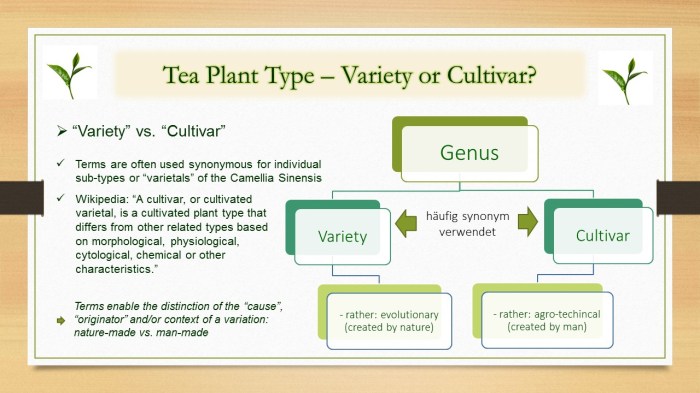
Cultivars and varieties are terms frequently used in horticulture and agriculture, often interchangeably, but they represent distinct concepts. Understanding their differences is crucial for accurate identification and management of plant resources. This section will delineate the precise definitions, highlight key distinctions, and trace the historical context behind their use.Cultivars and varieties, while both referring to specific plant types, differ significantly in their origin and characteristics.
This distinction impacts how we categorize, propagate, and manage these plants. A deep understanding of these terms is essential for anyone involved in plant breeding, agriculture, or horticulture.
Cultivar Definition
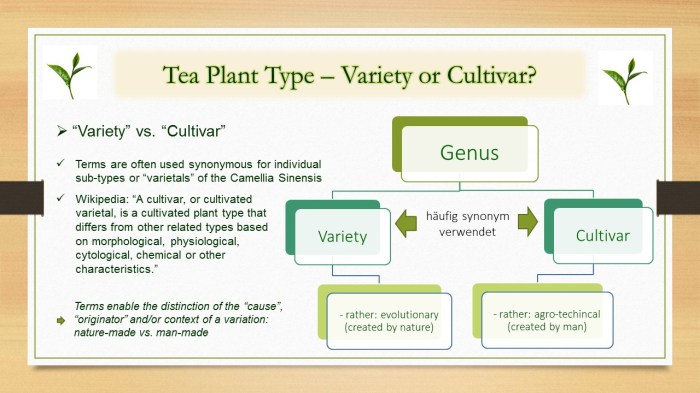
A cultivar is a cultivated variety of a plant. It is a plant variety that has been selected and developed for specific desirable traits, such as yield, fruit size, disease resistance, or flower color. These traits are often enhanced through human intervention and selective breeding. Crucially, cultivars are the result of deliberate human selection and are not naturally occurring.
Variety Definition
A variety is a naturally occurring subdivision of a species. It possesses distinct characteristics from other varieties of the same species, but these differences typically arise from natural genetic variation. Variability in characteristics like flower color, leaf shape, or fruit size can distinguish one variety from another.
Ever wondered about the difference between cultivars and varieties? It’s a bit like knowing how to properly store your prized heirloom tomatoes – different techniques apply to different types. Understanding these distinctions is key to growing the best possible plants, and that’s directly connected to how you organize your home storage solutions. Check out how to store everything in your home for tips on optimizing your space.
Ultimately, knowing the specifics of cultivars versus varieties helps you treat each plant correctly, leading to more success in your gardening journey.
Key Differences
The core difference between a cultivar and a variety lies in their origin. Cultivars are man-made, the product of deliberate selection and breeding; varieties arise naturally from genetic variation within a species. This distinction influences their characteristics, which are more uniform and predictable in cultivars due to human intervention. This intentional manipulation results in cultivars with a more stable and consistent expression of desired traits.
Historical Context
The use of these terms has evolved over time. Initially, the distinction wasn’t as clearly defined, leading to some ambiguity. As the science of plant breeding advanced, the need for precise terminology became evident. Modern botanical classifications rely on rigorous criteria to differentiate cultivars from varieties, ensuring accurate identification and management of plant resources.
Comparison Table
| Feature | Cultivar | Variety |
|---|---|---|
| Definition | A cultivated variety of a plant, developed through human selection and breeding for specific traits. | A naturally occurring subdivision of a species, exhibiting distinct characteristics from other varieties. |
| Origin | Man-made; result of deliberate selection and breeding. | Natural; arising from genetic variation within a species. |
| Characteristics | More uniform and predictable; often enhanced for specific traits. | More variable; exhibiting natural genetic diversity. |
| Examples | ‘Red Delicious’ apple, ‘Golden Delicious’ apple, ‘Dwarf Cavendish’ banana. | Different types of wild roses, various types of wheat (e.g., durum wheat). |
Characteristics and Traits
Cultivars and varieties, while both representing variations within a species, differ significantly in their characteristics and the methods used to develop them. Understanding these distinctions is crucial for agricultural practices, as the traits of cultivars are often more predictable and stable than those of varieties. This section delves into the key characteristics that set them apart, focusing on morphology, yield, disease resistance, and inheritance patterns.Cultivars, unlike varieties, are intentionally selected and bred to exhibit specific desirable traits.
This selection process, often involving multiple generations, results in more consistent and predictable characteristics across individuals. Varieties, on the other hand, arise naturally from variations within a population.
Distinguishing Traits of Cultivars
Cultivars are meticulously developed to possess specific desirable traits, making them predictable and consistent. This process contrasts sharply with the natural variation found in varieties. The consistent traits of cultivars make them highly valuable in agriculture and horticulture.
- Morphology: Cultivars often exhibit specific and uniform morphological features, such as flower shape, leaf size, and fruit color. This uniformity is a key characteristic of cultivars and is a result of intentional selection and breeding efforts. For instance, a cultivar of tomatoes might be selected for its compact growth habit, while another might prioritize high fruit yield.
- Yield: Cultivars are often selected for high yields. This is a primary goal in agriculture, as it directly impacts profitability. Examples include high-yielding rice cultivars, which significantly contribute to food security in many parts of the world.
- Disease Resistance: A key advantage of cultivars is their often-enhanced resistance to specific diseases. This resistance is crucial for sustainable agriculture, minimizing the need for costly and environmentally impactful disease control measures. A cultivar of wheat resistant to rust disease, for example, could significantly reduce crop losses.
- Other Desirable Traits: Cultivars are selected for a wide range of other desirable traits, including flavor, texture, and nutritional content. Consider a cultivar of apples that exhibit a sweet flavor profile or a high content of vitamin C.
Methods for Cultivar Development
Cultivars are not spontaneously occurring; they are meticulously developed through specific techniques. These methods ensure the desired traits are passed on to successive generations.
- Selection: Choosing individuals from a population exhibiting the desired traits is a fundamental step. This selection process is repeated over multiple generations, gradually accumulating the desired characteristics. For instance, a farmer selecting the largest and tastiest fruits from a crop to use as breeding stock.
- Hybridization: Combining desirable traits from different varieties through controlled breeding can yield improved cultivars. This approach can introduce traits that are not present in either parent, creating entirely new and beneficial combinations. A good example is the development of hybrid corn varieties with enhanced yield and disease resistance.
- Genetic Engineering (in some cases): Advanced techniques like genetic engineering can introduce specific genes for desired traits, potentially leading to even more dramatic improvements in cultivars. However, these techniques often raise ethical and environmental considerations.
Inheritance of Traits
The inheritance of traits in both cultivars and varieties follows Mendelian principles of genetics. However, cultivars, due to their selection and breeding history, often exhibit a more predictable and stable inheritance pattern.
- Mendelian Genetics: Traits in both cultivars and varieties are passed down through genes, following the principles of Mendelian inheritance. This includes dominant and recessive traits. The difference lies in the consistency of these traits within cultivars, stemming from intentional selection.
Stability of Traits Across Generations
The stability of traits across generations differs significantly between cultivars and varieties. Cultivars, through deliberate breeding, tend to maintain their traits more consistently than varieties.
- Cultivars: Cultivars, being intentionally bred, demonstrate a high degree of stability in their traits across successive generations. This stability allows farmers to rely on consistent performance. For example, a cultivar of potatoes with high yields will generally maintain high yields across multiple growing seasons.
- Varieties: Varieties, arising from natural variation, may exhibit fluctuating traits in successive generations. This variability can make predicting the performance of varieties challenging. A variety of tomatoes might exhibit different yields from year to year.
Comparison Table
| Trait | Cultivar | Variety |
|---|---|---|
| Morphology | Uniform and predictable | Variable and unpredictable |
| Yield | High and consistent | Variable and potentially low |
| Disease Resistance | Often enhanced | Variable and often susceptible |
| Inheritance | Stable and predictable | Variable and unpredictable |
| Stability across generations | High | Low |
Selection and Development Processes
Cultivars, unlike varieties, are the direct result of human intervention. Understanding the processes behind their creation is key to appreciating the ingenuity and dedication involved in improving plants for specific uses. This section delves into the meticulous selection and development procedures, highlighting the differences between cultivating a desirable trait and letting a variety naturally evolve.The development of new cultivars is a complex process, often involving several generations of selection and testing.
It hinges on recognizing and nurturing desirable traits, and discarding undesirable ones. This process can take years, even decades, but the outcome can significantly impact agricultural productivity and our relationship with the natural world.
Selecting Desirable Traits in Cultivar Development
Cultivating a plant for a particular trait necessitates careful observation and evaluation of its characteristics. Seed breeders meticulously scrutinize individual plants within a population for the desired features. Traits like disease resistance, yield, fruit size, or flower color are key targets for selection. This process often involves several generations of plant breeding.
Procedures Involved in Creating New Cultivars
Developing a new cultivar is a multifaceted undertaking, encompassing several steps:
- Seed Selection: Initial selection of seeds exhibiting the desired traits is crucial. This often involves careful examination of seed morphology, germination rate, and early growth patterns. This step is crucial in establishing a foundation for future improvement.
- Controlled Cross-Pollination: To combine desirable traits from different parent plants, breeders carefully control the pollination process. This is particularly important for creating hybrid cultivars that combine desirable traits from different parent varieties.
- Screening and Evaluation: The resulting offspring are rigorously screened and evaluated to identify individuals possessing the desired traits. This involves careful observation of growth patterns, yield characteristics, and disease resistance.
- Repeated Selection: The selection process is repeated over several generations. This iterative process aims to strengthen the desired traits and reduce the frequency of undesirable ones. Each successive generation should show progressive improvement in the desired characteristics.
- Testing and Validation: The final cultivar is subjected to rigorous testing in diverse environments to ensure its stability and adaptability. Factors like climate, soil conditions, and pest pressure are crucial in this stage.
Differences in Selection Processes Between Cultivars and Varieties
Varieties arise from natural selection processes over long periods. Cultivars, on the other hand, are the result of directed, human-guided selection. The key distinction is human intervention. While varieties may exhibit desirable traits, these traits are not deliberately amplified or enhanced by human intervention. Cultivars are explicitly crafted to improve specific qualities.
Role of Human Intervention in Cultivar Development
Human intervention is paramount in cultivar development. Breeders actively choose parent plants, control pollination, and select progeny based on desired traits. This meticulous process significantly alters the genetic makeup of the plant, shaping its characteristics in a way that nature alone wouldn’t accomplish. The intervention in the selection process is what differentiates cultivars from varieties.
Ever wondered about the difference between cultivars and varieties? It’s a fascinating botanical discussion, but sometimes a bit overwhelming. Basically, cultivars are plants selected and developed by humans for specific traits, like a gorgeous rose. On the other hand, varieties are naturally occurring variations within a species. Learning how to unclog a sink, for example, might not seem directly related, but both topics involve human interaction with natural systems, though in very different ways.
Understanding these distinctions is key to appreciating the diversity of plants around us. Hopefully, this helps you better grasp the differences, and remember, a helpful resource for unclogging your sink is available here: how to unclog a sink. Now, back to the difference between cultivars and varieties!
Techniques to Preserve Unique Traits of Cultivars and Varieties
Preserving the unique traits of cultivars and varieties is vital for maintaining biodiversity and agricultural resilience. Techniques include:
- Seed Saving: Careful preservation of seeds is crucial for maintaining the genetic makeup of cultivars and varieties.
- Genetic Databases: Maintaining detailed records of genetic characteristics helps in tracking and preserving unique traits.
- Controlled Environments: Maintaining a controlled environment helps in preserving the unique characteristics of cultivars and varieties.
- Germplasm Banks: Storing seeds, pollen, or other genetic material in controlled environments is crucial for long-term preservation.
Developing a New Cultivar: A Flowchart
A flowchart illustrating the cultivar development process would show a cyclical nature, with each step feeding into the next. It would start with initial selection of seed stocks, followed by cross-pollination, screening and evaluation, selection, testing and validation, and finally, release to the market.
A comprehensive flowchart would clearly illustrate the iterative nature of the cultivar development process, emphasizing the crucial role of human intervention and the importance of continuous testing and improvement.
Examples and Applications
Cultivars and varieties, through careful selection and breeding, have profoundly impacted agriculture and horticulture. Their tailored traits enhance yield, nutritional value, disease resistance, and overall quality. This section explores the practical applications and diverse examples across various plant species, showcasing their significance in food production, human health, and economic growth. Furthermore, it highlights the crucial role cultivars play in conservation efforts.
Notable Cultivars and Varieties
Numerous examples of exceptional cultivars and varieties illustrate the transformative power of plant breeding. Apples, for instance, boast a vast array of cultivars, each with unique flavors, textures, and colors. ‘Fuji’ apples are known for their crispness and sweetness, while ‘Honeycrisp’ apples are prized for their juicy texture and tangy flavor. In the realm of tomatoes, ‘Beefsteak’ tomatoes are celebrated for their substantial size and meaty texture, whereas ‘Cherry’ tomatoes are appreciated for their small size and sweetness.
These examples represent just a fraction of the countless cultivars developed over time.
Figuring out the difference between cultivars and varieties of plants can be tricky, but it’s important for gardening. It’s all about how much human intervention shaped the plant. Thinking about how much insulation affects home energy bills can be similar. The cost of blown-in insulation, for example, blown in insulation cost , is a factor in deciding on a home improvement project.
Ultimately, both plant selection and home improvement decisions involve weighing different factors and outcomes. Different varieties and cultivars lead to unique results, just as different insulation choices will affect energy efficiency.
Practical Applications in Agriculture and Horticulture
Cultivars and varieties are indispensable tools in modern agriculture and horticulture. Their specific traits allow for optimized crop yields. Disease-resistant varieties reduce the need for pesticides, leading to a healthier environment. Early-maturing cultivars enable multiple harvests within a growing season, boosting productivity. Improved nutritional content in some varieties enhances human health.
Furthermore, the specific adaptations of cultivars to different growing conditions, like drought-resistant varieties in arid climates, contribute to sustainable agricultural practices.
Impact on Food Production and Human Health
The development of superior cultivars has dramatically increased food production worldwide. High-yielding varieties, like those of rice and wheat, have helped meet the nutritional needs of a growing global population. Furthermore, enhanced nutritional content in certain cultivars contributes to improved human health. For example, some cultivars of potatoes and sweet potatoes have been bred for higher vitamin A content, which is crucial for eye health.
These advancements have had a significant impact on food security and public health.
Economic Importance of Cultivars
The economic impact of cultivars is substantial across various industries. The horticultural industry benefits significantly from the availability of attractive and disease-resistant cultivars. In the case of flowers, specific cultivars with vibrant colors and unique forms drive market demand. Similarly, the fruit industry relies on the production of cultivars with desirable flavors, textures, and shelf life for commercial success.
In essence, cultivars drive economic growth in agricultural and horticultural sectors.
Role of Cultivars in Conservation Efforts
Cultivars can play a vital role in conservation efforts by preserving valuable genetic diversity. Traditional varieties, often adapted to specific local environments, can be preserved as cultivars, ensuring that the genetic heritage of various plant species is maintained. The development of disease-resistant cultivars, adapted to specific climates, can help conserve plant populations in challenging environments. These measures safeguard the valuable genetic resources of plants.
Table of Examples
| Species | Cultivar/Variety | Traits | Applications |
|---|---|---|---|
| Apple | Fuji | Crisp, sweet | Fresh consumption, processing |
| Apple | Honeycrisp | Juicy, tangy | Fresh consumption |
| Tomato | Beefsteak | Large, meaty | Fresh consumption, sauces |
| Tomato | Cherry | Small, sweet | Fresh consumption, salads |
| Rice | High-yielding variety | Increased yield | Food production |
Geographic Distribution and Adaptation
Cultivars and varieties, crucial components of agriculture, exhibit diverse adaptations to specific geographical regions. Understanding these adaptations is vital for successful cultivation and for mitigating the impacts of environmental changes, such as climate shifts. The distribution of these cultivated plants profoundly influences agricultural practices, impacting everything from crop yields to pest management strategies.Geographic factors, including climate, soil type, and altitude, play a critical role in shaping the characteristics and traits of cultivars and varieties.
The interaction between these environmental factors and the genetic makeup of the plant determines the plant’s success in a particular location. This adaptation is crucial for the survival and productivity of cultivated plants.
Adaptation to Different Geographical Regions
Cultivars and varieties exhibit remarkable adaptability to diverse geographical environments. This adaptation is largely driven by natural selection and human intervention. For example, rice cultivars adapted to flooded conditions in Southeast Asia differ significantly from those grown in drier, upland regions. This difference reflects the selective pressures imposed by varying water availability. Similarly, wheat varieties adapted to high altitudes in the Himalayas possess different physiological characteristics compared to those grown in lower altitudes.
Impact of Environmental Factors
Environmental factors significantly influence the characteristics of cultivars and varieties. Temperature, rainfall, sunlight, and soil nutrients all play a role in shaping the size, yield, and nutritional content of crops. For instance, drought-resistant maize varieties are crucial in regions experiencing prolonged dry spells. These varieties have evolved physiological mechanisms to conserve water and maintain productivity in arid environments.
Similarly, frost-tolerant apple cultivars are essential in regions prone to winter freezes.
Influence on Agricultural Practices
The distribution of cultivars and varieties significantly influences agricultural practices. Farmers in specific regions often adopt cultivation techniques tailored to the characteristics of the crops they grow. For instance, the cultivation of water-intensive rice necessitates irrigation systems that are well-developed in regions where rice is widely grown. Likewise, the presence of drought-tolerant crops allows farmers to cultivate in regions with limited water resources.
Effects of Climate Change
Climate change poses a significant challenge to the adaptation and distribution of cultivars and varieties. Changing temperature patterns and altered precipitation patterns can negatively impact the productivity of existing varieties. This necessitates the development of new, climate-resilient cultivars and varieties. For example, the development of heat-tolerant corn varieties is critical in areas facing increasing temperatures.
Impact of Geographic Isolation
Geographic isolation plays a vital role in the development of new cultivars and varieties. In isolated regions, unique genetic traits can emerge and become dominant in the local population. This isolation can lead to the development of cultivars and varieties with specialized adaptations to local conditions. This is often observed in mountain regions or remote islands. The development of unique varieties of potatoes in the Andes Mountains, for instance, showcases the influence of geographic isolation on crop evolution.
Global Distribution of Specific Cultivars
A detailed map illustrating the global distribution of specific cultivars and varieties of a plant species, such as the “Golden Delicious” apple, would visually depict the range of its cultivation and highlight areas where it thrives. The map would show the geographic regions where this apple cultivar is most widely grown, potentially exhibiting concentrated areas of cultivation. This map could also show the diversity in cultivation methods and adaptations employed by growers in various regions.
Legal and Intellectual Property Aspects
Cultivars, unlike varieties, are often subject to specific legal protections designed to incentivize plant breeding and innovation. These protections ensure that breeders receive recognition and compensation for their work and investments in developing new and improved plant varieties. Understanding these legal aspects is crucial for both breeders and companies seeking to utilize these improved cultivars.
Legal Considerations in Cultivar Ownership
The ownership and use of cultivars are governed by a complex web of national and international regulations. These regulations aim to balance the rights of breeders with the public’s access to new and improved plant varieties. Breeders’ rights are essential in ensuring the commercial viability of new cultivars, stimulating further research and development. Legal frameworks must provide a clear path for breeders to protect their creations while ensuring a sustainable and accessible supply of seeds and plants for farmers and consumers.
Protection of Intellectual Property Rights
Intellectual property rights (IPR) related to cultivars are protected through various mechanisms. Plant breeders’ rights (PBR) are a key aspect of this protection. PBR systems grant exclusive rights to the breeder for a specific period, enabling them to control the propagation, marketing, and use of the cultivar. These rights incentivize investment in plant breeding and encourage the development of new and improved varieties.
The scope and duration of these rights vary depending on the specific legal framework.
Regulations Governing Cultivar Development and Commercialization, Cultivars vs varieties how do they differ
Regulations governing the development and commercialization of new cultivars differ across countries. These regulations typically involve procedures for registering new cultivars, testing their characteristics, and assessing their compliance with specific standards. National plant variety protection offices play a critical role in these processes. The regulations help ensure that new cultivars meet certain quality standards and are well-adapted to the environment in which they are intended to be grown.
They also address concerns related to genetic purity and uniformity.
Role of Plant Breeders’ Rights in Cultivar Development
Plant breeders’ rights are vital in encouraging the development of new cultivars. They provide a framework that protects the breeder’s investment in research and development, allowing them to profit from their innovation. The prospect of receiving exclusive rights incentivizes breeders to invest in advanced breeding techniques and research, ultimately leading to a wider range of improved cultivars. This incentivization drives the continuous improvement of existing varieties and the introduction of novel traits.
Comparison of Legal Frameworks for Cultivar and Variety Protection
While both cultivars and varieties are protected under some legal frameworks, the specific rights and protections granted often differ. Cultivar protection, typically under plant breeders’ rights, often offers broader and more comprehensive protection, especially when novel traits or unique combinations of traits are involved. Variety protection often focuses on specific traits or characteristics. This difference in scope can influence the commercial opportunities and licensing strategies for each.
Key Legal Aspects of Cultivar Protection by Country
| Country | Type of Protection | Duration of Protection | Registration Process |
|---|---|---|---|
| United States | Plant Variety Protection Act | 20 years from the date of grant | Filing a detailed application with the United States Department of Agriculture |
| European Union | Community Plant Variety Rights | 25 years from the date of grant | Filing a comprehensive application with the European Union Intellectual Property Office |
| Japan | Plant Variety Protection Act | 20 years from the date of grant | Application to the Japanese Intellectual Property Office |
Note: This table provides a simplified overview. Specific details and nuances may vary depending on the particular cultivar and the relevant national laws.
Final Wrap-Up: Cultivars Vs Varieties How Do They Differ
In conclusion, the distinction between cultivars and varieties lies in their origin and the degree of human intervention. Cultivars are specifically selected and developed by humans for desirable traits, whereas varieties naturally occur. This difference has profound implications for agriculture, horticulture, and conservation efforts. Understanding the intricacies of cultivars and varieties allows us to appreciate the immense role they play in our world, from providing food to preserving biodiversity.