

DIY outdoor Halloween decorations are exploding in popularity! From whimsical cobweb creations to spooky silhouettes, the possibilities are endless. This guide explores everything you need to know to craft stunning, unique, and budget-friendly outdoor Halloween displays. We’ll cover crafting ideas, materials, project tutorials, budgeting tips, safety precautions, and even how to maintain your decorations through the season.
Get ready to transform your yard into a hauntingly beautiful Halloween haven!
This comprehensive guide will walk you through the entire process, from initial inspiration to final display. We’ll delve into different styles, materials, and cost-effective strategies to ensure you can create impressive Halloween decorations without breaking the bank. Get ready to unleash your inner creative spirit and craft the perfect Halloween atmosphere for your home!
Introduction to DIY Outdoor Halloween Decorations

The trend of DIY outdoor Halloween decorations has surged in recent years, mirroring a broader interest in crafting and personalization. This approach offers a unique way to express creativity and personalize the spooky festivities, setting homes apart from the typical mass-produced Halloween displays. The charm of DIY decorations lies in their ability to reflect individual tastes and styles, transforming a house into a personalized haunt.The appeal of DIY Halloween decorations is multifaceted.
Beyond the cost savings, it’s the opportunity to unleash creativity and transform a space with personalized touches. For many, the process itself becomes a fun activity, engaging families and fostering a sense of community as neighbors share ideas and creations. This personal touch often results in more unique and memorable displays.
Factors Motivating DIY Enthusiasts
People are drawn to DIY Halloween decorations for a variety of reasons. Cost-effectiveness is a major driver, allowing for the creation of elaborate displays without breaking the bank. Furthermore, the process of crafting decorations is often viewed as a rewarding hobby, providing a sense of accomplishment and satisfaction. The ability to personalize decorations and create unique designs that reflect individual tastes is also a strong motivator.
Finally, the opportunity to spend time with family and friends while crafting and decorating is an important element.
Styles and Types of DIY Outdoor Halloween Decorations
DIY Halloween decorations encompass a vast array of styles and types. From whimsical and spooky to spooky and scary, there are endless possibilities. Simple silhouettes of ghosts or pumpkins carved from wood or foam board can be creatively displayed. More elaborate designs might include intricate scarecrows or detailed haunted houses. The creativity is truly limitless.
Some examples of styles include: classic spooky, whimsical and playful, vintage and nostalgic, or modern and minimalist.
Common Materials Used for DIY Outdoor Halloween Decorations
A wide range of materials are employed in DIY outdoor Halloween decorations. Recycled materials like cardboard boxes, plastic bottles, and wood pallets are frequently repurposed to create unique and eye-catching displays. Natural elements like twigs, leaves, and gourds are commonly used to add a touch of autumnal charm. Crafting supplies like paint, fabric scraps, and string are also employed to create elaborate and detailed decorations.
The choice of materials often depends on the desired aesthetic and the availability of resources.
DIY outdoor Halloween decorations are so fun, but don’t forget about the essentials for your upcoming college adventure! You’ll need to carefully consider what to pack, especially if you’re moving into a dorm. Referencing a comprehensive college living packing list will help you stay organized and prepared for the big move. Plus, with all those new dorm room decor ideas, you’ll want to get creative with your Halloween display, making sure you have everything you need.
| Material | Example Uses |
|---|---|
| Recycled Cardboard | Creating haunted houses, ghost figures, or intricate backdrops. |
| Natural elements (twigs, leaves) | Building rustic scarecrows, adding texture to displays, or creating whimsical creatures. |
| Paint and Fabric | Personalizing scarecrows, adding vibrant colors to pumpkins, or creating elaborate costumes for characters. |
Crafting Ideas and Inspiration

Transforming your outdoor space into a spooky haven for Halloween doesn’t require a hefty budget or professional skills. With a little creativity and readily available materials, you can craft stunning DIY decorations that will impress your neighbors and delight your guests. This section dives into a variety of crafting ideas, from classic silhouettes to whimsical cobwebs, offering inspiration for every style.Beyond simply placing pre-made decorations, DIY projects allow for personalization and a unique touch that reflects your personal style.
They also provide a fantastic opportunity to get the whole family involved, fostering creativity and bonding over shared Halloween fun.
Spooky Silhouette Decorations, Diy outdoor halloween decorations
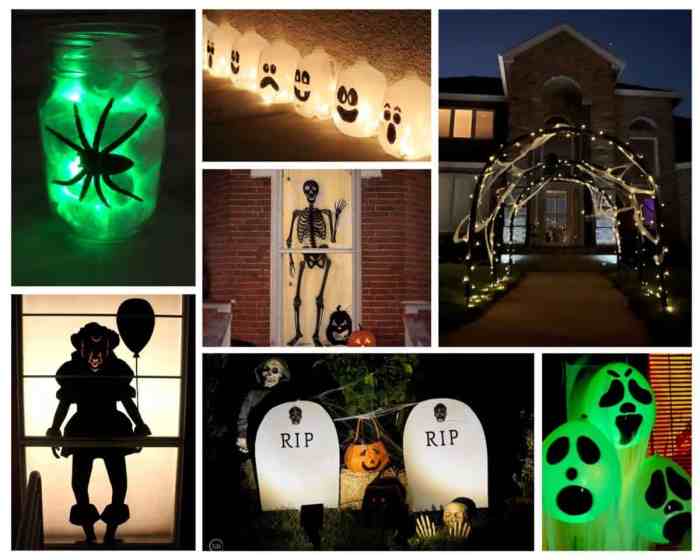
Crafting spooky silhouettes adds a dramatic and atmospheric touch to your outdoor Halloween display. These can be made from readily available materials like cardboard, plywood, or even repurposed wood planks. Cut out simple shapes like ghosts, bats, or witches, and paint or stain them for a striking effect. For an extra touch, add string lights or LED accents for a nighttime glow.
The resulting silhouettes can be placed strategically around your yard, adding depth and visual interest.
Carved Pumpkin Magic
Carving pumpkins is a timeless Halloween tradition. Beyond the classic jack-o’-lantern, explore alternative carving techniques. Create intricate designs, use stencils for consistency, or even incorporate other Halloween symbols like spiders or bats. For non-carving options, paint pumpkins in various colors and patterns to match your desired theme. Consider using glow-in-the-dark paints for a special nighttime effect.
Cobweb Creations
Cobwebs are a fundamental element of any Halloween display. Instead of store-bought cobwebs, create your own using fishing line or twine. Drape these carefully crafted webs over trees, bushes, or fences for a realistic and spooky touch. To add depth, use varying thicknesses of string to create different levels and textures. Consider using metallic or iridescent threads for an added sparkle effect.
DIY Decoration Styles
Various styles can be implemented in your outdoor Halloween display, each offering a unique aesthetic.
- Rustic: This style emphasizes natural elements and warm tones. Use wood, branches, and natural fibers for a cozy and inviting atmosphere. Consider using burlap, straw, and dried leaves to complement the overall rustic feel. Wooden planks or branches can serve as a base for smaller decorations.
- Whimsical: This style prioritizes creativity and fun. Incorporate bright colors, unusual shapes, and playful decorations. Consider using colorful balloons, oversized cutouts, and whimsical props to add a touch of fun and playfulness to your display. The use of unconventional materials like painted stones or found objects can further enhance this style.
- Spooky: This style focuses on creating an eerie and atmospheric environment. Use dark colors, eerie shapes, and elements like fog machines or string lights to heighten the sense of mystery and fright. Use black, dark purple, and grey colors to create a menacing effect. Ensure lighting is strategically placed to enhance the spooky atmosphere.
Halloween Decoration Themes
This table showcases various Halloween decoration themes with corresponding materials and methods.
| Theme | Materials | Methods |
|---|---|---|
| Haunted Forest | Branches, leaves, faux vines, spooky figures | Arrange branches to create a forest path, drape vines, add figures |
| Witches’ Cottage | Wooden planks, old buckets, cobwebs, faux plants | Create a miniature cottage, place buckets as planters, add cobwebs and figures |
| Spooky Mansion | Black fabric, cardboard, string lights, faux tombstones | Create a large silhouette of a mansion, use black fabric for draping, string lights for illumination |
| Monster Mash | Cardboard, paint, glow-in-the-dark materials | Create monster figures, use glow-in-the-dark paint for added effect |
Halloween Colors and Symbolic Meanings
Utilizing the right colors can greatly impact the overall feel of your Halloween decorations.
- Black: Symbolizes mystery, darkness, and secrets. It’s a classic Halloween color that creates a spooky atmosphere.
- Orange: Represents autumn, warmth, and the harvest season. It creates a festive and inviting ambiance.
- Purple: Connects with royalty, mystery, and magic. It adds a touch of elegance and intrigue to your Halloween display.
- Green: Represents nature, decay, and the afterlife. It can be incorporated in a rustic or spooky theme.
- Red: Represents danger, passion, and excitement. It can be used to add a touch of boldness or a pop of color.
Materials and Supplies
Transforming your outdoor space into a spooky spectacle requires careful selection of materials and supplies. The right choice can significantly impact the aesthetic appeal and longevity of your Halloween decorations. From classic wood carvings to intricate fabric creations, the possibilities are endless. Understanding the different options and their associated costs is key to a successful and budget-conscious DIY project.Crafting Halloween decorations involves a diverse range of materials.
The key is to choose materials that align with your creative vision and budget, considering factors like durability, weather resistance, and the overall aesthetic you want to achieve. This section delves into the various materials, tools, and cost considerations for your DIY Halloween extravaganza.
Common Materials
Different materials lend themselves to various Halloween decoration styles. Wood, for example, can be carved into intricate silhouettes, while fabric can be used to create draping or costumes. Natural elements, like gourds and branches, add a rustic touch. Plastic offers versatility and affordability for large-scale projects.
- Wood: Wood is a classic choice for carving intricate figures, creating spooky silhouettes, or building elaborate structures. Its natural beauty and versatility make it a popular option for creating Halloween characters, signs, or decorative elements. The type of wood (e.g., pine, cedar, hardwoods) and its quality can significantly impact the cost and durability of the project.
- Fabric: Fabric can be used to create draping, costumes, or other decorative elements. Different fabrics have varying levels of durability and texture, influencing the project’s cost and overall aesthetic. Consider the thickness, weight, and color when selecting fabric for your project.
- Plastic: Plastic is a highly versatile and cost-effective material for large-scale Halloween decorations. Plastic pumpkins, skeletons, and other figures are often affordable and readily available. However, plastic decorations might not be as durable as wood or fabric.
- Natural Elements: Natural elements, such as gourds, branches, and leaves, add a rustic and organic touch to your Halloween display. These elements are often readily available and can be collected from local sources, significantly reducing costs. Ensure the natural elements you use are properly preserved and safe for outdoor use.
Essential Tools
A well-equipped toolkit is crucial for any DIY Halloween project. The specific tools needed will depend on the complexity of your decorations. From basic carving tools to more advanced crafting equipment, having the right tools ensures smooth and efficient work.
- Carving tools (knives, chisels, gouges): Essential for wood carvings, these tools come in varying sizes and shapes. The type of tool needed will depend on the complexity of the design. Proper maintenance of these tools will ensure their longevity and safety.
- Paintbrushes and paints: Painting is often used to enhance the details and colors of decorations. The type of paint (acrylic, spray paint) will depend on the material being painted and the desired effect. Consider weather resistance when choosing outdoor paints.
- Fabric scissors and sewing supplies: For fabric decorations, fabric scissors and sewing supplies are crucial for creating costumes, banners, or other elements. Ensure you have the right size and type of scissors for the fabric you’re working with.
- Measuring tape, markers, and other crafting tools: These tools are essential for precise measurements, designs, and creating intricate details in your Halloween creations.
Material Costs
The cost of materials for DIY Halloween decorations varies significantly depending on the materials chosen and the project’s scale. A simple pumpkin carving can be relatively inexpensive, while elaborate, large-scale displays may incur higher costs.
| Material | Description | Potential Cost Range (USD) |
|---|---|---|
| Wood (pine) | Basic wood for carving | $5-$25 |
| Fabric (polyester) | Simple fabric for draping | $5-$20 |
| Plastic pumpkins | Small to medium size | $2-$15 each |
| Gourds (natural) | Small to medium size | $3-$10 each |
Safety Precautions
Safety should always be a priority when handling crafting materials. Sharp tools, certain chemicals, and potential hazards associated with specific materials need careful attention.
DIY outdoor Halloween decorations are so much fun, and you can get super creative with them! Thinking about how to display them around your yard? Before you go all out on the spooky decor, you might want to consider if your monsteras need moss poles to thrive. Knowing if your plants need extra support can really affect how you arrange your outdoor Halloween decorations.
After all, you don’t want your spooky decor to end up hindering your plants! For more info on if monsteras need moss poles, check out this helpful guide: do monsteras need moss poles. Once you’ve got your monsteras set up, you can add your DIY decorations, knowing you’ve taken care of the plant needs.
Always prioritize safety when using tools and materials for crafting projects.
Properly storing and handling crafting materials, especially sharp tools and chemicals, will significantly reduce the risk of accidents. Always follow safety guidelines provided by the manufacturer for the specific materials and tools you are using.
Project Tutorials and Ideas
Embarking on your DIY Halloween adventure? Transforming your outdoor space into a spooky spectacle is easier than you think! This section dives into crafting tutorials and inspiration for your Halloween decorations. From classic haunted houses to innovative recycled creations, we’ll guide you through the steps to bring your spooky visions to life.This section presents detailed instructions and methods for creating various outdoor Halloween decorations.
We’ll explore diverse techniques, from simple to complex, ensuring you can select projects that align with your skills and creativity.
Creating a Haunted House
Crafting a haunted house is a quintessential Halloween project. It offers a significant visual impact and invites visitors into a spooky scene. This project can be scaled to suit your space and desired level of complexity.
Materials: Cardboard, cardboard tubes, construction paper, scissors, glue, paint, decorations (glitter, lights, etc.).
Steps:
- Design: Sketch your desired haunted house design on paper. Consider the size and shape that best fits your outdoor space. This initial design step is crucial to visualize the final product.
- Construct the Base: Use cardboard to create the base of the house, cutting and shaping it into the desired roof and wall structure. You can use cardboard tubes for a more sturdy base.
- Add Details: Use construction paper to add doors, windows, and other details to your house. Don’t be afraid to get creative with shapes and sizes. You can also include chimney details for added visual interest.
- Paint and Decorate: Paint the house in a spooky color scheme. Use black, purple, or orange for a classic Halloween aesthetic. Add finishing touches like cobwebs, bats, or other Halloween-themed decorations.
- Add Lighting: String lights inside the house to create an eerie glow at night. For enhanced visibility, consider placing some glow sticks or LED lights within the house structure.
Using Recycled Materials
Transforming discarded materials into spooky Halloween decorations is a creative and environmentally friendly approach. This method fosters resourcefulness and gives new life to items that might otherwise be discarded.
- Old boxes: Transform cardboard boxes into spooky figures, like ghosts, monsters, or even miniature houses.
- Plastic bottles: Decorate plastic bottles to represent pumpkins, bats, or other Halloween-themed creatures.
- Fabric scraps: Create cobwebs, or even costumes for the house.
Step-by-Step Assembly for a Recycled Ghost
This project utilizes a plastic bottle as a base for a spooky ghost.
- Select a plastic bottle. Wash and dry it thoroughly.
- Cut a piece of fabric or white paper and use glue to create the ghost’s body.
- Add eyes and a smile using markers or paint.
- Attach the fabric/paper ghost shape to the plastic bottle.
- Hang the ghost using twine or fishing line.
Decoration Techniques and Effects
Various techniques can elevate your Halloween decorations.
- String lights: Create an eerie glow by strategically placing string lights within your haunted house or other decorations.
- Glow sticks: Enhance the spooky ambiance with strategically placed glow sticks within your haunted house or other decorations.
- Shadow puppets: Utilize simple shadow puppets to add a dynamic element to your Halloween displays.
DIY Outdoor Halloween Decoration Projects
| Project | Materials | Steps | Image Description |
|---|---|---|---|
| Haunted House | Cardboard, paint, construction paper, decorations | Design, construct base, add details, paint, decorate, add lighting | A cardboard structure painted in spooky colors, decorated with paper cutouts and string lights. |
| Recycled Ghost | Plastic bottle, fabric, markers | Clean bottle, cut fabric, decorate, attach to bottle | A plastic bottle with a white fabric ghost shape attached, adorned with eyes and a smile. |
| Spider Webs | Fishing line, glue, artificial spiders | Create a web structure with fishing line, glue to the desired surface, add spiders | A web-like structure made from fishing line, strategically placed over a garden decoration, with artificial spiders embedded within the web. |
Budgeting and Cost-Effectiveness
Transforming your outdoor Halloween display into a spooky spectacle doesn’t have to break the bank. With a little creativity and resourcefulness, you can craft impressive decorations without emptying your wallet. Clever budgeting and cost-effective strategies are key to achieving a fantastic Halloween display without sacrificing quality or style.Clever choices in materials and creative repurposing can significantly reduce costs while maintaining the desired aesthetic.
This approach not only saves money but also fosters a sense of accomplishment and satisfaction in creating something unique and special.
Repurposing Materials for Cost Savings
A crucial aspect of budget-friendly DIY Halloween decorations is repurposing materials. This approach not only reduces costs but also contributes to environmental sustainability by minimizing waste. Transforming ordinary items into extraordinary decorations is a rewarding process.
- Empty plastic bottles can be transformed into spooky ghosts, jack-o’-lanterns, or even miniature scarecrows. By painting, decorating, and adding embellishments, these simple containers can be reborn into striking Halloween characters.
- Old cardboard boxes and paper rolls can be fashioned into intricate structures, like haunted houses or elaborate tombstones. Creativity and imagination are your only limitations.
- Thrift stores and yard sales are treasure troves for affordable materials. Find vintage items, such as old toys, clothes, or furniture pieces, that can be creatively repurposed into unique Halloween decorations. Look for items with potential and transform them into something spectacular.
- Gather natural elements like twigs, leaves, and gourds from your yard or local parks. These materials can be used to create rustic and natural-looking decorations, such as spooky wreaths or whimsical creatures.
Comparing Cost-Effectiveness of DIY Options
Analyzing the cost-effectiveness of various DIY decoration options is crucial. Comparing the price of store-bought items to the cost of creating comparable DIY alternatives can reveal substantial savings.
| Decoration Type | Store-Bought Cost (Estimated) | DIY Cost (Estimated) | Cost Savings |
|---|---|---|---|
| Plastic Spiderwebs | $5-$10 | $1-$2 (using recycled materials) | $3-$8 |
| Pre-made Jack-o’-lanterns | $10-$20 | $2-$5 (using pumpkins and paint) | $5-$15 |
| Store-bought Halloween Figures | $15-$30+ per figure | $3-$10 per figure (using repurposed materials) | $5-$20+ per figure |
Sourcing Affordable Materials
Identifying cost-effective sources for materials is crucial for creating budget-friendly DIY decorations.
- Thrift stores, yard sales, and online marketplaces like eBay or Facebook Marketplace offer a treasure trove of affordable materials. You can discover unique and interesting items that can be repurposed for Halloween decorations.
- Visit local craft stores or hardware stores for affordable supplies like paints, adhesives, and other necessary materials.
- Utilize materials found in your own home or neighborhood, like old boxes, jars, or natural elements.
Long-Term Savings with DIY Decorations
DIY Halloween decorations offer significant long-term savings compared to store-bought alternatives. By investing time and effort in crafting your own decorations, you avoid recurring costs associated with purchasing new decorations each year.
“DIY Halloween decorations not only save money but also foster a sense of creativity and personalization, making your display unique and memorable.”
Safety and Durability
Crafting spooky and spectacular outdoor Halloween decorations is a rewarding experience, but safety and longevity are crucial considerations. Planning for potential hazards and using durable materials are key to ensuring a fun and safe Halloween season for everyone. Understanding how to protect your creations from the elements and secure them properly will ensure your decorations stand the test of time and weather.Careful consideration of safety and durability is paramount when crafting and displaying outdoor Halloween decorations.
This involves proactive measures to prevent accidents and damage, while ensuring the longevity of your creations. By anticipating potential issues and implementing appropriate solutions, you can enhance the enjoyment and safety of your Halloween display.
Safety Precautions
Proper safety precautions are essential for creating and displaying outdoor Halloween decorations. This involves mindful handling of materials, careful planning, and proactive measures to prevent accidents.
- Using appropriate tools and techniques: Always use sharp tools with care, and ensure proper handling of potentially hazardous materials. For example, when working with glass or metal, use protective eyewear and gloves to prevent injuries. Use appropriate safety gear, like gloves and eye protection, when working with any materials that might cause injury or irritation.
- Childproof your decorations: If children might be in the vicinity, ensure that decorations are not easily accessible or pose a tripping hazard. This includes securing heavy items and making sure sharp edges are not exposed. Consider the height and location of decorations, especially those children might be tempted to touch or climb on.
- Avoid flammable materials: Outdoor Halloween displays often involve candles or other open flames. Ensure proper ventilation and keep flammable materials away from heat sources. Consider using battery-operated candles or LED lights to eliminate fire hazards and ensure the decorations are safe in the presence of children.
Potential Hazards and Mitigation
Identifying potential hazards and implementing mitigation strategies are crucial steps in ensuring a safe and enjoyable Halloween experience.
- Tripping hazards: Ensure that decorations do not create tripping hazards by using appropriate support structures and securing them properly. Consider using non-slip materials or ensuring adequate spacing between decorations to avoid creating uneven surfaces that could lead to falls. Carefully place decorations on the ground, making sure there are no tripping hazards. Strategically position decorations to minimize the chance of people stumbling over them.
- Sharp edges and points: Inspect all decorations for sharp edges or points. Consider using protective coverings or padding to minimize the risk of cuts or injuries. If necessary, round off sharp edges of any decorations that could pose a safety risk. Use caution tape or similar markers to delineate areas with sharp objects.
- Weather-related damage: Anticipate potential weather-related damage. Ensure decorations are weatherproof or can withstand expected weather conditions. For example, if it rains, water can damage the decorations or make them slippery. Consider using waterproof materials or coverings to protect them from the elements. Use materials that can withstand potential storms or high winds.
Durability of Materials
Choosing durable materials is key to ensuring the longevity of your outdoor Halloween decorations. Different materials respond differently to the elements, and understanding these properties is important.
- Wood: Wood can be durable if treated properly, but it can rot or warp in wet conditions. Use pressure-treated lumber for outdoor use to resist decay and insect damage. Consider using weather-resistant paints or sealants to further enhance durability.
- Plastic: Plastic is generally weather-resistant, but some types can become brittle or fade in strong sunlight. Choose high-quality, UV-resistant plastics to extend the lifespan of your decorations. Look for plastic with UV protection ratings, and consider using a clear sealant to further protect the decorations.
- Metal: Metal can rust or corrode, depending on the type of metal and the weather conditions. Use galvanized or stainless steel for outdoor use, or apply protective coatings to prevent rust. Metal decorations might need to be repainted periodically to maintain their appearance and prevent rust.
Protecting Decorations from the Elements
Protecting DIY decorations from the elements is crucial for extending their lifespan.
- Weatherproofing: Use waterproof sealant or paints to protect the decorations from rain, snow, and sun. Use outdoor-rated paints and sealants specifically designed for outdoor use. This will help extend the life of your decorations and prevent them from becoming damaged by the elements.
- Covering: Consider using protective coverings, like tarps or waterproof covers, to shield decorations from the elements when not in use. Covering decorations during inclement weather will help to preserve their condition and appearance. Use covers that are waterproof and resistant to tearing.
- Reinforcing structures: Use strong supports to prevent decorations from falling or breaking. This is particularly important for larger or heavier decorations. Ensure that the support structures are strong enough to withstand the weight of the decorations and any potential weather conditions. Check the support structures regularly to make sure they are still stable and strong.
Securing Decorations
Properly securing decorations is essential to prevent accidents and ensure longevity.
- Using anchoring systems: Use appropriate anchoring systems for decorations that might be susceptible to wind or weather. For example, use heavy-duty hooks, weights, or stakes to secure decorations to the ground. This will prevent the decorations from blowing away or falling during strong winds or storms.
- Reinforcing connections: Use strong fasteners and materials to secure all connections between parts of the decorations. This will prevent the decorations from breaking apart or detaching from the structure. Use strong, durable fasteners to prevent breakage.
- Regular inspections: Regularly inspect decorations for any signs of damage or instability. Check for loose connections, damaged components, or any signs of wear and tear. Addressing these issues promptly will help prevent accidents and maintain the integrity of your display. Regularly check the connections and stability of your decorations to ensure they remain secure and prevent damage.
Displaying and Arranging Decorations
Transforming your outdoor space into a spooky spectacle hinges on how you arrange your Halloween decorations. A well-placed pumpkin can elevate the entire vibe, while haphazardly strewn cobwebs can detract from the overall aesthetic. Strategic planning and thoughtful arrangement are key to achieving a truly captivating display.Effective layouts and compositions are essential to maximizing the impact of your DIY creations.
Careful consideration of spacing, color palettes, and thematic cohesion will ensure a harmonious and impactful presentation. Don’t be afraid to experiment with different approaches, finding what best suits your space and vision.
DIY outdoor Halloween decorations are a blast! I’m currently brainstorming some spooky ideas, and I’m thinking about incorporating some fresh sage into my designs. Learning how to harvest sage properly is key to creating those authentic fall vibes, which can then translate to truly terrifying Halloween decor. You can find some great tips on harvesting sage at this link: how to harvest sage.
I’m envisioning dried sage bundles as spooky accents, adding a touch of the autumnal to my frightful Halloween displays. Maybe I’ll even create a “witch’s garden” with the fresh sage and some other autumnal elements.
Effective Layering and Zoning
Creating depth and visual interest in your Halloween display is crucial. Layering different elements, from towering scarecrows to petite witch figurines, adds visual complexity. Imagine a staggered arrangement, with taller items placed in the background, drawing the eye progressively through the display. Think about zoning your space. A section for eerie, dark elements might contrast nicely with a more whimsical or playful area.
Lighting Strategies
Strategic lighting is paramount to bringing your Halloween decorations to life. Soft, warm lighting can create an inviting, almost magical ambiance, while harsh, bright lights can feel jarring and unwelcoming. Consider using string lights, lanterns, or even battery-powered LED candles to highlight key elements of your display. Don’t forget the importance of pathway lighting, especially if you’re using a large or complex display.
Using Props and Elements to Enhance the Theme
Props and elements are your secret weapons for amplifying the Halloween theme and atmosphere. A weathered wooden fence can create a rustic feel, while plastic spiders add a creepy touch. Consider adding small, themed items like miniature ghosts, bats, or tombstones to populate the space. A few strategically placed pumpkins, of varying sizes, can provide visual interest and create a sense of abundance.
These items can bring the overall display to life, giving a more detailed and authentic Halloween atmosphere.
Example Display Layouts
Consider a spooky graveyard scene, complete with weathered tombstones, flickering candles, and strategically placed cobwebs. For a more playful theme, incorporate a whimsical village scene with colorful houses, tiny witches, and glowing lanterns. To maximize the impact, vary the sizes and heights of your decorations. Varying heights and sizes of your decorations creates visual interest, drawing the eye from one element to the next.
| Display Theme | Layout Ideas | Lighting Suggestions |
|---|---|---|
| Spooky Graveyard | Staggered tombstones, cobwebs draped across fences, flickering candles, black and grey color scheme. | Warm-toned string lights around the tombstones, LED candles on the graves. |
| Witches’ Village | Colorful houses, miniature witches, glowing lanterns, whimsical touches. | String lights wrapped around the houses, battery-powered fairy lights. |
“A well-planned and well-lit display can transform your outdoor space into a truly captivating Halloween spectacle.”
Maintenance and Preservation
Keeping your DIY Halloween decorations looking fantastic year after year requires a little proactive care. Proper maintenance extends the life of your creations, saving you money and effort in the long run. It also ensures that your spooky displays are as impressive as possible each autumn.Protecting your hard work from the elements and storing it correctly are crucial for longevity.
Regular cleaning and minor repairs will prevent damage and keep your decorations in top condition. This will also preserve the beauty and quality of the natural materials used in your projects.
Protecting Decorations from Weather Damage
Outdoor Halloween decorations face harsh weather conditions. Rain, snow, extreme temperatures, and even strong winds can take a toll on your creations. Taking preventative measures is key to extending their lifespan. Protecting decorations from moisture and temperature extremes will reduce the likelihood of cracking, warping, or discoloration.
- Cover vulnerable items during inclement weather. A simple tarp or waterproof cover can shield decorations from rain, snow, and excessive sun exposure. Use heavy-duty materials to ensure long-lasting protection.
- Select weather-resistant materials whenever possible. Consider using materials like treated wood, weatherproof paints, or outdoor-grade fabrics. These materials will withstand the elements better than less durable alternatives.
- Reinforce vulnerable areas. For example, if your decorations include wooden structures, use weather-resistant wood glue or sealant to prevent moisture damage. This approach is particularly important for carvings and intricate details. Securing loose parts with screws or other fasteners can prevent them from flying off in strong winds.
Storing Decorations Properly
Proper storage is essential to prevent damage during the off-season. This not only preserves the integrity of your decorations but also saves you time and effort in the long run.
- Clean decorations thoroughly before storing. Remove any dirt, debris, or moisture. This step is vital for preventing mold and mildew, which can permanently damage decorations.
- Store decorations in a dry, cool, and well-ventilated area. Avoid damp basements or attics, as these environments are prone to moisture problems. Consider using storage boxes or containers to protect decorations from dust and other contaminants. Proper ventilation is critical to prevent moisture buildup.
- Group similar items together. Label storage containers for easy identification. This organization will help you locate items quickly when you’re ready to decorate next year.
- Protect fragile decorations. Wrap delicate items in acid-free tissue paper or bubble wrap to prevent damage during transport and storage. Place these items in sturdy boxes to prevent breakage.
Cleaning and Repairing Decorations
Regular cleaning and minor repairs can significantly extend the lifespan of your DIY decorations.
- Use mild soap and water for most decorations. Avoid harsh chemicals that could damage the materials. For example, for painted wood decorations, a gentle soap solution and a soft cloth can be used for cleaning.
- Address any damage promptly. Small cracks or breaks can worsen over time. Use appropriate repair materials, such as wood glue, epoxy resin, or fabric glue, depending on the material. Patching holes or broken parts is critical to maintain the structural integrity of the decorations.
- Inspect decorations regularly. Regular checks can help you catch problems before they become major issues. A visual inspection can reveal signs of wear and tear, such as cracking, discoloration, or loose parts. Regular inspections allow for timely repairs, preventing significant damage.
Preserving Natural Materials
Using natural materials adds a unique touch to Halloween decorations. Proper preservation methods will keep these materials looking their best.
- Protect natural materials from moisture and direct sunlight. These conditions can cause warping, discoloration, and decay. Use appropriate coverings to protect them.
- Control the humidity levels in your storage area. Fluctuations in humidity can cause damage to wood, straw, and other natural materials. Use a dehumidifier in damp areas to maintain ideal storage conditions.
- Use preservatives for wood, straw, or other materials, if needed. Natural preservatives can be applied to wooden decorations or other natural materials to prevent insect damage, rot, and mold. Research the specific preservation methods suitable for your chosen materials.
Ending Remarks
So, there you have it – a complete guide to crafting incredible DIY outdoor Halloween decorations! We’ve covered everything from design inspiration and material selection to project tutorials and cost-effective strategies. By following these tips, you can create stunning and personalized Halloween displays that are both impressive and budget-friendly. Now go forth and create some spooky magic!