



Types of pipe used for water—from the humble beginnings of early water conveyance to the sophisticated composite pipes of today—this exploration delves into the fascinating world of piping materials. We’ll examine the various types of pipes, from the familiar metal pipes to the innovative plastic and composite options, and uncover the factors that influence their selection. Each material has its own set of advantages and disadvantages, and understanding these nuances is crucial for efficient and sustainable water infrastructure.
This comprehensive guide will cover everything from the historical evolution of piping materials to the environmental impact of different types. We’ll analyze the strengths, weaknesses, and typical applications of steel, copper, galvanized steel, cast iron, PVC, ABS, CPVC, reinforced concrete, and asbestos cement pipes. A detailed comparison table will further illustrate the key characteristics of each material, helping you understand the ideal choice for specific water projects.
Introduction to Piping Materials
From the humble beginnings of clay pipes to the sophisticated polymers of today, the materials used for water conveyance have undergone a remarkable evolution. This evolution has been driven by factors including advancements in material science, increasing water demand, and evolving environmental concerns. Understanding the different types of piping materials and their properties is crucial for ensuring safe, reliable, and efficient water delivery systems.The diverse range of materials used in water infrastructure reflects the varying needs of different applications.
Factors like pressure requirements, corrosive environments, and cost-effectiveness play a significant role in selecting the appropriate material for a particular project. This discussion delves into the historical context, the categorization of materials, and provides a comparative analysis of common water pipe types.
Common Water Pipe Materials
Various materials are used for water pipes, each with unique characteristics and applications. These materials can be broadly categorized into several groups.
Historical Evolution of Pipe Materials
The earliest water pipes were often made from natural materials like clay or wood. These materials were readily available but often lacked the durability and strength needed for larger-scale systems. The development of metalworking techniques led to the use of lead and copper, offering better durability and pressure resistance. Later, the introduction of cast iron, ductile iron, and steel expanded the possibilities for water conveyance, while also addressing corrosion concerns.
More recently, the rise of plastics, such as PVC and ABS, provided lighter, more corrosion-resistant alternatives. The choice of material continues to evolve in response to ongoing challenges and technological advancements.
Comparison of Common Water Pipe Types
| Material | Advantages | Disadvantages | Typical Applications |
|---|---|---|---|
| Clay | Abundant, relatively inexpensive in early times. | Susceptible to breakage, low pressure resistance, prone to leaks. | Small-scale water distribution systems in the past. |
| Cast Iron | High strength, good pressure resistance, relatively inexpensive. | Heavy, susceptible to corrosion in certain environments, can be brittle at low temperatures. | Water mains in older infrastructure, where pressure isn’t exceptionally high. |
| Ductile Iron | High strength, better corrosion resistance than cast iron, good flexibility. | Can be more expensive than cast iron, slightly heavier. | Water mains, especially in areas with aggressive water chemistry. |
| Steel | Exceptional strength and pressure resistance, highly durable. | Susceptible to corrosion, can be expensive. | Large-diameter water mains, high-pressure systems, water transmission pipelines. |
| PVC (Polyvinyl Chloride) | Lightweight, corrosion-resistant, relatively inexpensive, easy to install. | Lower pressure resistance compared to metal pipes, can be brittle at very low temperatures. | Water service lines, smaller distribution systems, and drainage systems. |
| ABS (Acrylonitrile Butadiene Styrene) | Lightweight, corrosion-resistant, good impact resistance, cost-effective. | Lower pressure resistance compared to metal pipes, may not be suitable for all applications. | Water service lines, smaller distribution systems, and drainage systems. |
| Copper | Excellent corrosion resistance, high strength, malleable, aesthetic appeal. | High cost, limited availability compared to other materials, can be more complex to install. | Water service lines, plumbing applications. |
Metal Pipes
Metal pipes are a prevalent choice for water conveyance due to their inherent strength and durability. Their diverse properties, ranging from corrosion resistance to malleability, allow for a wide range of applications in plumbing and water distribution systems. Different metal types exhibit varying characteristics, impacting their suitability for specific tasks and environments.
Steel Pipes
Steel pipes are renowned for their exceptional strength and durability. Their high tensile strength makes them capable of withstanding significant pressure, crucial for water distribution systems. This strength, combined with their relatively low cost, makes them a popular choice for large-scale infrastructure projects. However, steel pipes are susceptible to corrosion if not adequately protected. Proper coatings and galvanization are essential to mitigate this risk and extend their lifespan.
The strength of steel pipes is often measured in terms of yield strength and ultimate tensile strength, with higher values indicating better resistance to deformation and breakage under stress.
Copper Pipes
Copper pipes are prized for their exceptional malleability, allowing for easy shaping and installation. This malleability, combined with their excellent conductivity, makes them ideal for applications requiring efficient heat transfer, such as domestic hot water systems. Copper pipes are also highly resistant to corrosion, contributing to their extended lifespan. This inherent resistance to corrosion minimizes the need for frequent maintenance, which translates to long-term cost savings.
Galvanized Steel Pipes
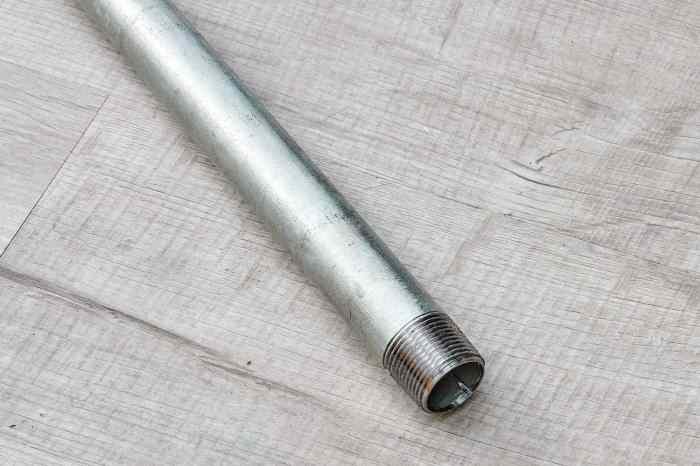
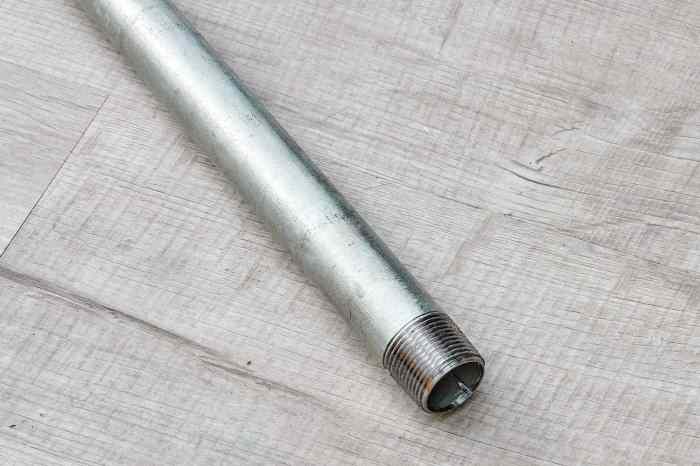
Galvanized steel pipes are a popular compromise between the strength of steel and the corrosion resistance of zinc. A protective zinc coating is applied to the steel, significantly enhancing its ability to resist corrosion. This protection extends the pipe’s lifespan and reduces the frequency of repairs. However, the zinc coating can be susceptible to pitting or breakdown in certain environments, which can lead to localized corrosion.
Different pipes are used for water delivery, from PVC to copper, each with its own pros and cons. Thinking about mosquito-borne diseases, planting some mosquito-repelling plants around your home could be a great addition to your water system. Plants that repel mosquitoes can help keep your outdoor spaces enjoyable, just like choosing the right pipe for your water needs is crucial for a smooth system.
Ultimately, selecting the appropriate pipe type depends on factors like water pressure and budget.
Furthermore, galvanization can introduce some environmental considerations, though modern techniques often minimize these impacts.
Cast Iron Pipes
Cast iron pipes, historically a common choice, offer a blend of durability and affordability. They exhibit good strength and resistance to corrosion, especially in environments with lower water pressures. Different types of cast iron pipes exist, tailored for specific applications. For example, ductile iron pipes are known for enhanced flexibility and impact resistance, making them suitable for challenging terrain and high-pressure systems.
However, cast iron pipes can be heavier than other options, and their installation can be more complex due to their size and weight.
Types of Metal Pipes for Water
| Material Type | Strength | Cost | Maintenance Requirements |
|---|---|---|---|
| Steel | High | Moderate | Moderate (depends on corrosion protection) |
| Copper | Moderate | High | Low |
| Galvanized Steel | High | Moderate | Moderate (susceptible to localized corrosion) |
| Cast Iron (Ductile) | Moderate | Low | Low (resistant to corrosion) |
Plastic Pipes
Plastic pipes have become increasingly popular for water conveyance due to their numerous advantages. Their lightweight nature, ease of installation, and cost-effectiveness make them a practical choice for various water infrastructure projects. However, their susceptibility to certain chemicals and temperature extremes must be considered when selecting them for specific applications.
Types of Plastic Pipes
Plastic pipes come in various forms, each with unique properties. Common types used for water conveyance include PVC (polyvinyl chloride), ABS (acrylonitrile butadiene styrene), and CPVC (chlorinated polyvinyl chloride). These materials exhibit varying degrees of strength, flexibility, and chemical resistance, influencing their suitability for specific applications.
Benefits of Plastic Pipes
Plastic pipes offer several advantages compared to metal pipes. Their lightweight nature significantly reduces installation costs and time, making them ideal for large-scale projects. Furthermore, plastic pipes are generally more cost-effective than metal pipes, especially when considering the lower material cost and easier installation process. Their smooth interior surfaces also minimize water friction, leading to lower energy consumption for pumping.
Limitations of Plastic Pipes
While plastic pipes offer many benefits, certain limitations exist. They are susceptible to degradation from certain chemicals, and their performance can be affected by high temperatures. Careful consideration of the specific chemical composition of the water and the ambient temperature conditions is crucial when choosing plastic pipes for a project.
Applications in Water Infrastructure
Plastic pipes are widely used in a variety of water infrastructure projects. They are employed in water distribution systems, pipelines for transporting treated water, and in irrigation systems. For example, PVC pipes are frequently used in residential water supply lines due to their affordability and ease of installation. ABS pipes, known for their impact resistance, are suitable for applications with potential for external impacts, such as those found in underground utility systems.
Comparison of Plastic Pipe Characteristics
| Material | Durability | Lifespan | Installation Complexity |
|---|---|---|---|
| PVC | Good, resistant to most common chemicals | Typically 50+ years with proper installation | Relatively low |
| ABS | Good impact resistance, moderate chemical resistance | Typically 25-50 years with proper installation | Moderate |
| CPVC | Excellent chemical resistance, high temperature tolerance | Potentially 50+ years with proper installation | Moderate to high |
This table provides a general comparison of the key characteristics of different plastic pipes. Actual performance may vary based on specific factors like pipe thickness, installation methods, and environmental conditions.
Composite Pipes
Composite pipes represent a fascinating blend of materials, offering a unique approach to water conveyance. They combine the strengths of different substances to create a robust and often more environmentally friendly alternative to traditional metal and plastic pipes. This approach to piping design has significantly altered the landscape of water infrastructure projects.Composite pipes are essentially layered structures, where different materials work together to achieve superior performance.
These pipes often incorporate a strong, stiff polymer matrix, reinforced with fibers like fiberglass or carbon fiber. This combination provides exceptional strength and durability while minimizing weight. The resulting pipe exhibits a unique set of properties that make it suitable for a variety of applications.
Structure and Composition
Composite pipes are typically constructed from a polymer matrix reinforced with fibers. The polymer matrix, often a thermoset resin, provides the pipe’s shape and initial strength. The reinforcement fibers, such as glass fibers or carbon fibers, dramatically increase the pipe’s tensile strength and stiffness. This combination of materials creates a composite structure with exceptional mechanical properties. The precise layering and arrangement of these materials affect the final properties of the pipe, influencing its performance in different environments.
Different pipes are used for transporting water, from PVC to copper, each with varying strengths and water pressure capabilities. Understanding how to water deeply, like described in this guide on what is watering deeply , is crucial for healthy plant growth. Ultimately, the right pipe choice depends on the specific needs of your water system and the desired water pressure.
Advantages of Composite Pipes
Composite pipes offer a multitude of advantages over traditional piping materials. Their exceptional strength allows for thinner walls, reducing material usage and cost. They also exhibit excellent corrosion resistance, significantly extending their lifespan compared to metal pipes. This reduced maintenance translates to lower operational costs over the pipe’s lifetime. Lightweight construction facilitates easier installation and handling, reducing labor costs.
Limitations and Challenges
Despite their numerous benefits, composite pipes do present some limitations. The manufacturing process can be complex and costly, potentially increasing the initial investment. Additionally, the long-term performance of the polymer matrix under extreme temperature fluctuations or specific chemical exposures needs careful consideration. Proper selection and application are crucial to ensure longevity and performance in different environmental conditions.
Applications in Water Distribution
Composite pipes are finding increasing use in various water distribution networks. Their corrosion resistance makes them ideal for applications in corrosive environments, such as those involving saline water or industrial wastewater. Their lightweight nature facilitates installation in challenging terrain, such as mountainous regions. Their strength allows for the construction of larger diameter pipes, enhancing the capacity of the water distribution system.
Comparison Table
| Material | Cost | Durability | Environmental Impact |
|---|---|---|---|
| Metal (Steel) | Moderate | Good, but susceptible to corrosion | Potentially high depending on manufacturing processes |
| Plastic (PVC) | Low | Good, but limited strength and temperature tolerance | Generally lower than metal, but recyclability varies |
| Composite | High (initially), but potentially lower over lifetime | Excellent, high resistance to corrosion | Lower than metal, often recyclable or reusable |
Specialized Pipes: Types Of Pipe Used For Water
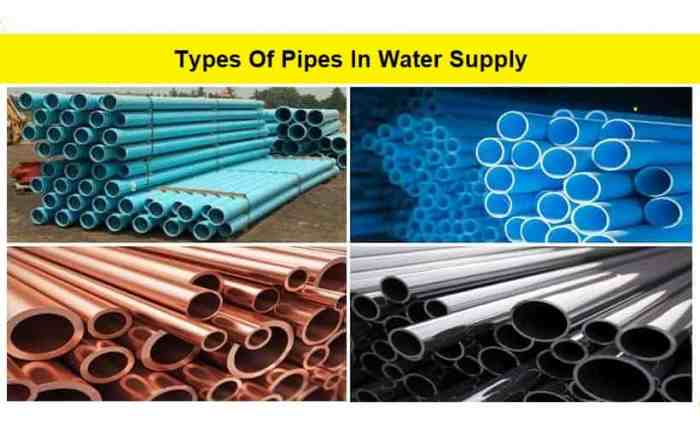
Beyond the common metal and plastic options, specialized pipes cater to specific water infrastructure needs. These pipes often excel in environments with unique challenges, such as high pressure, corrosive conditions, or demanding soil compositions. Understanding their applications and properties is crucial for effective water management.
Reinforced Concrete Pipes
Reinforced concrete pipes (RCPs) are a mainstay in water infrastructure projects, particularly for large-scale sewer and drainage systems. Their robust construction makes them ideal for handling high volumes of water and sediment. The reinforcement, typically steel or other metals, enhances their compressive strength and durability, allowing them to withstand significant loads and ground pressure. For instance, in projects involving deep trenches or areas prone to ground movement, RCPs provide the necessary structural integrity.
Their inherent resistance to corrosion further extends their lifespan.
Asbestos Cement Pipes
Asbestos cement pipes (ACP) were historically significant in water distribution systems. Their strength, durability, and resistance to corrosion made them popular choices for various applications, especially in the mid-20th century. However, concerns regarding asbestos health risks have led to a significant decline in their use, with many jurisdictions now prohibiting their installation. Understanding their historical importance provides context for modern piping materials and the evolving safety standards in water infrastructure.
ACP’s long lifespan and resistance to chemicals made them suitable for many applications, though the dangers of asbestos now render them unsuitable.
Specialized Pipes for High-Pressure Systems
High-pressure water systems, such as those used in fire suppression or industrial processes, necessitate pipes with exceptional strength and durability. For these applications, pipes made from high-strength steel alloys, reinforced polymers, or even specialized composites are often employed. These materials can withstand the immense pressure exerted on the pipes without compromising structural integrity or leading to leaks. Examples include pipes used in high-rise buildings for water supply, and pipes within fire hydrant systems.
Material Properties and Performance Characteristics
The selection of specialized pipes is highly dependent on the specific application. Material properties like tensile strength, compressive strength, and resistance to corrosion are critical factors. Considerations also include the pipe’s flexibility, impact resistance, and ability to withstand temperature fluctuations. The lifespan of a pipe is also a key consideration, directly influencing the long-term cost-effectiveness of the installation.
Table of Specialized Pipes
| Material | Application | Strength | Lifespan (approx.) |
|---|---|---|---|
| Reinforced Concrete | Large-scale sewer and drainage systems, deep trenches | High compressive strength | 50+ years |
| Asbestos Cement | Water distribution systems (historical) | High strength, durable | 50-75+ years (historical data) |
| High-strength steel alloys | High-pressure water systems (fire suppression, industrial) | Exceptional tensile strength | 30-50+ years (depending on application) |
| Reinforced polymers | High-pressure water systems, chemical applications | High strength, good chemical resistance | 25-50+ years (depending on application) |
Pipe Selection Criteria
Choosing the right pipe material for a water project is crucial for ensuring safe, reliable, and cost-effective water delivery. This selection process depends on several key factors, each playing a vital role in the long-term performance and suitability of the pipeline. Understanding these criteria helps engineers and designers make informed decisions, avoiding costly mistakes and potential hazards.The selection of water pipes involves a multifaceted approach, considering factors like water quality, pressure requirements, and environmental conditions.
This comprehensive analysis ensures the pipe material not only meets immediate needs but also stands up to the rigors of the intended application. Careful consideration of local regulations and standards further ensures compliance and safety.
Thinking about the different types of pipes used for water delivery got me wondering about nature’s amazing designs. Just like various pipes are engineered for optimal water flow, some flowers mimic the beauty of birds, like the stunning examples found in this article about flowers that look like birds. From PVC to copper, each pipe type has its strengths and weaknesses, just as each flower has its unique charm.
Ultimately, the right pipe for the job is crucial for a smooth water supply, just as the right approach to gardening ensures thriving plants.
Factors Influencing Pipe Material Selection
Understanding the specific characteristics of the water being transported, the operating conditions, and local regulations is paramount in selecting the appropriate pipe material. Different pipe types excel in different environments, and understanding these nuances is key to successful project execution.
- Water Quality: The chemical composition and presence of corrosive elements in the water directly impact the choice of pipe material. For example, highly acidic water necessitates materials like stainless steel or specialized linings to prevent corrosion and maintain water purity.
- Pressure Requirements: The pressure exerted on the pipe during water flow significantly affects the pipe’s strength and thickness. High-pressure applications often require thicker, more robust pipes made from materials like ductile iron or steel.
- Temperature Requirements: Water temperature can also influence the selection. Hot water pipelines require materials with higher temperature resistance, such as copper or certain types of plastic, to prevent degradation and potential leaks.
- Cost Considerations: The economic viability of a project plays a significant role. Different materials have varying costs, and the initial cost should be weighed against the long-term maintenance and replacement costs.
- Installation Complexity: The complexity of the installation process, including the terrain and access limitations, can influence the choice. Certain materials might be easier or more suitable for specific installation environments.
Importance of Water Quality, Pressure, and Temperature
These factors are integral to the success and longevity of a water pipeline. Understanding and appropriately accounting for these parameters is critical in avoiding issues such as leaks, corrosion, and premature failure.
- Water Quality: Different water types, like hard water with high mineral content or water with high acidity, necessitate the selection of materials that can resist corrosion and maintain water purity. This is crucial for maintaining public health and safety.
- Pressure Requirements: The pressure rating of the pipe is a crucial factor in ensuring structural integrity and preventing failures. A pipe subjected to higher-than-rated pressure is at risk of bursting, causing significant damage and disruption.
- Temperature Requirements: High water temperatures can lead to pipe degradation and potentially hazardous situations. Materials like certain plastics may become brittle or lose structural integrity at high temperatures, requiring a different selection. The specific material’s temperature resistance must be matched to the water temperature for optimal performance.
Role of Local Regulations and Standards
Local building codes and industry standards dictate the permissible pipe materials and specifications for water distribution systems. These regulations ensure public safety and compliance with established safety protocols.
- Local Regulations: Building codes often dictate the allowable pipe materials for specific water applications, based on factors such as water quality, pressure, and local environmental conditions. Compliance with these regulations is essential for project approval and acceptance.
- Industry Standards: Standards like those from the American Water Works Association (AWWA) provide detailed guidelines and specifications for various pipe materials, ensuring consistency and safety across different projects. Adhering to these standards is essential for project success.
Examples of Specific Situations
Different pipe types are suitable for different situations. The optimal choice depends on a careful evaluation of the specific requirements.
- High-pressure water distribution systems in urban areas often utilize ductile iron or steel pipes due to their strength and ability to withstand high pressures.
- In areas with corrosive water, PVC or CPVC pipes might be the best choice due to their resistance to corrosion.
- Small-scale irrigation systems often use polyethylene pipes for their affordability and ease of installation.
Decision-Making Flowchart for Pipe Material Selection
This flowchart illustrates the decision-making process for choosing the appropriate pipe material for a given water project.
| Step | Action |
|---|---|
| 1 | Define project parameters (water quality, pressure, temperature, location) |
| 2 | Research available pipe materials |
| 3 | Assess material suitability based on defined parameters |
| 4 | Consider local regulations and standards |
| 5 | Evaluate cost-benefit analysis of different materials |
| 6 | Select the most appropriate pipe material |
Environmental Impact of Pipes
The choice of pipe material significantly impacts the environment throughout its lifecycle, from manufacturing to disposal. Understanding the environmental footprint of each material is crucial for sustainable water infrastructure development. Factors like carbon emissions, water consumption, and waste generation are key considerations. This section explores the environmental impact of different pipe materials.
Manufacturing Processes and Their Environmental Footprint, Types of pipe used for water
Different pipe manufacturing processes have varying environmental impacts. Metal pipes, for example, often involve high-temperature smelting, which contributes to greenhouse gas emissions. Plastic pipes, while potentially lower in emissions during manufacturing, can rely on fossil fuels for production, contributing to carbon emissions. Composite pipes often involve the combination of various materials, each with its own environmental footprint.
The manufacturing process for each type needs careful evaluation to assess its contribution to pollution.
Environmental Impact of Different Pipe Materials
- Metal Pipes (e.g., Steel, Copper, Cast Iron): Metal pipe production typically involves significant energy consumption, contributing to greenhouse gas emissions. The extraction and processing of raw materials also have environmental consequences. Steel, for instance, requires substantial energy for smelting, and the disposal of scrap metal poses a waste management challenge. Copper production, while efficient, can still involve pollution from refining processes.
Cast iron, due to its manufacturing process, may have a higher carbon footprint compared to other metals. However, steel and copper pipes have a high recyclability rate.
- Plastic Pipes (e.g., PVC, PE): Plastic pipe production relies heavily on fossil fuels, creating a significant carbon footprint. The manufacturing process often releases volatile organic compounds (VOCs) into the atmosphere. Disposal of plastic pipes is another concern; while recyclable, they are often not collected or recycled extensively. Polyvinyl chloride (PVC) production, in particular, generates significant waste. The use of recycled plastics can mitigate the environmental impact.
- Composite Pipes (e.g., Fiber-Reinforced Polymer): Composite pipes generally have a lower carbon footprint than metal pipes, but the exact impact depends on the specific materials used in the composite. Manufacturing processes often involve the use of various materials, including polymers and fibers, which might have differing environmental profiles. The recycling of composite pipes is often complex and less well-established compared to metal pipes.
However, the lower energy intensity in manufacturing composite pipes compared to some metal pipes can contribute to a lower carbon footprint.
Recyclability and Reusability of Pipes
The recyclability and reusability of pipes vary significantly depending on the material. Metal pipes, particularly steel and copper, have high recyclability rates, allowing for the reuse of the material. This reduces the need for new material extraction and processing, lowering the overall environmental impact. Plastic pipes, although potentially recyclable, are not always collected and processed efficiently. The recycling process for some plastics can also have environmental implications.
Composite pipes often pose challenges for recycling due to the different materials used. Development of efficient recycling methods for composite pipes is a current area of research. Efforts to increase the recycling rate of various pipe materials are crucial.
Potential for Leaching of Harmful Substances
Certain pipe materials can leach harmful substances into the water, potentially impacting human health and the environment. Some plastics, like certain types of PVC, can leach plasticizers. Copper pipes, while generally safe, can leach copper into the water under specific conditions. Understanding the potential for leaching is crucial for selecting appropriate pipe materials for different water quality requirements.
Comparison of Environmental Impact
| Pipe Material | Carbon Footprint (Estimated) | Water Usage (Estimated) | Waste Generation (Estimated) |
|---|---|---|---|
| Steel | High | Moderate | Moderate (High recyclability) |
| Copper | Medium | Low | Moderate (High recyclability) |
| PVC | Medium-High | Low | High (Low recyclability) |
| PE | Medium | Low | Medium (Moderate recyclability) |
| Composite (FRP) | Medium-Low | Moderate | Moderate (Varying recyclability) |
Note: Estimates vary based on specific manufacturing processes and local conditions.
Closing Summary
In conclusion, selecting the right pipe for a water project is a critical decision, influenced by a multitude of factors. From historical context to modern considerations, this exploration highlights the diverse options available, each with its own unique set of benefits and drawbacks. Ultimately, the best choice hinges on a careful evaluation of water quality, pressure, temperature, cost, environmental impact, and local regulations.
By understanding the intricacies of each material, we can build more efficient, sustainable, and effective water infrastructure for the future.