



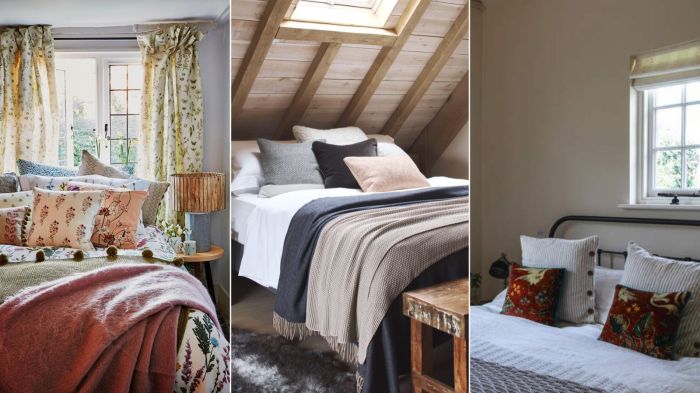
Tips and solutions for a bed under the window: Maximize your space and natural light with these clever strategies! From choosing the perfect window type to managing noise and light, we’ll explore everything you need to know for a comfortable and stylish bedroom setup.
This guide covers crucial factors like window placement, light and ventilation strategies, noise reduction, storage solutions, and aesthetic design considerations. We’ll delve into the specifics of different window types, optimizing light and ventilation, and finding innovative ways to minimize noise and maximize storage in the often-limited space under the window.
Window Placement Considerations

Choosing a bed placement near a window can significantly enhance a bedroom’s ambiance and functionality. Proper consideration of window types, optimal distances, and potential trade-offs are crucial for creating a comfortable and well-designed space. Careful planning can lead to a bedroom that maximizes natural light, ventilation, and minimizes unwanted noise and drafts.Understanding the various window types and their unique characteristics is essential for effectively positioning a bed.
Different window styles present varying opportunities and challenges for bedroom design, influencing both the aesthetic appeal and practical aspects of the space. A thoughtfully considered approach ensures that the bed’s placement harmonizes with the overall design and maximizes the benefits of the window’s attributes.
Window Types and Their Impact on Bed Placement
Different window types offer unique opportunities and present specific considerations for bed placement. Understanding these distinctions helps optimize the use of natural light, ventilation, and overall room design.
- Standard Windows: These are the most common type, offering straightforward placement possibilities. Positioning a bed directly beneath a standard window can bring in abundant natural light, but careful consideration of noise levels and potential drafts is necessary.
- Bay Windows: These protrude from the room, creating a spacious seating area and enhancing the view. A bed placed near a bay window can capitalize on the expanded space and the natural light, though the added dimension might necessitate adjustments in furniture arrangement to maintain a balanced layout.
- Dormers: These are window extensions that project upward from the roof. Their unique placement provides an abundance of natural light and often an elevated view. Placing a bed under a dormer maximizes light and can enhance the overall aesthetic appeal, but the proximity to the roof may impact ventilation and sound insulation.
Optimal Distance from the Window
Positioning the bed at the ideal distance from the window balances the advantages of natural light and ventilation with the potential for drafts and excessive noise.The optimal distance depends on the window type, room size, and personal preferences. Generally, a distance of 3 to 5 feet from the window is often a good starting point. This allows for adequate natural light while minimizing the risk of drafts.
Pros and Cons of Placing a Bed Directly Under a Window
Placing a bed directly beneath a window has its own set of advantages and disadvantages. A careful assessment of these factors ensures a comfortable and functional bedroom.
- Pros: Abundant natural light, improved ventilation, potential for beautiful views, and a brighter, more open feel.
- Cons: Increased noise from outside, potential for drafts, and fluctuations in temperature, especially in extreme weather conditions. Direct sunlight can also be disruptive during certain times of the day.
Designing the Space for a Bed Under a Window
Creating a balanced and visually appealing space requires careful consideration of furniture arrangement and decor choices.
- Furniture Arrangement: Positioning other furniture, such as nightstands, dressers, and wardrobes, around the window and bed should enhance the space’s functionality and aesthetics. Consider the available space and the flow of traffic.
- Decor Suggestions: Selecting appropriate curtains, blinds, or shades to manage natural light and maintain privacy is essential. Decorative elements, such as artwork or plants, can complement the window and bed placement.
Maximizing Storage Space
The space under or near the window can be effectively utilized for storage solutions.
- Storage Solutions: Built-in shelving, drawers, or ottomans can be incorporated into the design to provide ample storage without compromising the room’s aesthetics. Under-bed storage solutions can be integrated for added functionality.
Comparison Table of Window Types and Ideal Bed Placement
| Window Type | Ideal Bed Placement | Considerations |
|---|---|---|
| Standard Windows | 3-5 feet from the window | Noise, drafts, and temperature fluctuations |
| Bay Windows | Adjacent to the bay window, but maintain space for the seating area | Sufficient space for the bay window’s function, potential for maximizing light and views |
| Dormers | Close to the dormer, but consider the roof’s impact on ventilation | Maximizing light, but potential for reduced ventilation and sound insulation |
Light and Ventilation Strategies
Maximizing the benefits of a bed positioned under a window hinges on thoughtful strategies for managing light and ventilation. Understanding how natural light and air flow interact with your space is key to creating a comfortable and productive environment. Careful consideration of the time of day, season, and personal preferences is vital for optimizing this arrangement.
This section dives into techniques for controlling light levels, improving ventilation, and adjusting temperature to create an ideal sleep or work environment under your window. We’ll explore a variety of window coverings and discuss how they impact both light and airflow. Ultimately, the goal is to personalize the space to suit individual needs and preferences, ensuring a healthy and productive atmosphere.
Managing Light Levels
Sunlight’s intensity varies significantly throughout the day and across seasons. Direct sunlight can be overwhelming during peak hours, while diffused light can be calming. Strategically placed window coverings can help modulate the light entering the space.
Mitigating or Enhancing Light Penetration
Personal preferences play a crucial role in determining the ideal light levels. For those who appreciate the natural light, sheer curtains or blinds can allow diffused light to filter into the room. For individuals who prefer darker environments, thicker curtains or blackout shades can completely block out the light.
Improving Ventilation Under the Window
Proper ventilation is essential for maintaining a healthy indoor environment. Strategically placing fans, such as box fans or strategically positioned oscillating fans, can enhance airflow under the window. This method can help circulate air and prevent stagnation. The placement of the fan will affect the direction and effectiveness of the airflow. In addition, careful selection of window coverings can also contribute to better ventilation.
Thinking about placing a bed beneath a window? Plenty of clever tips and solutions exist, like strategically placed lighting or creative storage solutions. It’s interesting to consider how interior designers, in their own homes, might make some compromises, perhaps opting for a more practical arrangement than a purely aesthetic one, like in compromises interior designers made in their own homes.
Ultimately, the best solution often involves a balance of style and functionality, leading to a comfortable and well-designed space under the window.
Window Coverings for Light and Draft Control
Choosing the right window coverings is critical for optimizing light control and minimizing drafts. Different materials and designs offer varying degrees of light penetration, insulation, and draft resistance. This selection process requires careful consideration of personal needs and preferences.
- Blinds: Blinds are excellent for controlling light intensity and maintaining privacy. Vertical blinds can be adjusted to allow light to pass through or block it entirely. Horizontal blinds offer similar functionality and can provide more privacy, but may affect airflow slightly more.
- Curtains: Curtains, with their various materials and weights, offer a wide range of light and draft control options. Heavy, thick curtains are ideal for blocking out light and minimizing drafts, while sheer curtains allow natural light to filter through.
- Shades: Shades, ranging from cellular shades to roman shades, are popular for their ability to regulate light and temperature. Cellular shades, for instance, are particularly effective at insulation, reducing drafts, and blocking light. Different types of shades offer varying levels of light control.
Adjusting Temperature Under the Window
The temperature under a window can fluctuate throughout the day, depending on sunlight exposure and external temperatures. Strategically using window coverings can help maintain a comfortable temperature.
Comparison of Window Coverings
| Window Covering | Light Control | Ventilation | Temperature Regulation |
|---|---|---|---|
| Blinds (horizontal/vertical) | Good, adjustable | Moderate, can slightly impede airflow | Fair, moderate insulation |
| Curtains (sheer/heavy) | Adjustable, varies greatly with material | Good, dependent on material thickness | Good, heavy curtains offer better insulation |
| Shades (cellular/roman) | Good, adjustable | Moderate, dependent on shade type | Excellent, excellent insulation |
Noise Reduction and Soundproofing: Tips And Solutions For A Bed Under The Window
A bedroom under a window can be a haven of tranquility, or a battleground of external noise. Understanding and implementing effective soundproofing strategies can significantly improve sleep quality, focus, and overall well-being. This section dives into the world of noise reduction, providing practical solutions to transform your bedroom into a peaceful sanctuary.Minimizing unwanted noise involves a multi-faceted approach, addressing the source of the noise at the window, and mitigating its impact throughout the room.
The key is to create a layered defense against sound waves, reducing their transmission through walls, floors, and windows. Proper soundproofing considers the frequency of the noise, as some sounds are more challenging to block than others.
Maximizing a windowsill bed often involves careful plant selection. Thinking about plants you can prune in winter, like certain types of shrubs and flowering plants, can really help you manage space and light. Proper pruning techniques, as outlined in this helpful guide on plants you can prune in winter , can lead to healthier plants and more room in your window bed.
Ultimately, understanding your plants’ needs is key to a thriving, organized window-sill garden.
Soundproofing Strategies for Walls, Tips and solutions for a bed under the window
Effective soundproofing of walls involves using materials that absorb sound waves. This reduces the reflection and reverberation of noise, creating a quieter environment. Common materials include sound-absorbing panels, insulation, and acoustic drywall. The selection of materials depends on the budget and the desired level of sound reduction. Heavy drapes and curtains also play a role in absorbing sound.
Soundproofing Strategies for Floors
A significant source of noise transmission often originates from the floor. To address this, consider using sound-dampening underlayments beneath the flooring. These underlayments act as a barrier between the noise source and the floor, reducing the transfer of sound to the bedroom. Consider floating floor systems or adding extra layers of insulation to the subfloor. Carpet and rugs on the floor also contribute to noise absorption.
Soundproofing Strategies for Windows
Windows are often significant contributors to noise penetration. Double-paned or triple-paned windows, with their air gaps, significantly reduce sound transmission. Additionally, consider acoustic window inserts or specialized soundproof window films. These solutions, while often more costly, can create a considerable difference in noise levels. Properly sealing gaps and cracks around windows is crucial to prevent noise from entering.
Materials and Techniques for Soundproofing
Soundproofing materials and techniques vary in their effectiveness and cost. Some common materials include:
- Acoustic panels: These panels are specifically designed to absorb sound waves, often made from materials like fiberglass or mineral wool. They are effective at reducing reverberation.
- Insulation: Adding insulation to walls and ceilings can significantly reduce noise transfer. Consider using denser materials like fiberglass or mineral wool for enhanced soundproofing.
- Soundproof Curtains/Drapes: Heavy drapes can absorb sound waves, acting as a secondary barrier against noise. Consider materials like velvet or thick fabrics.
- Underlayments: These materials are placed beneath flooring to dampen sound transmission between the floor and the room below. They are particularly important for reducing footfalls and other noises that travel through the floor.
- Acoustic Caulk: Using acoustic caulk to seal gaps and cracks around windows and doors can significantly reduce noise penetration.
Examples of Successful Soundproofing Projects
Many successful soundproofing projects involve a combination of techniques. A homeowner might install double-paned windows, add soundproofing underlayments to the floor, and hang heavy drapes to achieve a significant reduction in street noise. A studio apartment owner might use acoustic panels on walls and a floating floor system to create a quieter workspace.
Managing Noise Levels at Different Times of Day
Different times of day require varying approaches to noise reduction. During the day, focusing on noise from traffic and other outdoor activities is key. At night, minimizing sounds from neighbors and other nocturnal activities is crucial. Soundproofing techniques should be tailored to the specific noise sources and their intensity.
Comparison of Soundproofing Materials
The effectiveness of soundproofing materials varies depending on the frequency of the noise and the specific material. A table comparing different materials and their effectiveness can help in choosing the best solution for your needs.
| Material | Effectiveness (general rating) | Pros | Cons |
|---|---|---|---|
| Acoustic Panels | High | Excellent sound absorption, customizable | Can be expensive, requires installation |
| Heavy Curtains/Drapes | Medium | Relatively inexpensive, easy to install | Effectiveness depends on material thickness |
| Double-Paned Windows | High | Improved energy efficiency, good sound reduction | Higher cost than single-paned windows |
| Soundproof Underlayments | Medium-High | Effective in reducing impact noise, good for floors | May not fully eliminate all noise |
Storage and Organization Solutions
Maximizing space under a window, while maintaining aesthetic appeal, requires thoughtful planning. A bed positioned beneath a window often presents a unique set of storage challenges, but with innovative solutions, you can create a functional and stylish space. Clever storage strategies can transform this often-overlooked area into a highly usable and visually appealing part of the room.The limited space under a window necessitates creative solutions.
Rather than letting this area become a storage abyss, consider transforming it into a well-organized and aesthetically pleasing addition to your bedroom. This involves a blend of careful planning, the selection of appropriate storage pieces, and the integration of storage solutions into the overall design of the room.
Custom Built-in Storage
Custom built-in storage solutions are an excellent way to maximize space under a window. A custom-designed unit can seamlessly integrate with the room’s design, providing hidden storage while maintaining a streamlined aesthetic. These units can incorporate drawers, shelves, and even hidden compartments for maximizing space and keeping belongings organized. Examples include shelving units with integrated drawers or a wall-mounted unit that perfectly fits the window’s curvature, concealing the storage area.
Shelving and Ottomans with Storage
Shelving provides a versatile and practical way to store items. Open shelving can display decorative items or books, while closed shelving can conceal clutter. Matching the shelving to the overall style of the room is key to maintaining a cohesive design. Ottomans with storage underneath are another option. These can be integrated into the room’s seating arrangement, providing extra seating while offering a discreet place for blankets, pillows, or extra linens.
Window Area for Display and Decoration
The window area itself can be a focal point for display. Plants, framed artwork, or decorative bowls can be arranged on the windowsill to create a visually appealing display. Choose items that complement the room’s overall style and enhance the natural light coming through the window. Consider using a window seat or bench with storage underneath for added practicality.
Positioning a bed under a window is great for natural light, but you need to consider potential issues like drafts and moisture. One thing to watch out for is the possibility of moisture accumulating, which could lead to problems like mold or even, surprisingly, mushroom growing in houseplant. This article offers some valuable insights into that.
To counteract these issues, consider using window treatments, moisture barriers, and good ventilation. Ultimately, the best approach for a bed under the window involves a combination of strategic placement and proactive maintenance.
Organizing and Decluttering
Organizing and decluttering are essential for maintaining a sense of calm and order. Regularly decluttering the space under the window and around the bed helps prevent clutter from accumulating. Implement a system for organizing items such as clothing, linens, or accessories. Invest in storage containers and baskets to keep items neat and tidy. Using different colored baskets for different categories can enhance the visual appeal and help maintain a structured approach to organization.
Integrating Storage with Bed and Room Style
Consider how the storage solutions will integrate with the bed’s design and the room’s overall style. If the bed has a headboard with storage, coordinate storage solutions with the headboard’s design. If the room has a modern aesthetic, minimalist shelving units might be appropriate. Choose storage solutions that complement the color palette and materials of the room.
For example, a wooden storage ottoman would complement a room with wooden furniture.
Storage Solutions Table
| Storage Solution | Description | Benefits |
|---|---|---|
| Custom Built-in Storage | Wardrobe-like storage built into the wall. | Maximizes space, seamless design integration. |
| Shelving | Open or closed shelves for display or storage. | Versatile, allows for both display and storage. |
| Ottomans with Storage | Ottomans with hidden compartments underneath. | Adds seating and discreet storage. |
| Window Seats/Benches | Seats incorporated into the window area. | Adds seating, storage space underneath. |
| Storage Containers/Baskets | Bins and baskets for organizing items. | Keeps items neat and tidy, improves visual appeal. |
Aesthetic and Design Considerations
Transforming a bed positioned beneath a window into a captivating focal point requires a harmonious blend of design elements. The key is to create a space that’s not just functional, but also aesthetically pleasing and reflective of your personal style. Consider the window as a key design element, leveraging its natural light and view to enhance the room’s overall ambiance.A thoughtfully designed bed under a window can dramatically alter the room’s atmosphere.
It’s about integrating the bed seamlessly into the existing decor, maximizing the space’s visual appeal, and ensuring the design choices align with the room’s function and your personal preferences. This approach creates a unique and inviting atmosphere, turning the space into a true sanctuary.
Incorporating the Bed into Different Design Styles
Different design styles call for unique approaches to bed placement. Matching the bed’s frame and surrounding décor to the chosen style is crucial for creating a cohesive and aesthetically pleasing space.
- Modern Design: Modern design emphasizes clean lines, minimalist aesthetics, and neutral color palettes. A sleek, low-profile bed frame, possibly in a light gray or white, works well. Consider incorporating geometric patterns in the bedding or wall art to complement the design. Lighting plays a vital role in modern design; consider strategically placed pendant lights or recessed lighting to highlight the window and the bed.
- Traditional Design: Traditional design embraces rich textures, warm colors, and ornate details. A four-poster bed frame in a dark wood or a light-toned wood with intricate carvings would be a good choice. Consider adding a decorative headboard with fabric or embellishments. Curtains in rich fabrics like velvet or linen can enhance the traditional ambiance. Draperies in complementary colors or patterns enhance the space’s sophistication.
- Minimalist Design: Minimalist design focuses on simplicity and functionality. A low-profile bed frame, often in a neutral color, is ideal. Maximize natural light by using sheer curtains or blinds. Keep the décor minimal, focusing on a few carefully chosen pieces to complement the bed and the window. Plants, strategically placed, can add a touch of nature without cluttering the space.
Selecting Furniture and Decor
Careful selection of furniture and decor enhances the space’s overall aesthetic appeal. Choosing items that complement the bed and the window is vital.
- Window Treatments: Select curtains or blinds that complement the room’s style and the bed’s frame. Consider the amount of light and privacy you desire. Sheer curtains allow ample light to enter while maintaining privacy. Drapes offer a more substantial barrier against the elements.
- Headboard Selection: A headboard adds visual interest and provides support for pillows. Choose a headboard that aligns with the room’s style and complements the bed frame. A headboard can be a statement piece or a subtle accent. Consider the material, color, and design when selecting a headboard.
- Lighting: Proper lighting highlights the bed and the window. Use a combination of ambient, task, and accent lighting to create a warm and inviting atmosphere. Strategically placed lamps near the bed or on a side table provide focused lighting.
Creating a Cozy and Inviting Atmosphere
Creating a cozy and inviting atmosphere involves considering various factors. This creates a sense of relaxation and comfort.
- Textiles: Soft textures, like plush blankets and throw pillows, add warmth and comfort. Select textiles that match the room’s style and color scheme. Incorporating textures through rugs and throws enhances the space’s visual appeal.
- Personal Touches: Incorporate personal touches to make the space feel more inviting. Family photos, artwork, or plants can add a personal touch to the space. Small decorative items and personal trinkets can reflect your unique style and personality.
Selecting the Right Bed Frame and Mattress
Choosing the right bed frame and mattress is crucial for both comfort and aesthetics. The bed’s size, style, and color must harmonize with the window and the room’s overall design.
- Bed Frame Considerations: The bed frame should complement the window and the room’s design. Consider the bed’s height, material, and color when selecting a frame. A low-profile bed frame can maximize the use of space and allow natural light to enter. A headboard can add visual interest and provide support.
- Mattress Selection: The mattress’s firmness and size should provide comfort and support. Consider the height of the bed frame when selecting the mattress to maintain a harmonious look. The mattress’s color and material should complement the bed frame and the room’s overall design.
Design Style and Bed Placement Table
This table provides a concise overview of different design styles and their suitability for bed placement under a window.
| Design Style | Bed Placement Considerations |
|---|---|
| Modern | Sleek, low-profile frames, neutral colors, geometric patterns |
| Traditional | Four-poster or ornate frames, rich fabrics, warm colors |
| Minimalist | Low-profile frames, neutral colors, maximizing natural light |
Wrap-Up

In conclusion, creating a bedroom with a bed under the window is a project combining practicality and style. By carefully considering placement, light management, soundproofing, and storage, you can create a space that’s both functional and beautiful. This guide provides a comprehensive framework for making the most of this unique bedroom setup. Enjoy your beautifully designed and comfortable bedroom!